
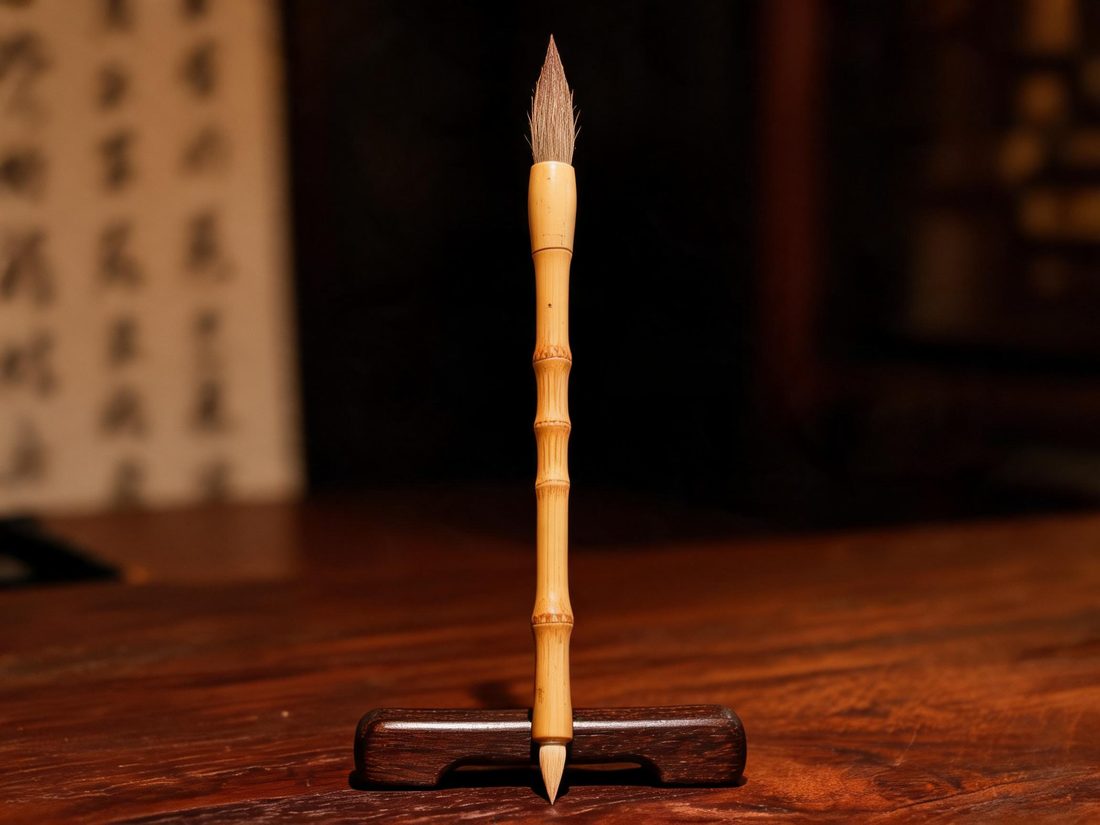
A bamboo sumi brush is a handle and a tip bought together: which handle properties to specify as ranges, how sumi painting differs from writing at the tip, and the packing checks that keep tips and handles intact in transit.
A bamboo sumi brush is two products in one purchase: a handle and a tip. Buyers who specify only the tip discover the handle question later, at packing, at the first complaint, or at reorder. Setting both in the order is what makes the line repeatable.
Why the handle deserves its own line on the order
The handle is the part of a brush the customer holds for the whole session, and it is also the part that has to survive both transit and use. Two handles with identical tips behave differently in the hand and pack differently in the box, so a purchase order that names only the tip has described half the product.
Handle properties a buyer can actually specify
| Property | Why it matters commercially |
|---|---|
| Diameter | Sets how the brush sits in the hand and how much control the user has |
| Length | Determines working reach and the length of the retail packing |
| Node position | Affects balance and grip on a natural bamboo section |
| Surface treatment | Affects appearance, feel and how the handle tolerates handling and humidity |
Bamboo is a natural material, so diameter and node position vary between sections. That variability is normal; what matters is whether variation is described at order stage, because a distributor who expects uniformity and receives natural variation will treat the second shipment as a fault.

The tip: what changes for sumi work
Sumi work differs from formal brush writing in how the brush is used. A painting session typically involves a small quantity of ink used repeatedly, with changes of dilution and tone, rather than one long continuous stroke exercise. That pattern places more emphasis on how the tip holds, releases and returns to a point across many short movements.
For buyers building a painting line, the useful specification work is to state the intended use alongside the tip size and hair mix, so the supplier matches the brush to the work rather than to a name. The same tip dimension that satisfies a writing programme may not satisfy a painting programme, and the difference is in the tip rather than in the handle.
Gumo Craftworks supplies the two behaviours separately, through the Goat Hair Soft Tip Brush for softer, wetter work and the Mixed Hair Combination Brush where the hand is not yet known.
Packing a handle that should not bend or crack
Two packing failures account for most damaged brushes on arrival.
- Compressed or bent tips. A tip that travels pressed against a hard surface will not hold its point. How the tip is wrapped and secured should be confirmed before ordering.
- Handle-to-handle contact. Bamboo handles packed loose will rub and chip. Individual wrapping or a divided insert prevents most of it, and it is also the arrangement a retail customer expects to open.
Because handle length drives box length, the packing decision and the handle specification should be settled in the same conversation rather than one after the other.
Checks before confirming a bamboo brush order
- Handle diameter, length and node position, stated as ranges if natural variation applies.
- Surface treatment of the handle, and how it is described to retail customers.
- Tip size and hair mix, specified separately from the handle.
- Intended use — writing or painting — stated on the order.
- How tips are secured and how handles are separated for shipment.
- Packed dimensions per grade, since handle length changes the box.
Frequently asked questions
Is bamboo less durable than wood for a brush handle?
Bamboo is a common handle material for this product type, and suitability depends on the individual handle and how it is finished and packed rather than on the material name alone. The useful questions are about the specific section and its treatment.
Should a sumi brush and a calligraphy brush be specified the same way?
No. The tip requirements follow the work. Painting involves repeated short movements with changing dilution, which places different emphasis on how the tip holds and returns to a point than continuous writing does.
Can I order the same tip size with different handles?
That is a normal way to build a range, and it is worth confirming early, because the two versions will have different packed dimensions and may not share the same retail box.
How much variation should I expect between bamboo handles?
Natural variation in diameter and node position is expected in a natural material. What a buyer should ask for is a description of that variation, so the range can be presented accurately rather than as uniform stock.
Next step for buyers
Buyers should write the handle and the tip as two separate lines on the requirement sheet, because only then can both be quoted and both be checked on arrival. Review the Goat Hair Soft Tip Brush and the Wolf Hair Stiff Tip Brush, then send your channel, the work your customers do and the handle and tip grades you plan to stock.