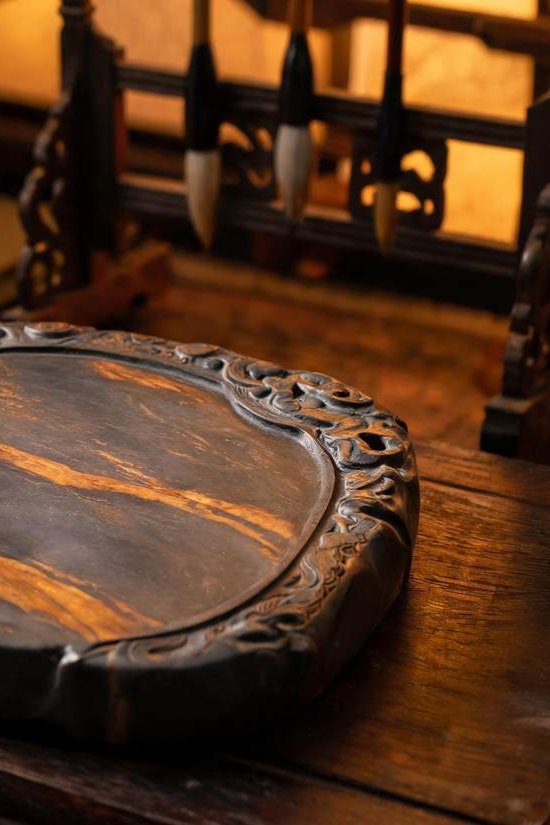
How B-grade stock and mixed ink craft orders work: written quality grading rules, defect thresholds per product family, AQL sampling and photo evidence before the deposit.
Mixed shipments of Hui ink sticks, inkstones, seal stones and craft ornaments rarely arrive with every carton at one uniform grade. Overseas buyers who accept the phrase "all new goods" without written quality grading rules often find chipped inkstone edges, uneven gold tracing or warped gift boxes only after the container has landed. A one-page grading annex, signed before the deposit, turns later disputes into a simple carton-by-carton checklist.
Why B-Grade Stock Exists in Every Ink Craft Order
Every production batch produces second-quality units alongside first-quality units. Polishing variations leave practice inkstones with shallow grooves; cutting variations leave seal stones with soft corners; strong light reveals tool marks on a carved stone decorative piece. Factories sort stock into A-grade, B-grade and clearance units during final inspection, and quality grading rules decide where each unit lands: first-quality cartons, reduced-price B-grade stock or a clearance list.
Grade Definitions Buyers Should Demand in Writing
A useful annex names each defect, a size threshold and a per-carton maximum. For carved Hui ink sticks, a shallow carve line or a dull gold edge can define a B-grade unit, while a cracked body moves the unit to clearance. For a carved stone decorative piece, edge chips under two millimeters can stay within A-grade, and larger chips drop the piece by one grade. Vague wording such as "good quality" leaves buyers with no measurable boundary; written quality grading terms fix the line early.
Grade Checks by Product Family
Inkstone buyers should ask for grinding-surface flatness readings and a tap test for hidden cracks on every sampled piece. Seal stone buyers should check squareness and face flatness, because an out-of-square blank wastes carving hours downstream, whatever the stone grade.
Ornament buyers should examine joints, paint edges and packaging fit under raking light, whether the order covers one hand-carved wooden ornament design or a full craft ornaments range. Recording results against the written annex keeps every product family on one evidence standard.
Sampling and Photo Evidence for Mixed Orders
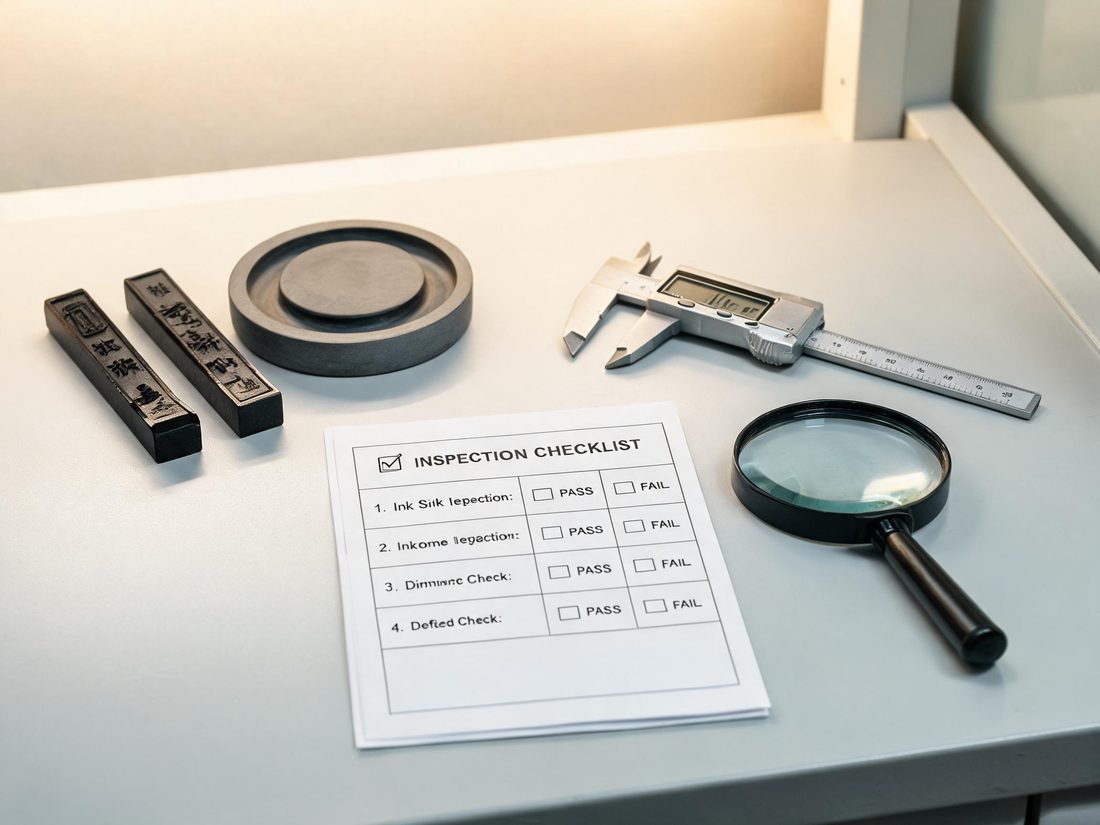
AQL-style sampling gives mixed orders a defensible sample size, and a photo set per defect class gives quality grading claims a fixed visual reference. The photo below shows a working inspection desk: two carved Hui ink sticks, a round inkstone, a caliper, a magnifier and a printed checklist with pass and fail columns. Carton labels should carry the grade letter and the inspector's initials, so a claim can point to an exact carton instead of a general complaint about the shipment.
Sell B-Grade Stock as a Real Product Line
B-grade stock does not need to become a loss. A practice inkstone and a practice seal stone give schools, workshops and beginner programs a legitimate lower-priced line, as long as cartons are labeled by grade and invoices state the grade mix. Retail partners running a scholar desk program can sell first-quality units in the gift corner and practice-grade units as class sets, with quality grading rules keeping the two streams separate from warehouse to shelf.
A Short Checklist Before the Next Mixed Order
- Attach a defect-by-grade annex to the proforma invoice before the deposit.
- Agree an AQL sample size and a photo set for every defect class.
- Require grade letters on carton labels and packing lists.
- Match practice-grade lines such as practice inkstones to labeled lower grades.
- Reconcile carton counts against the grade mix before balance payment.
Buyers who put quality grading rules in writing turn inspection from an argument into arithmetic: sampled units, defect sizes and grade counts either match the annex or fall short of the annex. Gumo Craftworks supports mixed orders of Hui ink sticks, inkstones, seal stones and craft ornaments with grade-labeled cartons and photo evidence, and the trade team welcomes buyer annex drafts before any deposit changes hands.