A guide to ancient Chinese ink for B2B buyers, covering traditional ink making craftsmanship, historical context, collecting criteria, and sourcing considerations for collectors, religious institutions, and cultural gift distributors.
For collectors, cultural institutions, and specialized distributors, ancient ink represents a bridge between China's literary heritage and today's market for collectible craft. The term refers to ink sticks made using traditional methods that predate industrial production - methods still preserved by a small number of workshops in China's ink-making heartlands. This guide covers the craftsmanship, historical context, and collecting considerations that B2B buyers need to understand when sourcing traditional Chinese ink for collections, cultural institutions, and religious use.
What Is Ancient Chinese Ink?
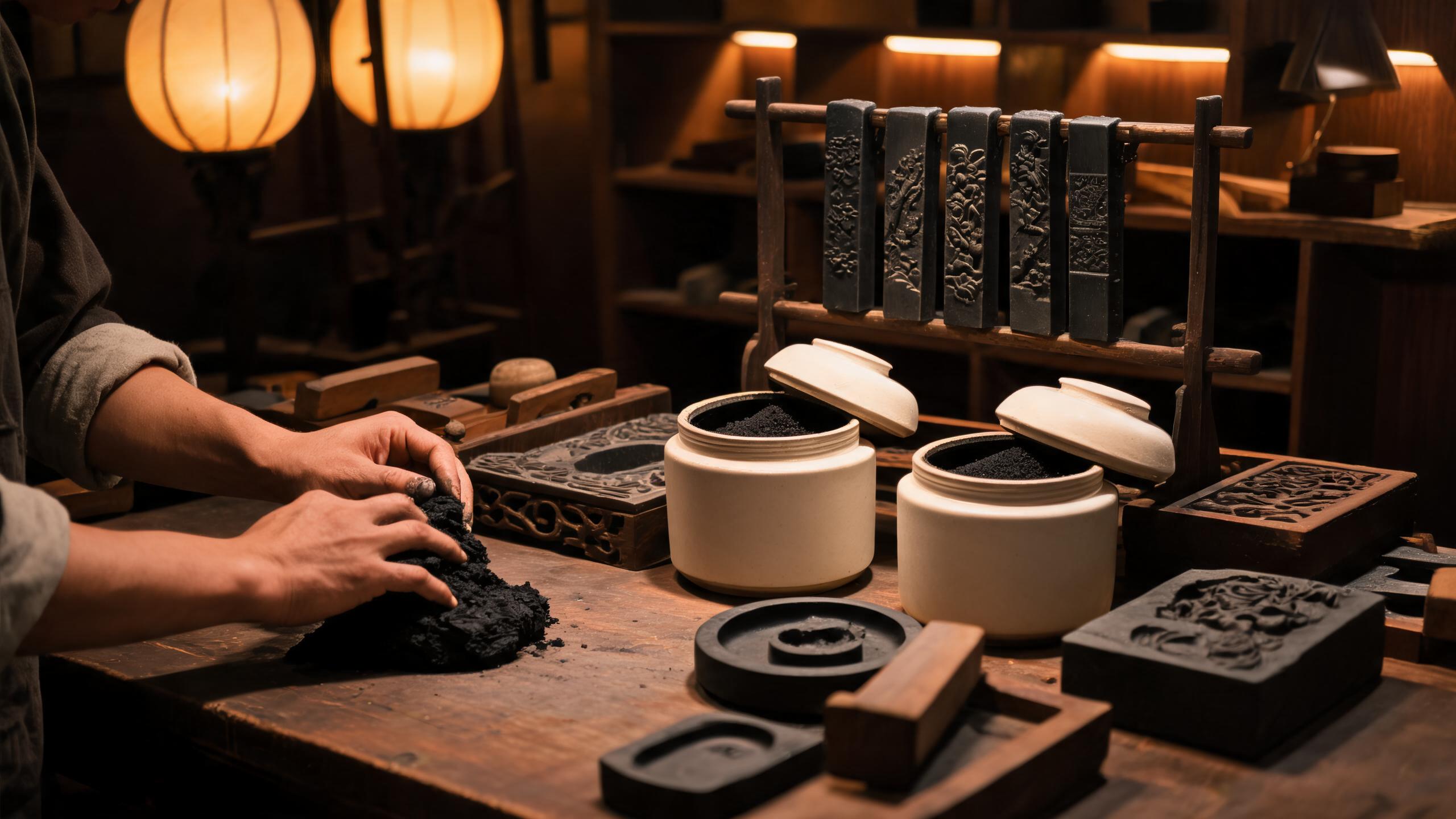
Ancient Chinese ink refers to solid ink sticks produced through traditional hand-crafted processes: gathering soot from controlled combustion of pine wood or vegetable oils, mixing it with natural animal glue, hammering the mixture into a uniform paste, pressing it into carved molds, and air-drying the sticks over weeks or months. The resulting ink stick, when ground on an inkstone with water, produces ink of exceptional depth and subtlety.
Unlike modern bottled ink, which is manufactured for convenience and consistency, ancient ink was designed for permanence. Documents and artworks created with traditional ink sticks have survived for centuries - a quality that makes these sticks valuable to collectors and institutions concerned with archival integrity.
The Craftsmanship Behind Traditional Ink Making
The production of ancient ink follows a sequence of labor-intensive steps, each critical to the final quality. At Gu Mo Craft Technology, these core processes have been preserved and refined since the company's founding in 2011.
1. Soot Collection
Pine soot is collected by burning pine wood in a sealed kiln with limited oxygen. The fine carbon particles that deposit on the kiln's inner surfaces are carefully gathered and graded by particle size. Oil soot is similarly collected by burning vegetable oils - typically tung oil or rapeseed oil - and harvesting the carbon residue. The soot quality directly determines the ink's color, texture, and grinding performance.
Gu Mo Craft Technology documents its pine soot, oil soot, and natural binder sources before production begins, with each batch tested for consistency and quality. This raw material documentation is available to institutional buyers.
2. Binder Mixing and Hammering
The collected soot is blended with natural animal glue and sometimes aromatic additives such as musk or borneol, which serve as preservatives. The mixture is then repeatedly hammered and kneaded - a process that ensures uniform distribution of soot particles throughout the binder. Proper hammering eliminates air pockets and creates a dense, homogeneous paste that will grind smoothly and produce consistent ink.
3. Mold Pressing
The hammered paste is pressed into carved wooden or stone molds, which imprint decorative patterns, calligraphy, or commemorative designs onto the stick's surface. Traditional mold patterns include landscapes, poems, auspicious symbols, and classical Chinese motifs. The mold pressing step gives each ink stick its distinctive visual identity.
4. Air-Drying
Pressed ink sticks are air-dried in temperature-controlled environments for extended periods - typically weeks to months depending on the stick's size and formulation. This slow drying process is essential: it prevents cracking, warping, and internal stress that would compromise the stick's structural integrity. Rushed drying through ovens or forced heat produces sticks that may appear fine initially but develop cracks over time.
5. Gold Tracing and Finishing
Premium ink sticks receive decorative gold tracing, where fine gold pigment is applied to the carved patterns on the stick's surface. This traditional technique enhances both the visual appeal and the collectible value of the ink stick.
A Brief History of Chinese Ink
Chinese ink making dates back over two millennia. The earliest ink sticks discovered by archaeologists date to the Han Dynasty (206 BCE-220 CE), though ink in various forms was used even earlier. The craft reached its zenith during the Ming (1368-1644) and Qing (1644-1912) dynasties, when Huizhou in Anhui Province became the center of premium ink production - giving rise to the Hui ink tradition that remains the gold standard today.
Throughout this history, ink sticks served not only as writing tools but also as objects of cultural and artistic value. Literati and officials commissioned custom-designed ink sticks as gifts, status symbols, and commemorative items. This cultural significance is why ancient ink sticks remain collectible today: they embody both functional craftsmanship and artistic heritage.
Collecting Ancient Ink: What B2B Buyers Need to Know
Identifying Quality Traditional Ink
| Feature | What to Look For | Red Flags |
|---|---|---|
| Soot quality | Fine, uniform particle size; consistent deep black tone | Visible impurities, uneven color, gritty texture |
| Binder proportion | Stick is dense and firm with smooth surface | Brittle, crumbly, or overly soft consistency |
| Drying quality | No cracks, warps, or surface blemishes | Hairline cracks, warping, or chalky surface |
| Carving and gold tracing | Crisp, detailed patterns with even gold application | Fuzzy lines, uneven gold, or missing details |
| Aroma | Faint, pleasant scent from natural additives | Chemical or unpleasant odor indicating synthetic binders |
Applications for Collectors and Institutions
Different buyer segments value ancient ink for different reasons:
- Collectors and museums seek ink sticks with artistic carving, historical designs, and documented provenance. Commemorative and limited-edition sticks with certificates of authenticity are most valued.
- Religious institutions - temples, monasteries, and cultural centers - require steady supplies of reliable ink for sutra copying and ceremonial writing. They value archival permanence and consistent supply over decorative appeal.
- Cultural gift distributors source ink sticks that combine traditional craftsmanship with presentation-worthy packaging for diplomatic, corporate, and institutional gifting.
- Art supply retailers catering to professional calligraphers and painters stock traditional ink sticks for customers who demand the quality and authenticity of hand-crafted ink.
Storage and Preservation
Ancient ink sticks, when properly stored, can last for decades or even centuries. Key storage conditions include:
- Temperature: Stable room temperature, avoiding extreme heat or cold
- Humidity: Moderate humidity; excessive dryness causes cracking, excessive moisture promotes mold
- Handling: Minimal handling to preserve surface carving and gold tracing
- Packaging: Individual protective wrapping for each stick, especially for carved and gold-traced pieces
Sourcing Traditional Ink from Gu Mo Craft Technology
Gu Mo Craft Technology has produced traditional ink sticks since 2011 using the core Hui ink processes: traditional soot refining, binder mixing and hammering, mold pressing, air-drying, and gold tracing. The company's product line includes ink sticks across multiple grades and formulations:
- Premium Pine Soot Hui Ink Stick - Hand-carved with gold-filled calligraphy, 50g-200g, with archival-quality matte black ink tone. MOQ: 50 pieces.
- Commemorative Gold-Edge Hui Ink Stick - Premium commemorative design for collectors and gift markets.
- Colored Hui Ink Stick Set - Five mineral-pigment colors (vermillion, ochre, azure, white, yellow) with tested lightfastness grade 4+. MOQ: 30 sets.
- Student Practice Hui Ink Stick - Pine soot with natural binder, plain surface, for educational and religious use. MOQ: 200 pieces.
Each batch includes material certificates, batch QC records, and quality grading documentation. OEM customization is available for carved patterns, specifications, and packaging.
Frequently Asked Questions
Q: How long do traditional ink sticks last?
When stored in a dry, cool environment, pine soot Hui ink sticks retain quality for 10+ years. Oil soot sticks can last even longer due to their water-resistant formulation.
Q: Do you provide certificates of authenticity for collectible ink sticks?
Yes, we provide certificates of authenticity with edition numbers for premium and commemorative ink stick orders.
Q: Can you produce custom designs for institutional collections?
Yes, we offer OEM customization for carved patterns, gold tracing designs, and packaging based on your artwork file. Sample approval takes 10-15 days.
Q: What documentation accompanies bulk shipments?
Each shipment includes material composition certificates, batch QC records, and quality grading documentation covering ink tone consistency and grinding performance.
Conclusion
Ancient Chinese ink represents a convergence of functional excellence and cultural artistry that few craft products can match. For B2B buyers serving collectors, religious institutions, and cultural gift markets, understanding the traditional craftsmanship, quality indicators, and sourcing considerations is essential to building a product line that meets the demands of discerning end users.
To explore our traditional ink stick collection, request samples, or discuss custom designs for your market, visit our product catalog and contact our export team.