
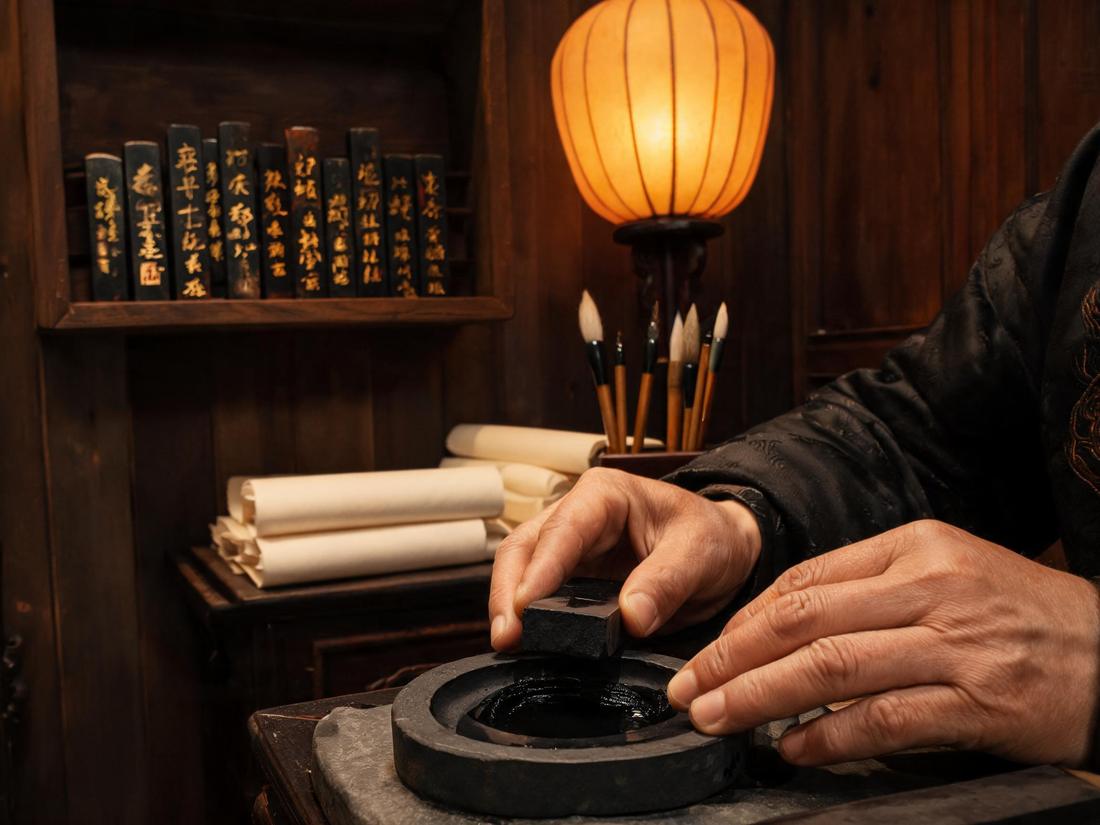
Sample approval is the midpoint of an ink craft order. What happens between sign-off and shipment: batch testing, AQL inspection, shipping documents and school-ready packing.
Sample Approval Is the Midpoint, Not the Finish Line
Most first-time buyers of Chinese calligraphy supplies put their energy into getting a sample right — and rightly so. But the approval email is the midpoint of the order, not the end of the work. What happens between sign-off and shipment determines whether the bulk order that arrives matches the sample you approved, whether the paperwork supports your procurement file, and whether the goods are usable the week they land. This article walks through the stages that both of our bulk school lines — Student Practice Hui Ink Stick and Practice Seal Stone — go through after approval, so you know what to expect and what to confirm while production is still ahead of you.
The Standard Sequence After Approval
Both product pages publish the same working sequence: quantity and labeling confirmation → sample → sample approval → production with in-process testing → AQL inspection → bulk packing for distribution → shipment under the agreed trade term. Two details in that sequence matter more than buyers expect. First, labeling confirmation sits before the sample: if your school name, artwork or kit-component list changes after sampling, the packing plan is redrawn and that portion restarts. Second, testing happens during production, not as a final gate — which is what allows problems to be caught while there is still time to remake a batch.
Production With Batch Testing Built In
The student-grade Hui ink stick line is built for volume — production capacity supports up to 15,000 pieces per month — and volume only works if every batch performs the same. Each batch is graded for ink tone consistency and grinding performance before packaging, and the grading is documented, so the bulk order you receive performs as one standard rather than a mix of shades. A sample that ground well means little if a 5,000-piece order arrives different; batch grading is how that gap is closed.
Practice seal stones are tested differently because their failure modes are different. Hardness is graded so cutting resistance stays uniform across the batch — the property beginners need to build technique — and surface quality is checked for the flaws that cause chipped edges and uneven cuts. Structural integrity is screened stone by stone, because hidden cracks are the failure that appears mid-carving in a classroom, not at the packing bench.

The Documents That Ship With the Order
Both lines ship with quality documentation. Practice seal stone orders include hardness test reports; student ink stick orders include quality grading reports per shipment. Packed orders are inspected to AQL acceptance sampling standards. For a school network, these documents do practical work: in a recent 1,000-stone order for a Malaysian calligraphy school chain, the hardness test reports that shipped with the goods let the schools confirm consistent carving quality across the whole order without re-testing each stone on arrival. The same logic applied to the 5,000-stick school order on the ink stick line, where per-shipment grading reports documented tone consistency across the batch.
Packing Is Built for Your Channel
Neither line ships in retail shelving packs. Bulk packaging is optimized for school distribution — storage, classroom handout and re-order handling — and custom label printing is available so packaging can carry a school or brand name, supporting per-campus organization or private-label student ranges. If stones are part of a larger teaching kit, tell us the other components when you inquire so packaging can be planned together; illustrated carving guides in multiple languages can also be included by request. All of these options are confirmed before production, which is another reason the labeling step sits early in the sequence.
What Can Move the Date
Standard lead time on both lines is 25–35 days after sample approval, and in recent school cases samples were delivered within 8 days. What changes the date in practice is rarely the production run itself. Labeling artwork confirmed late, carving-guide languages and quantities added mid-production, and order sizes that need to be checked against current monthly capacity windows are the usual causes. Confirming quantity, labeling, guide needs and destination before sampling — and asking for current volume windows if your order is large — keeps the schedule aligned with the term dates the goods are bought for.
Working Backward From the First Class
For school programs, the practical planning method is to work backward: take the date the goods must be in classrooms, add the 25–35 day production and inspection window after approval, and add time for sampling and approval discussions before that. Both lines carry an MOQ of 200 pieces. If your program combines ink sticks, practice stones and other components into one kit, the same backward plan applies to the combined shipment — a complete scholar desk set can be planned into the same program. When you are ready to plan an order, tell us the quantity, destination and term dates, and we will confirm the schedule against current capacity.