Calligraphy ink is made of two core ingredients: soot and a natural binder. This article explains how soot type (pine vs. oil) and binder affect tone, grind, and permanence, and what B2B buyers should verify when sourcing ink sticks or liquid ink.
Ink Composition Guide for Buyers
For overseas buyers sourcing traditional calligraphy ink, the first question is rarely about brand. It is about what is actually inside the stick or bottle. Calligraphy ink is made of two essential components: soot (the pigment) and a natural binder (the glue that holds it together). Everything else — tone, grinding behavior, permanence — follows from these two ingredients and how they are processed.
This guide explains the composition in practical terms, compares pine soot vs. oil soot, and lists what a B2B buyer should check with a supplier before placing an order.
In this article
The Basic Composition: Soot + Binder
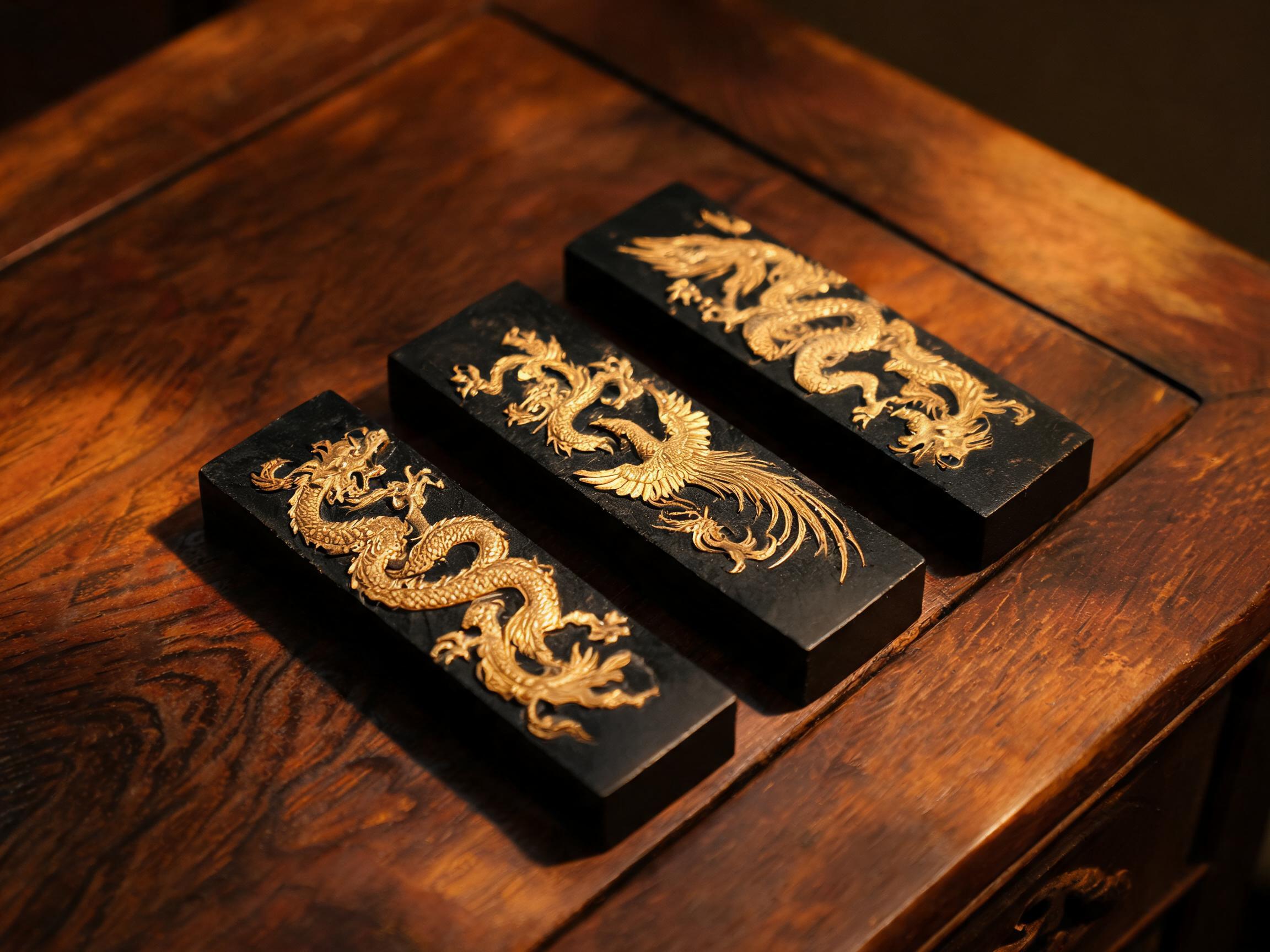
Traditional Chinese ink, often called mo (墨), is a manufactured solid. Its two active parts are:
- Soot (carbon pigment): The black coloring agent, produced by burning organic materials in a controlled, oxygen-limited environment. The soot is collected as a fine black powder.
- Natural binder: Typically animal glue (such as bone glue or hide glue) or a plant-based adhesive. The binder binds the soot particles together so the ink can be formed into a stick and, when rubbed on an ink stone with water, suspended evenly in the liquid.
Additives such as preservatives or fragrance may be present in small amounts, but they are secondary. The fundamental quality of the ink — its blackness, tone, and how it behaves on paper — is determined by the soot and the binder.
At Gu Mo Craft Technology (古墨工艺品), founded in 2011, production follows the traditional craft of gufa lianyan (ancient soot-making), followed by hejiao chuida (glue mixing and beating) and yamo yinyang (pressing and air-drying). The company documents the source of pine soot, oil soot, and natural binder before production begins, and each batch is tested for consistency and quality.
Pine Soot vs. Oil Soot: What Changes in Quality
The type of soot used is the single most important factor in how the ink performs. Two types dominate traditional Chinese ink production: pine soot and oil soot.
| Characteristic | Pine Soot Ink | Oil Soot Ink |
|---|---|---|
| Source of soot | Burned pine wood (or pine resin) | Burned plant oils (e.g., tung oil, rapeseed oil) |
| Typical tone | Cool, bluish-black or grey-black; matte finish | Warm, deep, glossy black |
| Particle character | Generally coarser, more absorbent | Finer, denser, more lustrous |
| Grinding behavior | Grinds relatively easily; produces a matte wash | Requires more effort; produces a richer, more opaque wash |
| Common use | Calligraphy practice, landscapes, works requiring subtle washes | Fine line work, detailed painting, works needing deep contrast |
These differences are general principles, not absolute rules. A specific product's behavior depends on the exact soot particle size, the binder ratio, and the processing method. For instance, a pine soot stick from one maker can behave differently from a pine soot stick from another.
Gu Mo Craft Technology produces both types. The Premium Pine Soot Hui Ink Stick is suited for those who want a traditional matte finish, while the Oil Soot Hui Ink Stick (Classic) offers a deeper, glossier black. For buyers, the choice depends on the end user's preferred aesthetic and the application.
Why the Binder Matters
The binder is not just a glue; it controls how the ink behaves in liquid form. A well-balanced binder allows the ink to:
- Grind smoothly on the ink stone without being too sticky or too loose.
- Flow off the brush in a controlled manner.
- Adhere to paper without excessive bleeding.
- Dry to a permanent, water-resistant film (once dry, traditional ink is generally permanent).
If the binder is too weak, the ink may become muddy or separate. If too strong, the ink may be difficult to grind or may appear sticky on the brush. The binder also affects the ink's permanence — how well it resists fading and smudging over time.
Because the binder is a natural product, its quality can vary by batch. This is why a serious supplier documents its binder source and tests each production batch. Gu Mo Craft Technology records the source of the natural binder before production and tests each batch for consistency, which is a practical safeguard for buyers who need predictable results.
How Buyers Judge Ink Quality When Sourcing
For a B2B buyer, judging quality is not about tasting the ink or performing a calligraphy demo. It is about verifying the supplier's controls. Here is what to check.
Soot Type and Source
Ask the supplier to state the soot type (pine or oil) and its origin. A supplier that can name the source — rather than saying "carbon black" — is more likely to be producing traditional ink rather than a synthetic substitute. Synthetic carbon black is cheaper but behaves differently and may not meet the requirements of traditional calligraphy.
Binder Type and Ratio
The binder should be a natural animal or plant glue. Ask for the ratio of soot to binder. While the exact ratio is often a trade secret, a supplier should be able to confirm it uses a natural binder and explain how it controls the ratio for consistency.
Batch Consistency
Ink is a natural product; color and behavior can shift between batches. A reliable supplier tests each batch. Ask whether the supplier performs batch testing for tone, grind, and permanence. Gu Mo Craft Technology documents soot and binder sources and tests each batch, which is a concrete control measure.
Form: Stick vs. Liquid
Decide which format fits your market. Ink sticks are traditional, require an ink stone, and are preferred by purists and advanced users. Liquid ink is ready to use and suits students and everyday practice.
| Format | Advantages | Considerations |
|---|---|---|
| Ink stick | Traditional, long shelf life, portable, allows user to control concentration | Requires grinding time; quality depends on user technique |
| Liquid ink | Convenient, consistent, no grinding needed | May contain preservatives; shorter shelf life once opened |
Gu Mo Craft Technology offers both. The Student Practice Hui Ink Stick is a pine soot stick with a natural binder, available in 20g to 50g sizes with a MOQ of 200 pieces. For a ready-to-use option, the Concentrated Matte Black Liquid Ink is made from concentrated refined soot, is tone-matched per batch, and is acid-free with lightfastness grade 5. It is available in 250ml and 500ml bottles with a MOQ of 100 bottles.
Supplier Checklist: Questions to Ask
- What is the soot type? Pine, oil, or a blend? What is the source?
- What is the binder? Is it a natural animal or plant glue? Can the supplier name the type?
- How is the soot produced? Traditional lamp soot collection or industrial carbon black?
- How do you test batches? Is there a documented process for checking color, grind, and permanence?
- What is the MOQ? Is there flexibility for sampling?
- What are the packaging and export terms? Are the sticks/bottles packed to prevent damage in transit?
For specific formulation details — such as exact soot particle size or binder percentage — buyers should confirm with the supplier directly. These parameters are often proprietary and vary by product line.
FAQ
Is calligraphy ink the same as Chinese ink?
Yes, in common usage, "calligraphy ink" and "Chinese ink" refer to the same material: a carbon-based pigment bound with a natural adhesive. The term "India ink" is sometimes used, but traditional Chinese ink has its own specific production methods.
Can I use any ink stick with any ink stone?
Yes, but the grinding experience will vary. A harder stick (often oil soot) may require more water on the stone. A softer stick (some pine soot) may grind faster. The user adjusts the water amount to control concentration.
Is liquid ink as good as an ink stick?
For convenience and consistency, liquid ink is excellent, especially for students and large-volume work. For traditional practice and artistic control, many calligraphers prefer the stick because it allows them to control the ink concentration precisely with each grind.
How should I store ink sticks?
Ink sticks should be dried completely after use and stored in a cool, dry place. They do not expire if kept dry. Liquid ink should be kept sealed when not in use to prevent evaporation.
What does "acid-free" mean for liquid ink?
Acid-free ink has a neutral pH, which helps prevent the ink from degrading the paper over time. This is important for archival quality and for works intended to last.
Understanding what calligraphy ink is made of — soot and binder — is the foundation of smart sourcing. By checking the soot type, binder source, and batch consistency, buyers can select a product that meets their market's expectations for quality and performance.