Learn how to select Chinese calligraphy brush for watercolor use, build a dual-use assortment, and verify supplier quality with practical inspection points for B2B importers.
Sourcing Guide for Art & Craft Importers
Western watercolorists are increasingly turning to Chinese calligraphy brushes — not as a novelty, but as a practical tool. The long tapered tip, generous belly, and natural hair snap give them behavior that round watercolor brushes often lack at the same price point. For art and craft importers, this creates a clear opportunity: a single SKU range that serves both the calligraphy market and the watercolor market.
But building that dual-use assortment requires more than picking a few brushes from a catalog. You need to know which hair types behave like watercolor brushes, which sizes cover the most common painting needs, and how to verify that a Chinese supplier actually delivers consistent quality. This guide walks through those decisions with practical sourcing and inspection points.
In this guide
Hair types: what works for watercolor
The first sourcing decision is hair type. Chinese calligraphy brushes come in three main categories, and each behaves differently when loaded with watercolor pigment.
Goat hair (soft tip)
Goat hair brushes are the softest of the three. They hold a large amount of water and pigment, release it gradually, and produce soft washes with minimal brush marks. For watercolorists, this is the closest equivalent to a squirrel or sable wash brush — ideal for wet-on-wet techniques, large backgrounds, and smooth gradient washes. The softness means less spring, so fine detail work is harder. In a dual-use lineup, goat hair brushes serve the wash-and-glaze segment of the watercolor market.
Suppliers like Gu Mo Craft Technology (founded 2011, integrating design, manufacturing, QC, and export) offer a dedicated goat hair soft tip brush line. When sourcing, confirm the hair grade and the ferrule construction — a well-set ferrule prevents the hair from loosening after repeated water immersion.
Wolf hair (stiff tip)
Despite the name, wolf hair brushes are typically made from weasel or similar fine guard hair. They have noticeably more spring and snap than goat hair. The tip returns to a sharp point after each stroke, which makes them suitable for controlled lines, small details, and lifting color. In watercolor terms, they behave closer to a synthetic sable or a firm round brush. They hold less water than goat hair, so they suit detail work over large washes.
Gu Mo's wolf hair stiff tip brush is positioned for this control-oriented segment. If your buyers include illustrators or watercolorists who do fine line work, this is the hair type to include.
Mixed hair (combination)
Mixed hair brushes combine soft and stiff hairs in one brush — typically goat hair for water capacity and wolf hair for spring. The result is a brush that holds a decent amount of pigment while still returning to a point. For watercolor, this is often the most versatile option: it can lay down a wash and then switch to moderate detail without changing brushes.
Gu Mo's mixed hair combination brush line is designed for this balanced behavior. For importers building a compact dual-use assortment, the mixed hair category often becomes the core SKU because it appeals to both calligraphers and watercolorists.
What about synthetic?
Many Western watercolor brands use synthetic or synthetic-blend filaments. Chinese calligraphy brushes are traditionally natural hair. If your market requires vegan or synthetic options, confirm with the supplier whether they offer a synthetic line — not all do. The natural hair versions are the traditional strength of Chinese brush manufacturers, so expect the best quality and price there.
Size ranges for a dual-use assortment
Calligraphy brushes are often sized differently than Western watercolor brushes. Instead of a number scale (e.g., size 6 or size 12), Chinese brushes use the total length of the brush or a traditional size name. This matters when building an assortment for Western buyers, who expect a familiar sizing logic.
For watercolor use, the practical range is narrower than the full calligraphy range. Here is the size logic to apply:
| Watercolor task | Brush size needed | Calligraphy equivalent |
|---|---|---|
| Washes, backgrounds, wet-on-wet | Large (equivalent to Western size 12–20) | Large format brushes |
| General painting, mid-size washes | Medium (equivalent to Western size 6–10) | Standard calligraphy brushes |
| Details, lines, lifting | Small (equivalent to Western size 0–4) | Small tip calligraphy brushes |
When discussing specifications with a supplier, ask for the actual brush dimensions — overall length, hair length, and belly width — rather than relying on the Chinese size name alone. Gu Mo offers a large format calligraphy brush line that covers the wash end of the watercolor spectrum. For the mid-range and detail sizes, the standard and small brushes from their student practice brush set can serve as entry-level dual-use products.
Building your product mix
Once you understand the hair types and size ranges, the assortment structure becomes a merchandising decision. Here is a practical way to build a dual-use lineup:
- Core line (mixed hair, medium size): This is your volume SKU. It works for calligraphy beginners and watercolor painters alike. Price it competitively and use it as the entry point for new buyers.
- Wash line (goat hair, large format): This addresses the watercolor-specific need for large soft washes. It is a differentiator because traditional calligraphy-only assortments often skip this size.
- Detail line (wolf hair, small to medium): This covers the precision segment. It is essential for watercolorists who do botanical or architectural work.
- Multi-packs: A set with one of each type (e.g., one goat, one wolf, one mixed) lets buyers test the range without committing to a full set of one hair type. This is a low-risk way to introduce the category to new retail accounts.
For a first order, consider a balanced mix of these three lines rather than a deep buy of one type. That gives you sales data on which hair type your market actually prefers before you commit to larger volume.
Verifying a China supplier: inspection points
Quality consistency is the biggest risk when sourcing natural hair brushes from China. Hair quality varies by season and batch, and hand-crafted brushes require skilled assembly. Here are the practical inspection points to build into your supplier agreement.
Material verification
Confirm that the hair is what the supplier says it is. A reputable manufacturer should be able to show you the raw hair before assembly and explain the grade they use. Gu Mo, for example, runs inline QC at each production stage, including material verification and finish grading. Ask your supplier to do the same and to document it.
Finish grading
The brush tip must be perfectly tapered. Run a simple test: wet the brush, form a point, and check that no stray hairs stick out. This is a manual inspection step, and it should be part of the supplier's QC checklist. If the supplier cannot describe their finish grading process, that is a red flag.
Ferrule and handle security
Watercolor brushes are repeatedly immersed in water and cleaned. The ferrule must be tightly crimped, and the handle must not wobble or separate from the ferrule. Ask the supplier how they test this — a simple pull test on a sample batch is a reasonable request.
Pre-production approval
Before mass production, a professional supplier should send you a buyer approval document set. This typically includes sample photos, spec sheets, and approval records. Gu Mo follows this process — they provide these documents for approval before starting mass production. If a supplier skips this step or is vague about it, insist on it. This is your last chance to catch a spec mismatch before you are committed to the full order.
Export packing and documentation
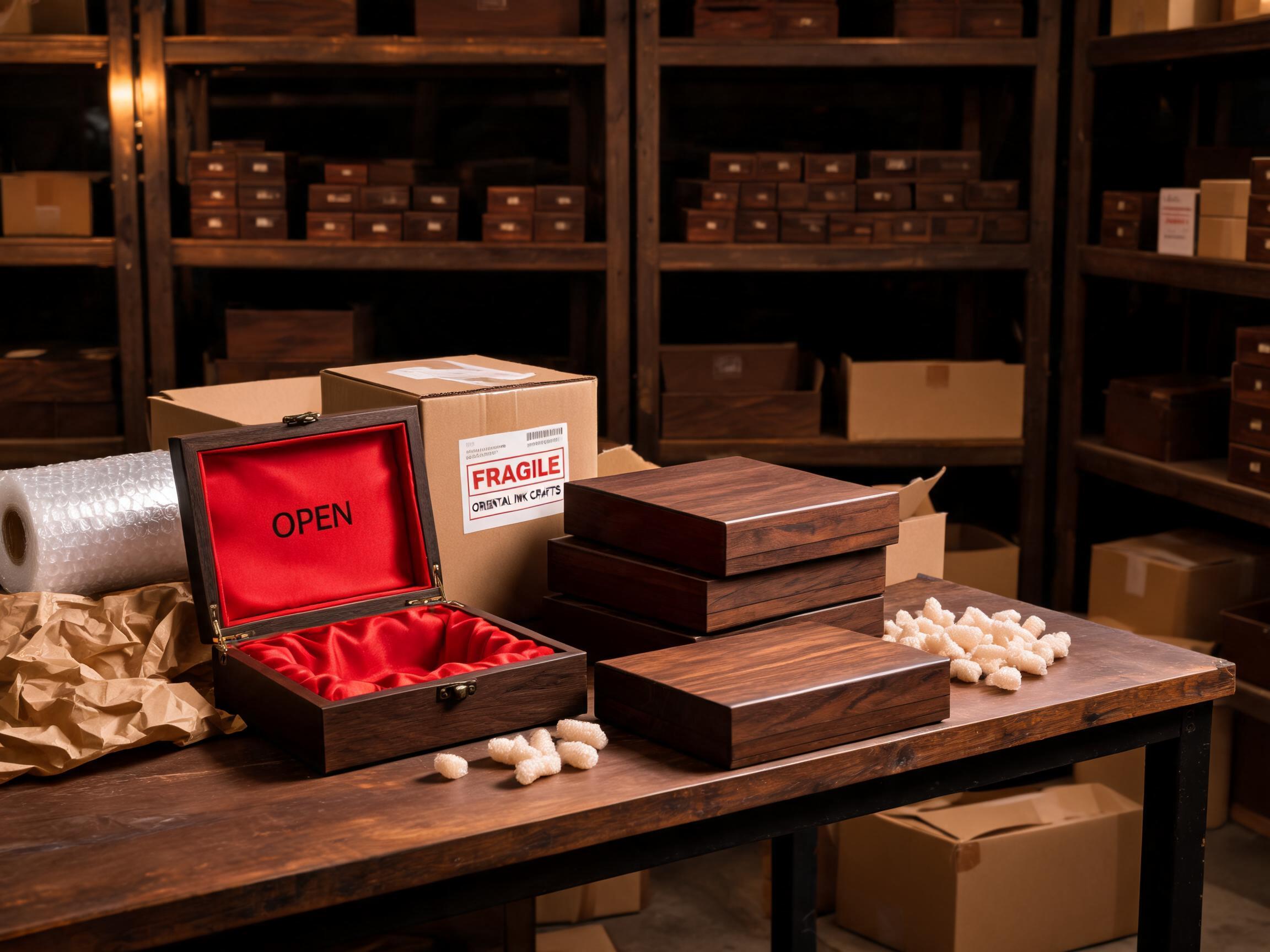
Natural hair brushes need protection from humidity and physical damage during shipping. Check that the supplier uses proper export packing — typically carton marks on the outer boxes and secure inner packing to prevent the brushes from shifting. Confirm that the supplier includes the full shipment documentation set with the order.
OEM and private label
If you plan to sell under your own brand, confirm the supplier's OEM and private-label capabilities. This includes custom packaging, handle branding, and possibly custom size specifications. Gu Mo offers OEM and private-label services, which is typical for established manufacturers. Ask for photos of their existing private-label work as a reference.
FAQ
Can a calligraphy brush really replace a Western watercolor brush?
For many tasks, yes. The long belly holds more water than a comparable Western round, and the natural hair gives a different, often desirable, pigment release. It is not a one-to-one replacement — the lack of a defined heel means the brush behaves differently — but it is a legitimate tool, not a compromise. Many watercolorists use them alongside Western brushes.
Which hair type is best for a beginner watercolorist?
A mixed hair brush is the most forgiving. It has enough spring for control and enough softness for washes. It is also the most versatile for a beginner who is still exploring technique.
What is the minimum order quantity for a dual-use assortment?
MOQ varies by supplier and by the specific brush line. Do not assume a single MOQ applies across all product lines. Ask your supplier for the MOQ per SKU and per line, and factor that into your assortment decision. A mixed assortment with a slightly higher MOQ per SKU may be more cost-effective than a deep buy of one type.
How do I verify the actual size of a brush before ordering?
Request a physical sample or a spec sheet with measured dimensions — overall length, hair length, and belly width. The Chinese size name alone is not enough to match it to a Western size expectation. A reliable supplier will provide these measurements as part of the approval document set.
Are these brushes suitable for acrylic or oil paint?
They are designed for water-based media. Natural hair can be damaged by solvents used in oil painting. For acrylic, they can work if cleaned immediately, but watercolor and ink remain the intended use. Do not market them for oil or solvent-based media.
Next step: build your sample order
The dual-use opportunity is real — the same brush that serves a calligrapher can serve a watercolorist, and that expands your addressable market without doubling your SKU count. The key is to source from a supplier who can document their QC process, provide pre-production approvals, and pack for safe export.
Start by requesting samples of the three hair types — goat hair soft tip, wolf hair stiff tip, and mixed hair combination — in the sizes you plan to carry. Test them with actual watercolor washes, not just dry handling. Then use the inspection points above to qualify your supplier before committing to a production run.