
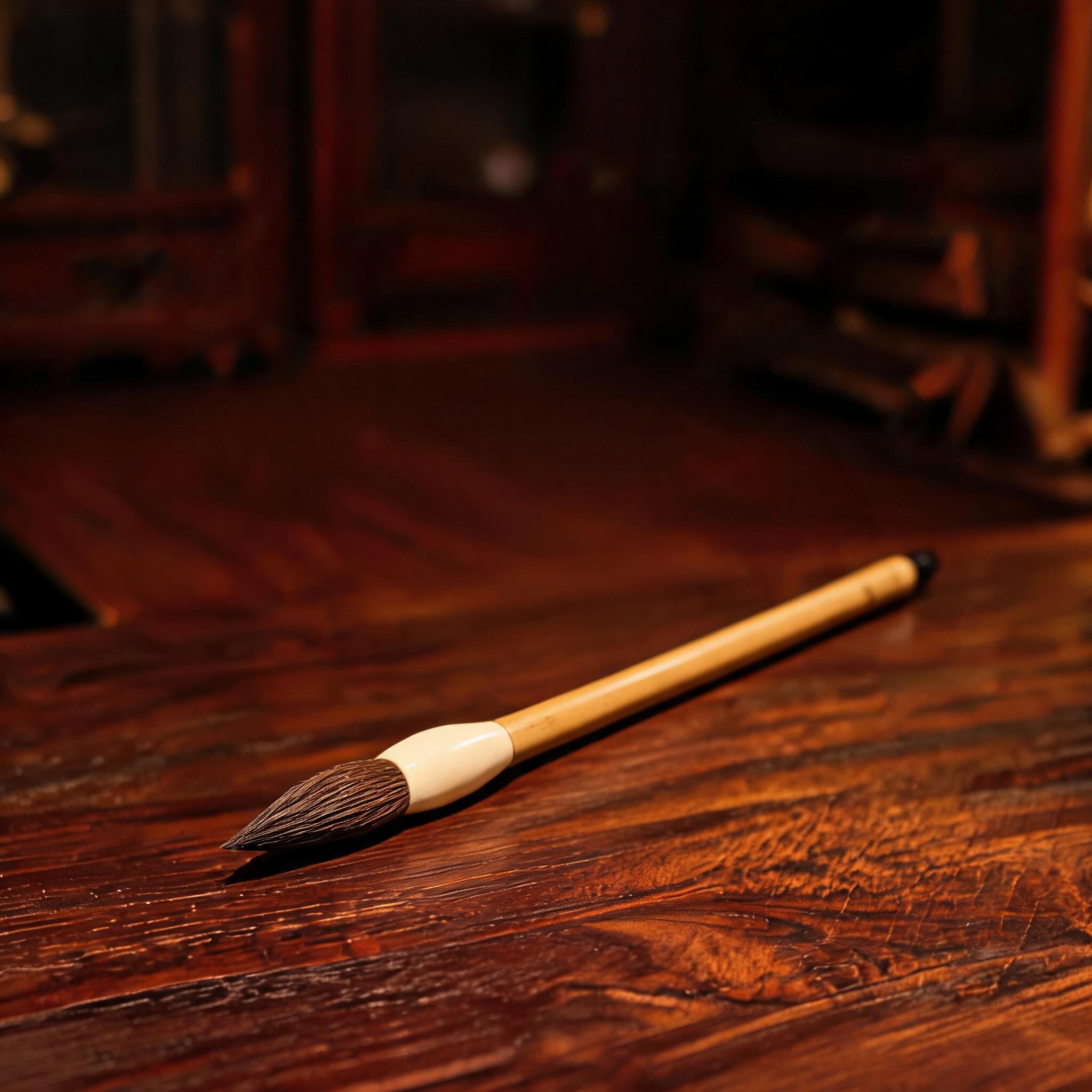
A practical classification guide for B2B buyers sourcing calligraphy brushes. Understand wolf vs goat vs mixed hair, brush shapes for different script styles, and how to match product types to your market's demand.
Buyer's Guide
When sourcing calligraphy brushes for resale or distribution, the first question is rarely about a single product. It is about understanding the full typology — what hair materials do, what shapes are for, and which combinations your market actually buys. This guide gives you a working classification of calligraphy brush types so you can make sourcing decisions with confidence.
Key takeaways for buyers: Hair material determines ink behavior (wolf = firm, goat = soft, mixed = balanced). Brush shape determines script application. A full product line should cover both axes to serve different market segments.
Why Brush Type Matters for Your Product Range
Calligraphy brushes are not interchangeable. A brush that works well for large-scale characters will fail at fine detail work, and a soft goat-hair brush behaves very differently from a stiff wolf-hair one. For B2B buyers, stocking the right mix of calligraphy brush types directly affects how well you serve your customers — from art supply retailers to stationery distributors to cultural product importers.
Understanding the classification system also helps you communicate precisely with suppliers. When you can specify "70% goat / 30% wolf blend with a lacquered bamboo handle, 24 cm," you get accurate quotes and consistent quality across orders.
Classification Axis 1: Hair Material
The hair material is the single most important factor in how a brush performs. It controls stiffness, ink absorption, and spring — the ability of the tip to return to its original shape after pressure.
Wolf Hair (狼毫)
Despite the name, wolf hair brushes are typically made from weasel or other fine animal hair. The key characteristic is firmness. Wolf hair provides strong spring and a resilient tip that holds its shape during fast, precise strokes. It is the preferred choice for regular script and running script, where control and sharp line quality matter most.
For buyers, wolf hair brushes suit customers who practice disciplined script styles and need a predictable, responsive tool. They are often priced at a premium due to the material's performance characteristics.
Goat Hair (羊毫)
Goat hair is notably softer and more absorbent than wolf hair. It holds significantly more ink, which allows for long, continuous strokes with rich, wet lines. The soft tip is ideal for styles that require expressive variation — particularly running script and cursive script, and for certain painting techniques.
Goat hair brushes are generally more economical than wolf hair, making them a common entry point for beginners and a staple for volume-oriented markets.
Mixed Hair (兼毫)
Mixed hair brushes combine the two materials to balance their properties. A common formulation is 70% goat hair with 30% wolf hair. The goat hair provides softness and ink capacity; the wolf hair adds structure and spring. The result is a brush that is more forgiving than pure wolf hair but more controlled than pure goat hair.
This balance makes mixed hair brushes the most versatile option for general use. They are a strong choice for retailers targeting a broad customer base — from hobbyists to serious practitioners.
| Material | Key Property | Best For | Buyer Consideration |
|---|---|---|---|
| Wolf Hair | Firm, strong spring | Regular script, running script | Premium positioning; precise control |
| Goat Hair | Soft, high ink absorption | Running script, cursive, painting | Economical; expressive strokes |
| Mixed (70/30) | Balanced firmness & softness | General use, all-rounder | Versatile; broad market appeal |
Classification Axis 2: Brush Shape and Function
Beyond material, the shape and size of the brush determine its function. Traditional Chinese calligraphy is divided into script styles, each with its own demands. A complete product line typically covers at least the following:
Regular Script Brushes (楷书)
Regular script (kaishu) requires precise, structured strokes. Brushes for this style are typically medium-sized with a well-defined tip. The firmness of wolf hair or a wolf-leaning blend is often preferred to maintain clean edges and consistent line width. These are among the most commonly sold brushes for both learning and practice.
Running Script Brushes (行书)
Running script (xingshu) is more fluid and allows for greater variation in stroke weight. A brush with a bit more softness — such as a goat hair or a balanced mixed hair brush — gives the writer the flexibility to modulate pressure naturally. The brush needs good ink retention to sustain continuous strokes.
Seal Script and Clerical Script Brushes (篆书/隶书)
Seal script (zhuanshu) and clerical script (lishu) often use brushes with a fuller, rounder belly and a slightly blunter tip. These brushes hold a large amount of ink and produce uniform, rounded lines. Softer materials like goat hair are common, though mixed blends also work well.
Painting Brushes
Chinese painting brushes (国画笔) come in a wider variety of shapes and sizes. They range from fine-line brushes for detailed work to broad, flat brushes for washes. The material choice depends on the technique — firm brushes for outlines, soft brushes for shading and color application.
Use-Case Comparison: Which Brush Type to Stock
Your stocking decisions should reflect the end-user segments in your target market. Here is a practical mapping:
| Market Segment | Primary Need | Recommended Brush Types |
|---|---|---|
| Art supply retailers | Broad range for hobbyists & students | Mixed hair (general use), goat hair (economical), entry-level wolf hair |
| Professional calligraphers | High performance, specific script styles | Premium wolf hair, specialized shapes for regular/running script |
| Educational institutions | Consistent quality, volume pricing | Durable mixed hair, standard sizes |
| Cultural product importers | Authentic, traditional items | Full range: wolf, goat, mixed; various shapes |
| Painting supply specialists | Variety of shapes for different techniques | Goat hair (soft), mixed hair, large-format brushes |
Large-Format and Specialty Brushes
Beyond standard sizes, large-format calligraphy brushes serve a distinct market. These are used for writing large characters — often for signage, decorative pieces, or performance art. A large brush with a dense-packed tip and a reinforced handle is essential for this application.
For example, a brush with a goat and horse hair blend offers a good combination of softness and durability for large strokes. A reinforced lacquered wood handle of 35 cm provides the necessary leverage and balance. The tip width at the base typically ranges from 3 to 5 cm, allowing for bold, sweeping strokes. These larger brushes are a distinct product category with their own sourcing considerations — handle strength and tip density are critical quality factors.
Sourcing Considerations for B2B Buyers
When you move from understanding brush types to placing orders, several practical factors come into play:
- Minimum Order Quantities (MOQs): MOQs vary by product. For instance, a standard mixed hair brush might have an MOQ of 100 pieces, while a specialized large-format brush could have an MOQ of 50 pieces due to its higher unit cost and more complex production. Always confirm MOQs with your supplier before planning inventory.
- Customization (OEM): Many buyers require custom branding, packaging, or specific handle materials. A supplier with integrated design and manufacturing capabilities can accommodate these requests. Confirm the scope of OEM services — from handle engraving to custom packaging — during the inquiry stage.
- Quality Consistency: For repeat orders, consistency is critical. Ask about the supplier's quality control process. A reputable manufacturer will have a dedicated QC team that inspects each batch for tip shape, hair density, and handle finish.
- Export Experience: For buyers in Southeast Asia, Japan/Korea, the Middle East, Central-Eastern Europe, Africa, or the Americas, working with a supplier that has experience exporting to your region can simplify logistics and compliance.
Selecting the Right Mix for Your Market
There is no single "best" brush type — only the right type for a specific use case. A balanced product line typically includes:
- A firm wolf hair brush for precision work and professional users.
- A soft goat hair brush for expressive styles and economical options.
- A mixed hair brush (like a 70/30 goat/wolf blend) as a versatile, all-purpose option.
- Large-format brushes for specialized applications and performance pieces.
By covering these categories, you can address the needs of beginners, serious practitioners, and professional artists alike.
Common Questions Buyers Ask
What is the practical difference between wolf and goat hair for my customers?
Wolf hair is firmer with better spring, giving precise control for structured scripts. Goat hair is softer and holds more ink, allowing for more expressive, flowing strokes. Your product descriptions should highlight these differences to help end-users choose correctly.
Is mixed hair a compromise or a distinct advantage?
Mixed hair is a deliberate design. A 70% goat / 30% wolf blend, for example, combines the softness and ink capacity of goat hair with the structure and spring of wolf hair. It is often the most forgiving brush for general use, making it an excellent choice for beginners and a safe default for retailers.
How should I approach MOQs when testing a new market?
Start by confirming the MOQ for each brush type you are interested in. If the standard MOQ is 100 pieces for a standard brush, consider whether a smaller trial order is possible. For large-format brushes with an MOQ of 50 pieces, the higher unit cost means careful market testing is even more important. Communicate your volume plans with the supplier to explore flexible arrangements.
Next Steps for Sourcing
Understanding the types of calligraphy brushes is the foundation for a successful product line. The next step is to align your sourcing strategy with a supplier who can provide consistent quality across all categories — from standard mixed hair brushes to specialized large-format tools.
When you are ready to source, prepare a shortlist of the brush types you need, along with target quantities and any customization requirements. Share this with potential suppliers and evaluate their responses based on product specifications, MOQ flexibility, and their experience with export markets similar to yours.