
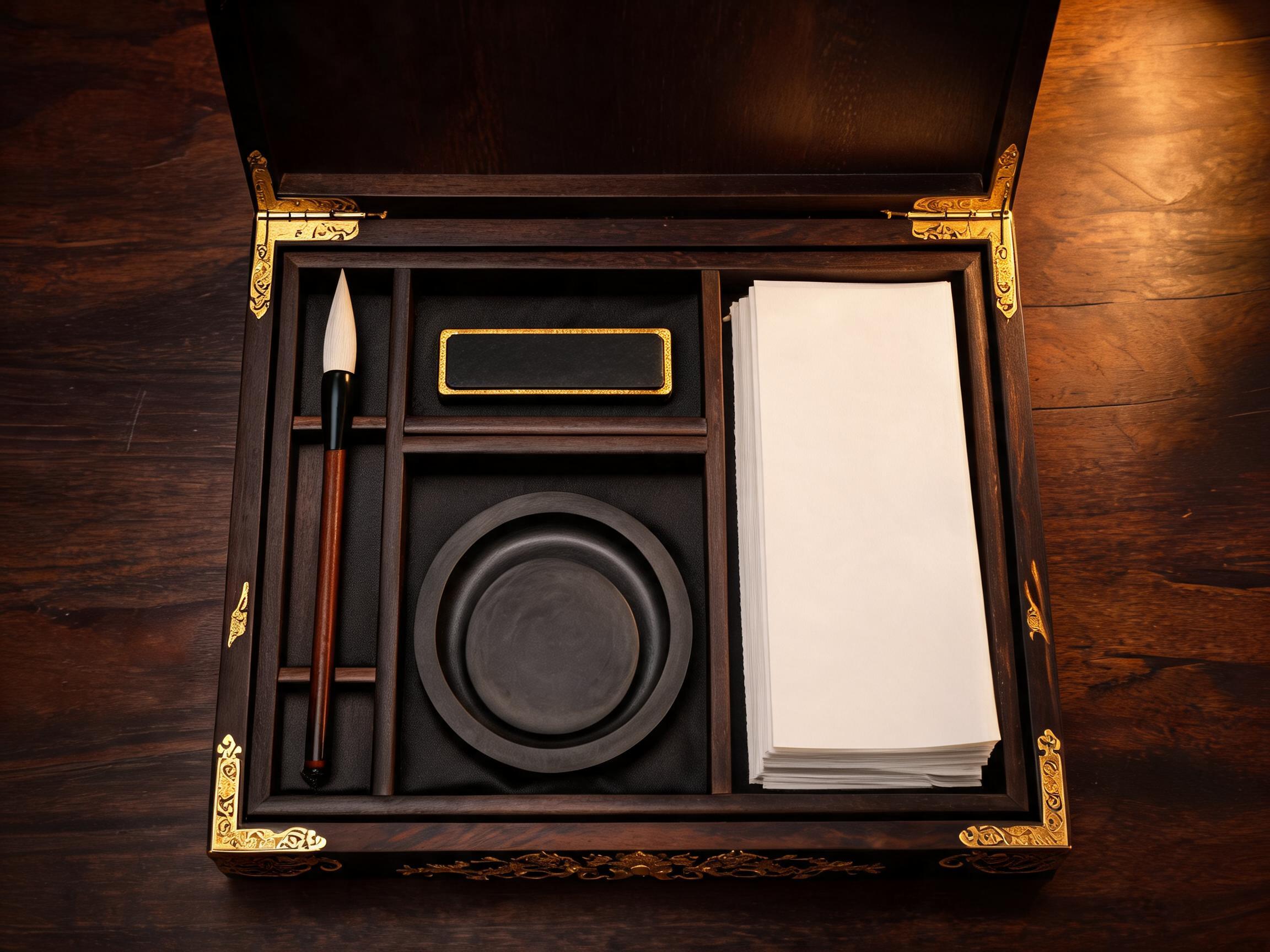
A buyer-side guide to configuring sumi painting kits by audience: a four-piece working core for cultural gifting and corporate events, upgraded materials and presentation boxes for VIP and diplomatic gifts, carved stone collectibles for institutions, and event-specific branding for exhibitions. Covers what each configuration is actually for, where the trade-offs sit, and what to confirm with the supplier before ordering.
A sumi painting kit sold to a gift retailer and one sold to a corporate events team are not the same product. The four working pieces overlap, but the buyers want different things from the desk set around them: durability for handling, presentation for gifting, or a collectible object that sits outside a working kit entirely. This guide maps configuration choices to buyer types so an importer can specify a kit that matches the order rather than guessing at the middle.
Search volume for the term is modest, and that is informative rather than discouraging. Buyers who look for a sumi painting kit are usually not browsing photographs of brushes; they are assembling a gift, a program, or an institutional acquisition, and they need to know what belongs inside the box. The configuration discussion below treats each option as a distinct purchasing decision, not a ladder of good, better, best.
Key takeaways
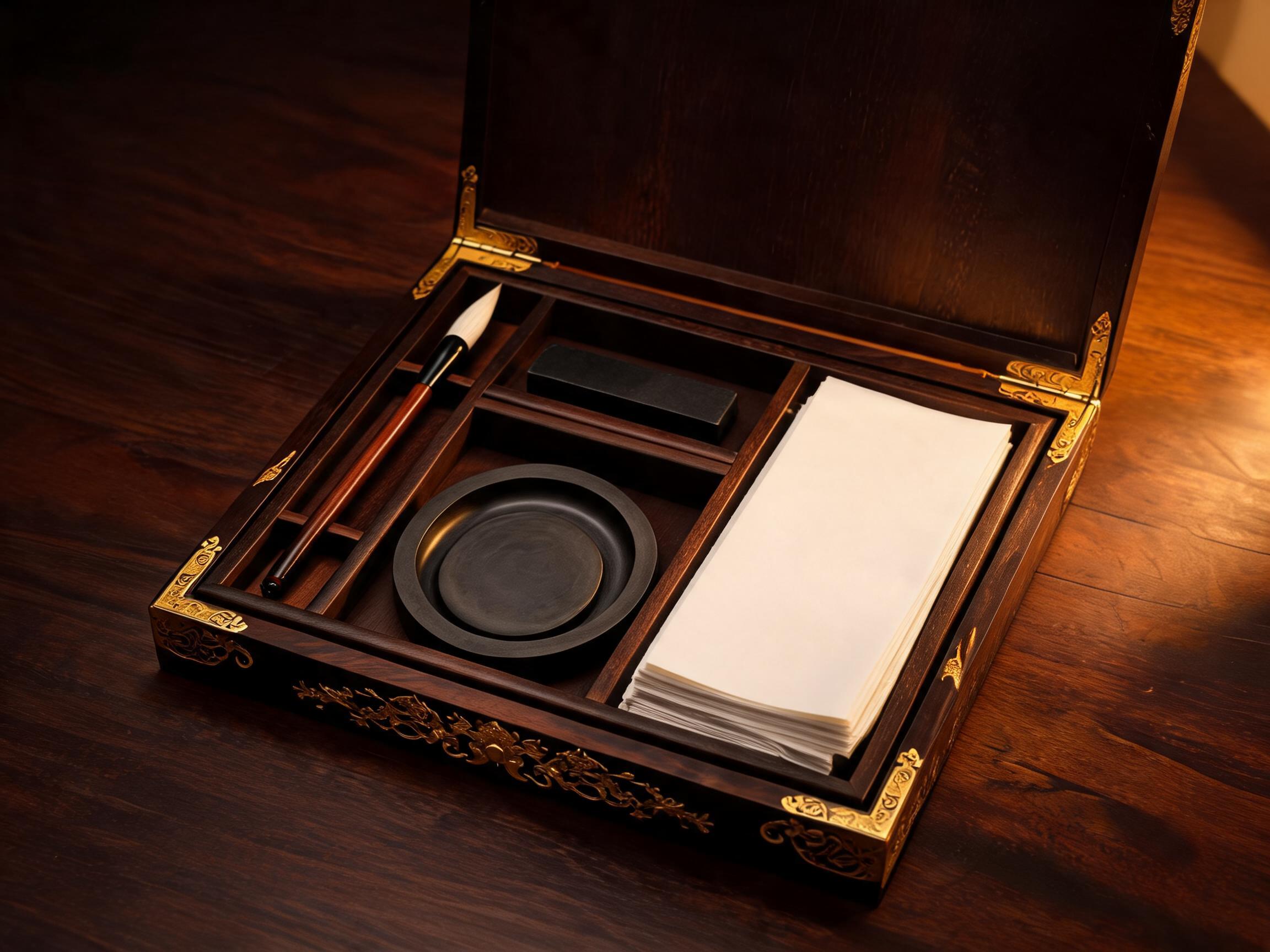
- The working core is four pieces: brush, ink stick, inkstone, and Xuan paper. Everything else in a desk set exists to support, protect, or present those four.
- Standard cultural-gifting kits and custom-themed event kits share the same core; they differ in packaging, branding, and how the ink stick is patterned.
- Premium gifting changes material quality (gold-edge ink stick, selected Duan inkstone) and box quality, which changes who can present the kit.
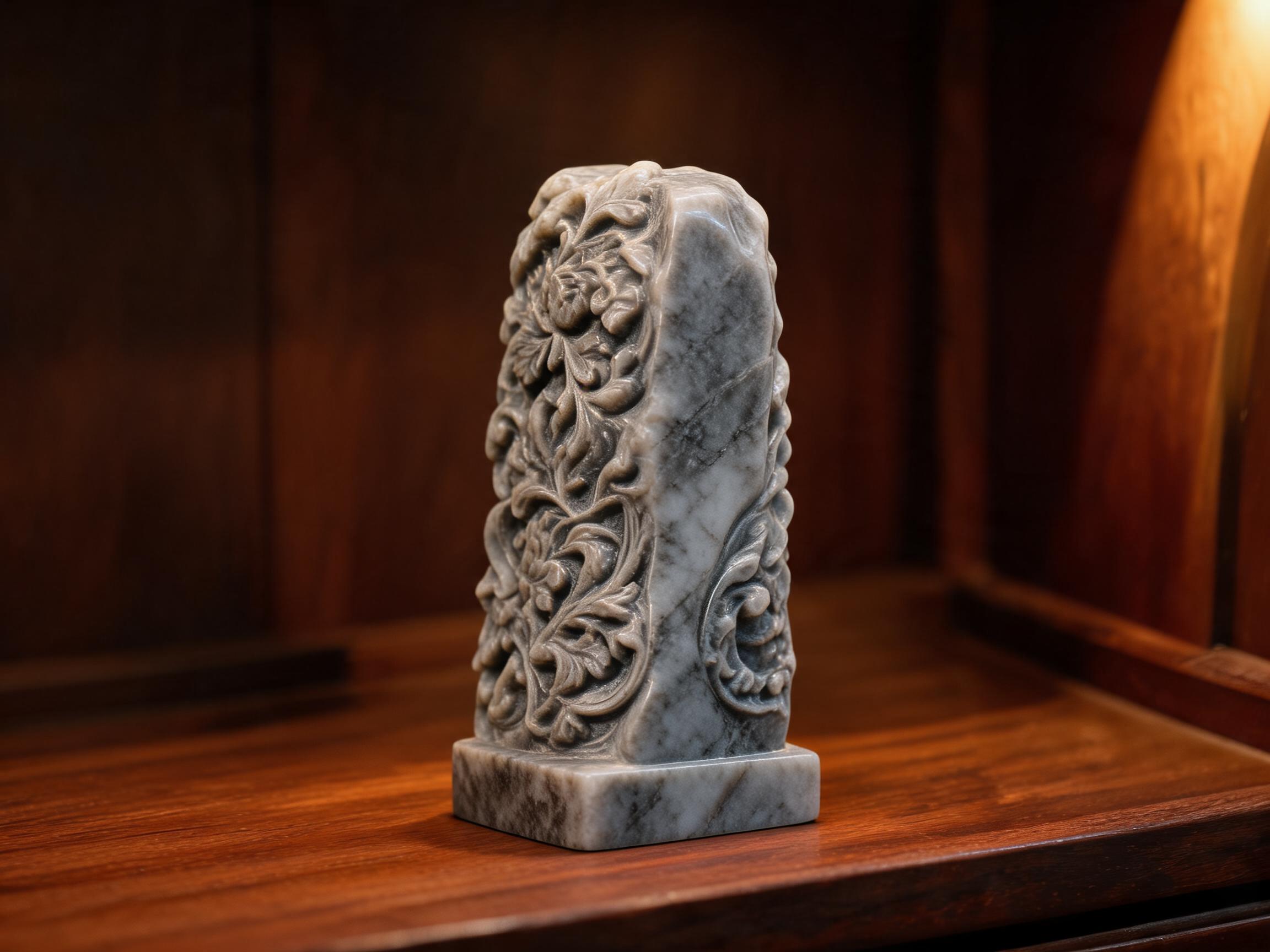
- Collectors and cultural institutions often buy a carved stone decorative piece, which is a display object with documentation, not a repackaged working kit.
- Piece counts, finishes, and certification details beyond what each product summary states must be confirmed with the supplier.
Start with the four-piece core, because every other decision references it
A functional East Asian ink-painting and calligraphy set depends on four components working as a unit. The brush carries the line. The ink stick is ground against the inkstone with water to produce fresh ink. The Xuan paper receives that ink and determines how much edge diffusion the brushstroke shows. Remove any one and the buyer has a souvenir, not a kit.
The Complete Scholar Desk Set (SKU GMO-SDS-001) is built around exactly this combination — ink stick, inkstone, brush, and Xuan paper — presented in a custom box. That configuration is described as being designed for cultural gifting and corporate events. For a retailer stocking a gift line, or an event organiser needing a presentable set that a recipient can actually open and use, this is the reference point. It answers the basic question: what is the minimum a kit must contain to be a working set rather than decoration?
Buyers comparing kits should check two things on the core before discussing anything else. First, whether the paper is Xuan paper rather than a generic drawing sheet. Second, whether the inkstone is sized and surfaced appropriately for the ink stick supplied — an inkstone too small for the stick slows grinding and makes the kit frustrating for a first-time user. Both are specifications to confirm with the supplier against the exact SKU, not assumptions drawn from the category in general.
Match the configuration to the buyer type
Four buyer types recur in this category. Each one stresses a different part of the desk set, and the sensible approach is to specify the kit that carries the right stress rather than one that compromises across all of them.
| Buyer type | What they are actually buying | Configuration emphasis | Relevant product |
|---|---|---|---|
| Gift retailers and cultural-gift importers | A sellable, presentable working kit | Four-piece core, clean box, consistent quality across the order | Complete Scholar Desk Set (GMO-SDS-001) |
| Corporate and diplomatic gifting | A gift that reads as considered and elevated | Upgraded ink stick and inkstone, luxury presentation box | Premium Scholar Desk Gift Set (GMO-SDS-003) |
| Exhibitions, museums, and event programs | A kit that carries the event's identity | Event-specific packaging, branded ink stick patterns | Custom-Themed Scholar Desk Set (GMO-SDS-005) |
| Collectors and cultural institutions | An object to display and document, not to paint with | Selected natural stone, structural testing, origin certificate | Carved Stone Decorative Piece (GMO-CO-002) |
Gift retail and cultural-gift importers
This buyer needs repeatable quality and a box that survives retail handling. The trade-off is straightforward: spend the budget on the four working pieces and on box durability, not on surface decoration. A retailer who buys on presentation alone frequently ends up with kits that photograph well and disappoint on opening. The GMO-SDS-001 configuration keeps the emphasis on the core components.
Market context matters here. Importers serving Chinese communities in the Americas, Southeast Asian gifting markets, and Central and Eastern European cultural retailers are often selling to recipients who know what a kit should contain. Those recipients will notice a missing or undersized inkstone immediately. Ask the supplier to confirm component sizes against the SKU rather than against a category photo.
Corporate and diplomatic gifting
The Premium Scholar Desk Gift Set (SKU GMO-SDS-003) moves the specification upward in two places: a gold-edge ink stick and a selected Duan inkstone, both housed in a luxury gift box. The distinction from the standard set is material grade and presentation, and both matter when the recipient is a guest, a partner, or an official counterpart.
The honest trade-off: a premium kit costs more per unit, and the extra value sits in materials and packaging rather than in a larger piece count. If a buying committee is comparing quotes, the premium set will not win on price. It wins where the gift's role requires visible quality — and that requirement should come from the buyer, not be manufactured by the supplier's description.
Exhibitions and branded event programs
The Custom-Themed Scholar Desk Set (SKU GMO-SDS-005) keeps the working core and applies event-specific packaging and branded ink stick patterns. For a museum shop running a temporary exhibition, or a company distributing kits at a cultural event, the branding is the point — the kit becomes a record of the occasion rather than a generic gift.
Two things need settling before a custom order makes sense. First, artwork and approval: the buyer supplies the design, and the supplier's file requirements and proofing steps need to be confirmed. Second, timing: custom packaging sits on the critical path, so the production schedule should be agreed against the event date, not approximated. Neither of these is a reason to avoid custom kits; they are simply the parts of the order that cannot be left implicit.
Extending a kit for collectors and cultural institutions
Collectors and institutional buyers are a different order type, and treating them as an upsell to a working kit usually misfires. The Carved Stone Decorative Piece (SKU GMO-CO-002) is described as selected natural stone with structural testing and an origin certificate, intended for collectors and cultural institutions. It is a display object with documentation — not a painting set.
That documentation is what institutional buyers are actually asking about. A procurement officer at a museum or cultural centre needs to know what the certificate states, what structural testing covers, and whether the accompanying paperwork can be supplied in the form the institution's records require. These are legitimate questions to put to the supplier against this SKU. A separate carved piece sits beside a working desk set in a collection; it does not replace the brush, ink, stone, and paper that constitute a usable kit.
If a single order needs both a working kit for a program and a display piece for a donor or an institution, specify them as separate line items with separate acceptance criteria. The packaging, the documentation, and the buyer's internal approval route are different for each.
What to confirm before placing an order
Several details sit outside what the product summaries establish, and they should be settled in writing rather than inferred from photographs or category assumptions.
- Component identity per SKU. Confirm which brush, which inkstone, which ink stick, and which paper grade ship with the exact item ordered. Photos of a family of kits are not a specification.
- Options and piece counts. Additional pieces or finishes beyond the stated configuration are a question for the supplier; do not publish a count the product record does not support.
- Packaging artwork workflow. For the custom-themed set, confirm file format, proofing rounds, and who approves the final print file.
- Documentation scope. For the carved stone piece, ask what the structural testing record and origin certificate contain, and whether copies can be provided with the shipment.
- Commercial terms. MOQ, lead time, pricing, and shipping terms are not fixed by this guide — confirm them with the supplier for the specific configuration and destination.
Configuring by destination market
The buyer type decides the kit; the destination market usually decides the packaging and documentation surrounding it. Importers serving Japan and Korea are often selling into a market where recipients already understand the tools, so component quality carries more weight than explanatory inserts. Buyers supplying Southeast Asian gifting and religious or temple use should confirm what presentation is appropriate for the setting rather than assuming a retail box fits. Middle Eastern corporate gifting programs tend to put weight on the box and the perceived value of the gift. Central and Eastern European cultural retailers and Chinese-community retailers in the Americas frequently need kits that explain themselves to a recipient new to the practice.
None of that changes the four-piece core. It changes the surrounding choices — insert cards, box finish, and whether the order should be configured as a retail line or a single presentation gift. Stating the market and the recipient in the inquiry gives the supplier the context needed to propose a configuration rather than a default.
The decision in one paragraph
For most gift retail and cultural-gift import orders, the four-piece working configuration is the right baseline, and the budget should sit in the components. Where the gift's role demands a visibly higher grade, the premium set with the gold-edge ink stick and Duan inkstone is the appropriate upgrade. Where the occasion itself is the message, the custom-themed set puts the budget into packaging and branding. And where the buyer is a collector or an institution, the carved stone piece is a separate acquisition with its own documentation requirements, not a larger kit. Confirm the component details, artwork workflow, and commercial terms with the supplier before committing the order.