
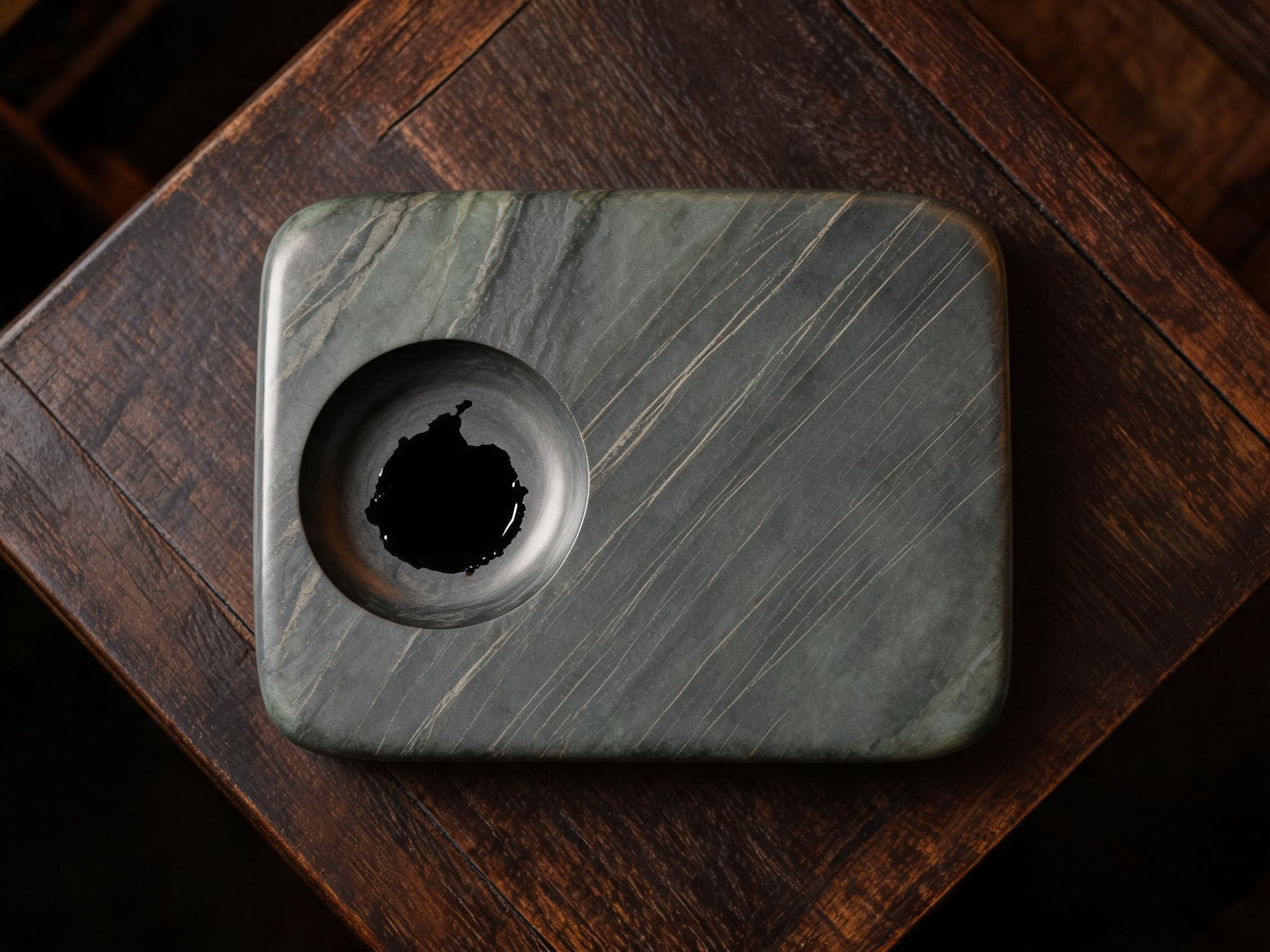
A specification checklist for Japan and Korea importers buying inkstones for sumi ink: matching stone type to the end channel, verifying the grinding surface before bulk orders, planning a size ladder for gift-ready retail, and handling storage. Written for temple and shrine supply buyers, stationery retailers, and cultural gift buyers.
Order Specification Guide
Buyers in Japan and Korea usually approach a sumi ink stone order with a channel already in mind: a temple or shrine that needs a serviceable stone for ritual use, a stationery shop building a gift display, or a cultural program sourcing sets in quantity. The stone that suits one of these is rarely the best answer for the next. This checklist lays out the specification decisions that matter before a bulk order — stone type by end channel, what to verify on the grinding surface, how to build a sensible size ladder, and how to store and handle stock after it lands.
Key takeaways
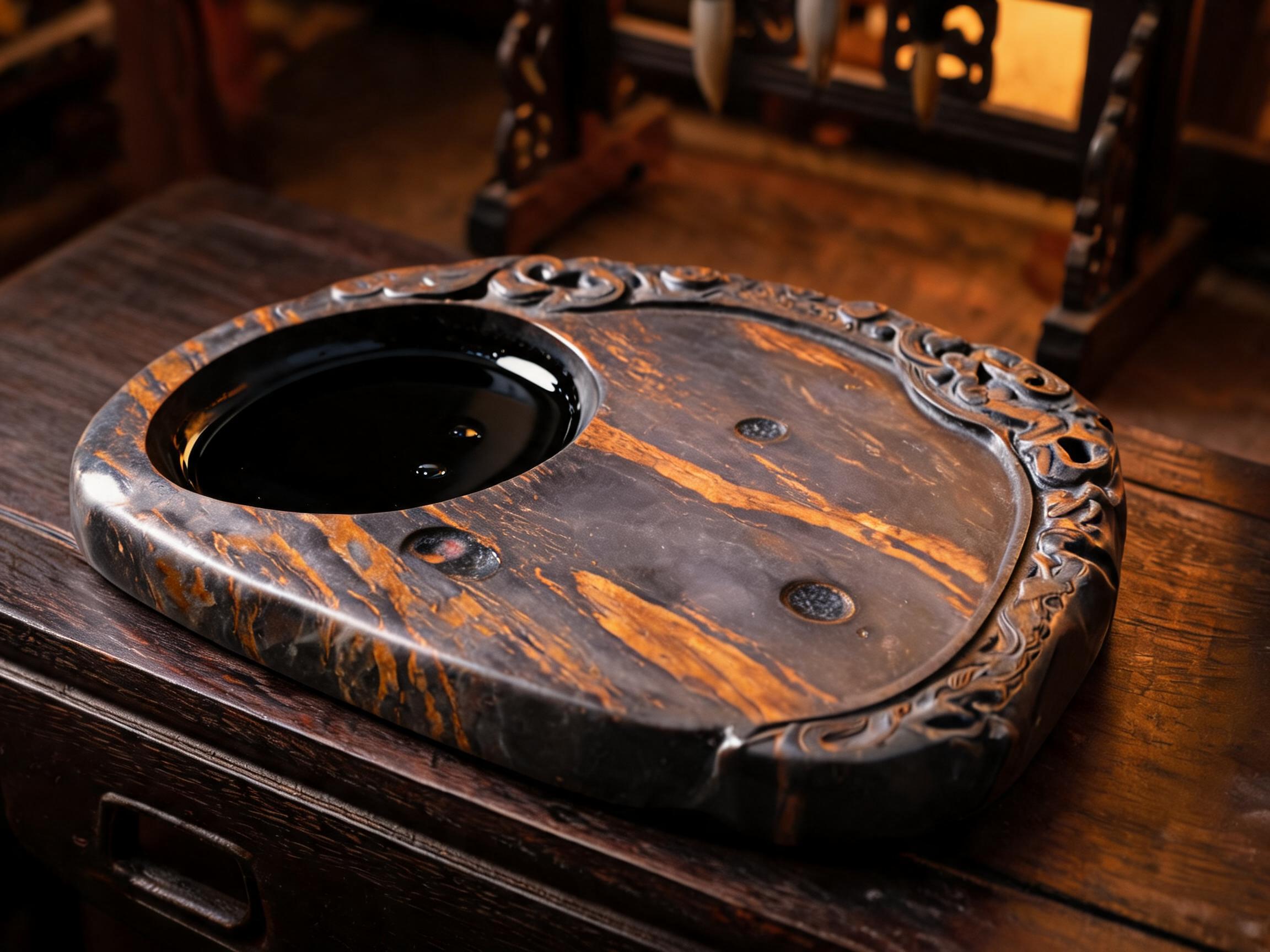
- Match the stone type to the end channel first; She and Duan stones serve different buyers.
- Verify the grinding surface as a workmanship point before committing to volume.
- Build a size ladder around gift and retail tiers rather than a single SKU.
- Confirm packaging, protective cases and storage instructions with the supplier in writing.
What this checklist covers
- Stone type by end channel
- Grinding-surface checks before a bulk order
- Size ladder and gift-ready packaging
- Storage and handling after delivery
- Order specification summary
1. Stone type by end channel
The first specification decision is not size or price — it is which stone family the channel can actually sell or use. Two Chinese stone types dominate the sumi inkstone market, and they are not interchangeable in terms of buyer expectation.
She stone: collectors and cultural institutions
She inkstones are valued for fine grain and structural integrity, and buyers who understand the material often ask about provenance before anything else. A premium She inkstone sourced from verified Wuyuan quarry sources and subject to structural integrity testing is the appropriate specification for cultural institutions, museum shops and collectors who will examine the stone closely. For this channel, ask the supplier to confirm quarry source documentation and how structural integrity is tested, and specify that stones with visible flaws in the grindable area are rejected at inspection.
Duan stone: calligraphy studios
Duan stone from Zhaoqing is the reference material for many calligraphy studios, where the stone is a working tool rather than a display piece. A classic Duan inkstone with hand-selected grain and verified Zhaoqing quarry sources is specified for its grinding performance. Studios care less about presentation and more about consistency: ask the supplier to confirm that grain selection is done by hand and that stones are checked for cracks or hard inclusions that would affect the grinding surface.
Compact format: classrooms and traveling programs
Where the stone travels — school calligraphy programs, workshop kits, traveling calligraphers — the priority shifts to durability and portability. A compact travel inkstone with an optimized grinding surface and a protective case is the practical specification. For these orders, confirm the case material and how the stone is held in place during transport, since a case that does not secure the stone protects nothing.
| End channel | Recommended stone type | What the buyer should prioritize |
|---|---|---|
| Collectors, cultural institutions, museum shops | Premium She inkstone (Wuyuan quarry sources) | Provenance confirmation, fine grain, structural integrity testing |
| Calligraphy studios and teaching supply | Classic Duan inkstone (Zhaoqing quarry sources) | Hand-selected grain, consistent grinding performance |
| Schools, workshops, traveling calligraphers | Compact travel inkstone | Optimized grinding surface, protective case, transport durability |
2. Grinding-surface checks before a bulk order
The grinding surface is where a sumi ink stone succeeds or fails in use, and it is the part buyers most often inspect only after the container arrives. Build these checks into the pre-production sample stage.
- Flatness of the grindable area. A hollow or crowned surface makes ink grind unevenly. Ask the supplier how surface flatness is checked and whether every stone in the batch goes through the same check or only a sample.
- Grain consistency. Fine grain should be consistent across the working area. Request close-up photographs of the actual production stones under even light, not of a catalogue sample.
- Inclusions and cracks. Hard inclusions scratch; hairline cracks can open with use. Ask what the rejection criteria are and who applies them.
- Edge finish inside the well. Sharp interior edges are a handling concern, particularly for school and gift channels. Confirm how the inner rim is finished.
- Grinding test in the sample. Ask the supplier to confirm how the sample was tested with a sumi stick — how long, on what surface, and what the result looked like. A supplier who can describe the test in specific terms is easier to hold to a standard than one who says only that performance is "good."
None of these checks tells you everything about a batch. They do establish what the supplier has agreed to inspect and reject, which is the basis for an inspection clause in the order.
3. Size ladder and gift-ready packaging
Retail and gift channels rarely sell a single size. Build the order around a ladder so that one container covers several price points.
| Tier | Channel role | Specification notes |
|---|---|---|
| Compact / travel | Entry gift, workshop kit, school program | Protective case is part of the product; confirm case finish and closure |
| Standard studio size | Core calligraphy retail and teaching supply | Consistent grinding surface across the batch; simple box packaging |
| Presentation size | Gift sets, cultural institution shops, collectors | Provenance documentation, presentation box, cloth or sleeve as specified |
For gift-ready retail, packaging decisions to settle with the supplier before the order include: whether the box is supplied assembled or flat, whether a cloth or sleeve is included, whether an outer carton is designed for shelf display, and whether inner packaging protects the stone through ordinary parcel handling. Ask the supplier to confirm which of these are standard and which require a separate arrangement, and request a photo of the packed unit — not the unpacked stone — for approval.
4. Storage and handling after delivery
Inkstones are stone. They chip, they stain, and they can be damaged by careless handling before they ever reach a customer. Include storage and handling instructions in your buyer specification so the channel receives them alongside the goods.
- Store stones so they do not knock against each other; a carton of loose stones will produce chipped corners in transit.
- Keep stones dry and away from sudden temperature swings; porous stone that has absorbed moisture behaves differently from dry stone.
- Clean the grinding surface with water and a soft cloth; avoid abrasive cleaners that change the surface texture.
- Dry the stone fully before storage — residual water in the well can leave mineral marks.
- For travel formats, keep the stone in its case when not in use, and check the case closure before each trip.
Ask the supplier to confirm the storage instructions they recommend for the specific stone type, and whether those instructions can be printed on a card inside the retail box. That card is often the difference between a gift that is used and one that is put away and forgotten.
5. Order specification summary
Before placing a bulk order, a written specification should cover:
- Stone type and source matched to the end channel, with the supplier confirming quarry source.
- Grinding-surface checks — flatness, grain consistency, inclusion and crack rejection criteria.
- Size ladder with the quantity split across tiers.
- Packaging — case, box, sleeve, outer carton, and whether a care card is included.
- Inspection and rejection terms for the grinding surface and for chips or cracks.
- Storage and handling instructions for both your warehouse and the retail channel.
Three product lines cover the main channels described here: the premium She inkstone for collectors and cultural institutions, the classic Duan inkstone for calligraphy studios, and the compact travel inkstone for classrooms and programs. If your channel mix is still undecided, describe the end use to the supplier and ask for a sample from each family before building the ladder.
Dimensions, weights, packing quantities and inspection terms vary by product and order. Confirm the applicable values in the specification sheet and quotation before committing to volume.