
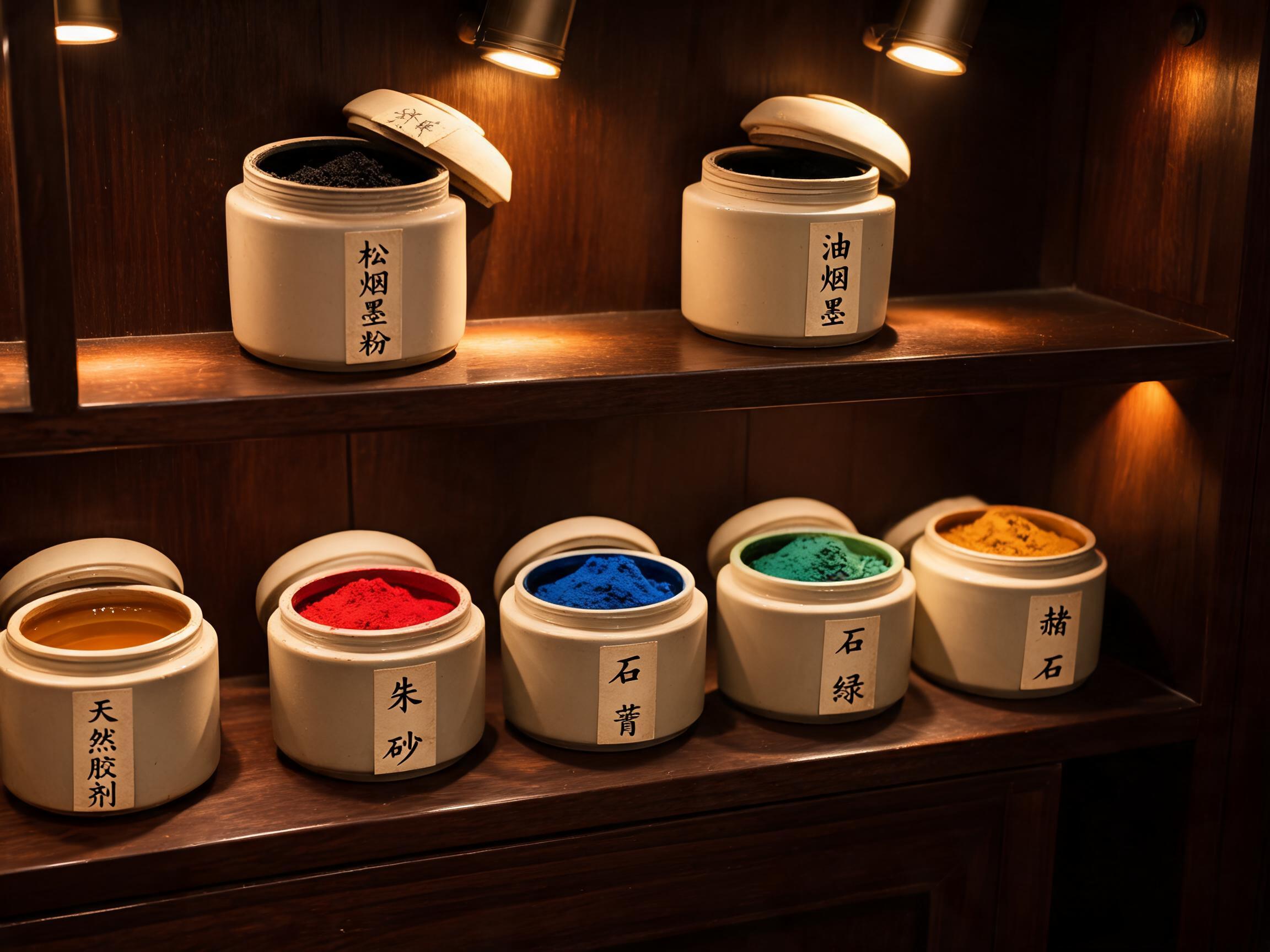
A pre-order verification guide for Japan and Korea importers of sumi ink sticks. Covers soot types, grade tiers, and a practical checklist for samples, batch consistency, weight ranges, labeling, and export documentation—using Gu Mo Craft Technology's Hui ink sticks as a reference.
Pre-Order Verification Guide
Ordering sumi ink sticks for the Japanese or Korean market is not the same as buying general stationery. Calligraphy supply chains in both countries are conservative: retailers, art academies, and temple suppliers expect the ink to behave the same way from one shipment to the next. A batch that grinds differently, smells different, or dries with a different sheen will come back as a complaint — or as a reorder that never arrives.
This guide covers what to verify before you place an order: soot type, grade tier, batch consistency, weight range, private-label options, and export documentation. Product references use Gu Mo Craft Technology, a Hui ink stick producer founded in 2011 that refines soot, mixes binders, hammers, molds, air-dries, and applies gold detailing in-house, with quality checks at each production stage.
- Why Japanese and Korean channels need different information than consumer buyers
- How soot type changes ink tone and brush feel
- Grade tiers and where each one is sold
- A pre-order verification checklist: samples, batch consistency, weight range, labeling, export documents
- FAQ and next steps
What Japan and Korea Importers Actually Need to Confirm
Japanese and Korean importers usually order sumi ink sticks for three channels: retail stationery and art supply shops, calligraphy schools and academies, and gift or temple supply. Each channel has a different tolerance for variation.
- Retail cares about packaging integrity, barcode and labeling compliance, and consistent appearance on the shelf.
- Schools and academies care about repeatable grinding behavior, predictable dilution, and per-stick weight consistency so students use the same amount of water each session.
- Gift and temple supply cares about presentation — gold detailing, box quality, and whether custom patterns or wording can be produced.
All three channels share one requirement: the supplier must be able to repeat the same product order after order. That is a production and QC question, not a marketing one. Before ordering, confirm what the factory controls in-house and what it outsources. Gu Mo Craft Technology, for example, handles soot refining, binder mixing and hammering, molding, air drying, and gold detailing internally, which is the part of the process most likely to drift between batches if it is subcontracted.
Soot Types: Pine Soot and Oil Soot
Soot is the pigment. The two main types used in Hui ink sticks are pine soot and oil soot (often called lampblack or 油烟). They are not interchangeable — they produce different ink character, and buyers should choose based on how the ink will be used.
| Soot type | Typical character | Common end use |
|---|---|---|
| Pine soot | Deeper, more matte black; traditional feel | Traditional calligraphy, seal script, practice with a heavier brush |
| Oil soot | Glossier, smoother finish; broad tonal range when diluted | Fine calligraphy, painting, gift sets |
The difference matters at the point of sale. A retailer selling to a serious calligrapher will get questions about soot type; a school buying in bulk mostly needs consistency. If you are ordering for more than one channel, split the SKUs rather than forcing one soot type to serve both.
For oil soot, the Oil Soot Hui Ink Stick Classic uses oil soot and a natural binder with a smooth polished finish, available from 30g to 150g per stick at a minimum order of 50 pcs. That weight range covers both retail single-stick sales and larger gift or academy packs. Pine soot options are available under the Premium Pine Soot Hui Ink Stick line, and for high-volume school orders there is the Student Practice Hui Ink Stick.
Grade Tiers and Where They Fit
Hui ink sticks are generally discussed in three practical tiers for import purposes. These are commercial categories, not official standards — suppliers may use different names — so treat them as a way to align your catalog with production.
Practice grade
Built for volume use: schools, workshops, and beginner sets. The priority is consistent grinding and predictable behavior at a low unit cost. Packaging is usually simple. This is where the Student Practice Hui Ink Stick fits.
Standard grade
The core retail product. Good finish, stable quality, suitable for general calligraphy buyers and art supply shops. This is the tier most importers build a catalog around.
Premium and gift grade
Selected soot, refined finish, gold detailing, and presentation packaging. Sold as single pieces or in boxed sets, often for gifting or temple supply. Premium pine soot and high-end oil soot products sit here.
Match the tier to the channel before you negotiate price. A school that receives premium gift-grade stock will not reorder at that price; a gift buyer who receives practice-grade stock will return it. Getting the tier wrong is more expensive than getting the price wrong.
Pre-Order Verification Checklist
This is the part that determines whether the second order happens. Run through each item before you commit to a purchase order.
Samples and reference retention
- Request physical samples of each grade and soot type you plan to order — not just photos.
- Keep one sample stick per SKU as a sealed reference. Label it with the date and batch number.
- Confirm the supplier can pull batch records that match the sample batch.
Batch consistency
- Ask how batch-to-batch consistency is controlled. Gu Mo Craft Technology runs inline QC at each production stage and can provide batch-level QC photo reports — ask to see what such a report actually contains before you rely on it.
- Confirm weight tolerance per stick. Ink sticks are air-dried, so weight can shift; ask what range the supplier guarantees.
- Ask whether surface finish, gold detailing, and embossing are checked per batch or only per run.
Weight range and unit configuration
- Confirm the weight options available for each SKU. The Oil Soot Hui Ink Stick Classic, for example, is offered from 30g to 150g per stick; verify which weights your chosen grade supports.
- Decide whether sticks ship individually boxed or in bulk, and confirm this is reflected in the quotation.
- Check minimum order quantity per SKU and per weight. MOQ can differ by weight and by customization level; the Classic oil soot line starts at 50 pcs.
Private label and packaging
- Confirm what can be customized: pattern, size, and packaging. OEM work usually includes custom patterns, sizes, and packaging — but confirm the exact scope before design files are exchanged.
- Ask how many rounds of artwork approval are included and who owns the tooling or mold if a custom shape is produced.
- For gift boxes, confirm whether the box is produced by the same factory or sourced elsewhere, since that affects lead time and consistency.
Export documentation
- Confirm which export documents the supplier provides as standard and which are project-specific.
- Match the document list to your customs broker's requirements for Japan or Korea — do not assume the supplier's standard set covers your port.
- Clarify HS code classification for ink sticks in your destination country with your broker; classification can affect duty and licensing.
- Confirm labeling language requirements before printing. Retail packaging in Japan and Korea typically needs destination-language labeling; verify who prepares the text and who approves it.
Choosing a Supplier: What Separates a Reliable One
Most sumi ink stick suppliers can show a catalog. Fewer can answer process questions. When evaluating a supplier, ask where soot refining happens, how binder mixing and hammering are controlled, and how long sticks are air-dried. These steps determine the final character of the ink and are the hardest to keep consistent if production is fragmented.
A producer that controls soot refining, binder mixing and hammering, molding, air drying, and gold detailing under one roof — with inline QC at each stage — has fewer handoff points where variation can enter. That is the practical reason to ask about process ownership, not just final inspection.
Frequently Asked Questions
What is the difference between pine soot and oil soot sumi ink sticks?
Pine soot tends to produce a deeper, more matte black with a traditional feel, while oil soot typically gives a glossier, smoother finish and a broader tonal range when diluted. The choice depends on the end user: traditional calligraphy versus fine work and painting. Confirm the soot type in writing on the order.
What weight range is available for sumi ink sticks?
Weights vary by product line. The Oil Soot Hui Ink Stick Classic is available from 30g to 150g per stick. Available weights can differ by grade and soot type, so confirm the specific weights your chosen SKU supports before ordering.
What is the minimum order quantity for Hui ink sticks?
MOQ depends on the SKU, weight, and level of customization. The Classic oil soot line starts at 50 pcs. For custom patterns or packaging, confirm MOQ separately — it may be higher than the standard SKU minimum.
Can I order custom patterns, sizes, and packaging?
OEM services typically cover custom patterns, sizes, and packaging. The exact scope — design files, artwork approval rounds, and tooling — should be confirmed with the supplier before production begins.
What export documentation should I expect?
Standard export documents vary by supplier and destination. Confirm which documents are provided as standard, then compare that list against your customs broker's requirements for Japan or Korea. HS code classification should be verified with your broker.
How do I verify batch consistency before ordering?
Request physical samples, retain a sealed reference stick per SKU, and ask for batch-level QC photo reports for the exact configuration you plan to order. Ask how weight tolerance and surface finish are checked per batch.
Next Step
Before you place a sumi ink stick order for the Japanese or Korean market, build a short verification file: one sealed reference sample per SKU, the confirmed soot type and weight range, the agreed MOQ, artwork approval terms for any private label, and the export document list checked against your broker's requirements.
If you are sourcing Hui ink sticks, review the available product lines — Oil Soot Hui Ink Stick Classic, Premium Pine Soot Hui Ink Stick, and Student Practice Hui Ink Stick — then request samples and a batch-level QC photo report for the configuration you intend to order.