
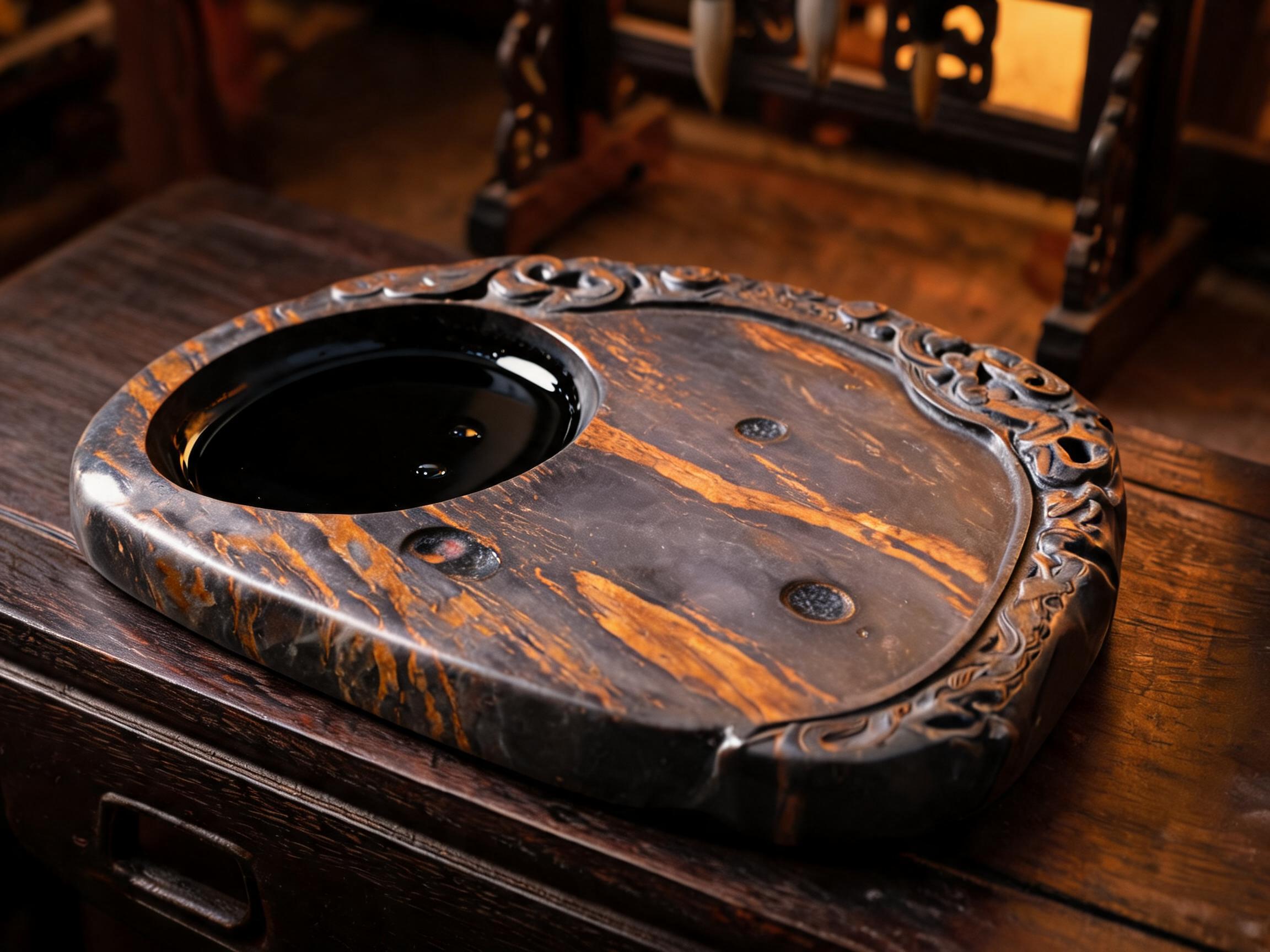
A step-by-step guide for first-time users and program buyers on setting up, grinding, and maintaining a Chinese ink stone. Includes water ratios, grinding angle, cleaning, and what to specify when ordering for classrooms or gift programs.
A Chinese ink stone (also written inkstone) is the grinding surface that turns a solid ink stick into usable liquid ink. For a beginner, the first session sets the pattern: the amount of water, the angle of the stick, and the rhythm of the grind all affect how the stone performs over months of use. For schools, gift channels, and temple supply programs, the same steps become a training routine that keeps a whole batch of stones working as intended.
This guide covers first-time setup, grinding steps, water quality, cleaning, and common mistakes. It closes with the specifications program buyers should confirm before ordering inkstones in quantity.
- Soak a new stone briefly before first use to remove surface dust from shipping and storage.
- Use a shallow pool of clean water, not a flooded surface.
- Grind in circles with light, steady pressure — the ink stick does the work, not your arm.
- Rinse with water only; soap and abrasives damage the grinding surface.
- For program orders, specify surface test documentation, per-batch consistency, and size range.
What a Chinese Ink Stone Is Made Of
Ink stones are cut from natural stone. The stone type and the quality of the grinding surface determine how quickly ink is produced and how evenly it releases. Our Classic Duan Inkstone (GMO-INK-001) is made from Zhaoqing Duan stone, hand-selected for grain, and comes with a grain grading certificate and quarry origin certificate. These stones measure 15–25 cm and are supplied at MOQ 50 with a 30–45 day lead time.
For classrooms and travel use, the Practice Inkstone (GMO-INK-003) is a natural stone model sized 10–15 cm. Its grinding surface is tested per batch, and it is rated for 2+ years of daily classroom use. MOQ is 100, with a 25–35 day lead time. The Compact Travel Inkstone (GMO-INK-005) is 8–12 cm with an optimized grinding surface and an individual protective case. Each stone is grinding-tested individually. MOQ 100, 25–35 days.
First-Time Setup
Before the first grind, a new stone needs a simple rinse. Dust from cutting, packing, and shipping can sit in the grinding surface and dull the first few ink batches.
Step 1: Rinse the Stone
Hold the stone under lukewarm running water or place it in a basin of clean water. Use your hand or a soft cloth to wipe the grinding surface. Do not scrub with a brush or abrasive pad. The goal is to lift loose dust, not to polish the stone.
Step 2: Soak Briefly
Let the stone sit in clean water for a few minutes. Natural stone can absorb a small amount of water, which helps the first grind feel smoother. A short soak is enough; long soaking is unnecessary and can soften the stone's edges over time.
Step 3: Dry Naturally
Remove the stone from the water and let it air-dry on a cloth. Do not use heat or direct sunlight to speed drying. Once dry, the stone is ready for its first grinding session.
Water Amount and Grinding Steps
The most common beginner mistake is using too much water. A thin layer of water is enough to carry the ink particles.
How Much Water
Add water drop by drop to the grinding surface. For a 10–15 cm stone, a small pool about the size of a coin or two is usually sufficient to start. You can add a few drops during grinding if the ink becomes too thick.
Grinding Angle and Rhythm
Hold the ink stick at a slight angle, close to upright rather than horizontal, and move it in a smooth circle. Use light, even pressure. The friction between the stick and the stone creates the ink; pressing harder does not speed up the process and can scratch the surface.
Grind in one direction or alternate directions, but keep the motion steady. A slow, consistent circle produces finer ink than a fast, uneven scrub. Stop when the ink reaches the consistency of thin cream. If you see dry patches, add a drop of water. If the ink looks watery, keep grinding without adding more water.
Keeping Water Quality
Use clean, room-temperature water. Tap water is generally fine, but if your local water is very hard or contains visible sediment, filtered water is a better choice. Avoid hot water — it can affect both the stone and the ink stick.
Change the water whenever you start a new grinding session. Leftover water in the stone can collect dust and affect ink quality. After each session, rinse the stone and let it dry.
Cleaning and Care
- Rinse with water only. Soap, detergent, and chemical cleaners can leave residue that changes how ink behaves on the stone.
- Use a soft cloth or your hand. Abrasive pads, steel wool, and stiff brushes can wear down the grinding surface.
- Dry flat. Store the stone in a dry place, away from direct sunlight and heat sources.
- Protect the surface. If the stone comes with a protective case, use it during storage and transport. The Compact Travel Inkstone includes an individual protective case for this purpose.
- Do not stack heavy objects on the stone. Natural stone can chip at the edges if struck or overloaded.
Common Mistakes That Damage Stone or Ink
- Grinding with too much water. This dilutes the ink and makes it hard to reach a usable consistency.
- Using heavy pressure. Pressing hard does not produce ink faster and can scratch the grinding surface.
- Skipping the first rinse. Dust and packing residue can contaminate the first ink batch.
- Letting ink dry on the stone. Dried ink can be difficult to remove and may leave a film. Rinse after each session.
- Using soap or abrasives. These strip the surface and change its grinding characteristics.
- Storing the stone wet. Prolonged moisture can affect the stone over time. Let it air-dry before storage.
What Program Buyers Should Specify When Ordering Inkstones
Schools, gift channels, temple supply programs, and resellers need consistency across a batch. The following specifications help ensure that every stone in an order performs as expected.
| Specification | Why It Matters | What to Ask For |
|---|---|---|
| Surface test | Confirms the grinding surface produces ink consistently across the batch. | Per-batch grinding surface test documentation. The Practice Inkstone is tested per batch; the Compact Travel Inkstone is tested per stone. |
| Per-batch documentation | Helps you verify that the stones received match the approved sample. | Batch records that identify the production run and surface test results. |
| Size range | Affects storage, shipping weight, and intended user group. | Confirm the size range for your program: 8–12 cm (Compact Travel), 10–15 cm (Practice), or 15–25 cm (Classic Duan). |
| Stone type and origin | Different stones have different grinding characteristics and price points. | For Duan stone, ask for grain grading and quarry origin certificates, as supplied with the Classic Duan Inkstone. |
| MOQ and lead time | Affects planning for school terms, gift seasons, and temple calendars. | Practice Inkstone: MOQ 100, 25–35 days. Classic Duan Inkstone: MOQ 50, 30–45 days. Compact Travel Inkstone: MOQ 100, 25–35 days. |
Lead times and MOQs are as stated for each product. Confirm current terms with the supplier before finalizing a program order.
FAQ
How often should I clean my ink stone?
Rinse it after every grinding session. A deeper rinse with clean water once a week is enough for regular use.
Can I use any water for grinding?
Clean, room-temperature water is best. Avoid hot water and water with visible sediment.
My stone feels rough after a few uses. Is that normal?
Some change in surface feel is normal as the stone wears in. If the surface feels uneven or stops producing ink evenly, stop using it and check with your supplier about surface care.
How do I choose between the three inkstone models?
Match the stone to the user and setting. The Compact Travel Inkstone (8–12 cm) suits individual use and travel. The Practice Inkstone (10–15 cm) is sized for classroom and daily practice. The Classic Duan Inkstone (15–25 cm) is a larger, hand-selected stone with grain and origin documentation, suited to gift and display programs.
Next Steps for Program Buyers
If you are sourcing inkstones for a school, gift, or temple program, start with a sample from the model that matches your size and documentation needs. Confirm the surface test documentation, per-batch records, and size range before placing a bulk order. For product details and current terms, see the Practice Inkstone, Classic Duan Inkstone, and Compact Travel Inkstone pages, or contact the supplier with your program requirements.