
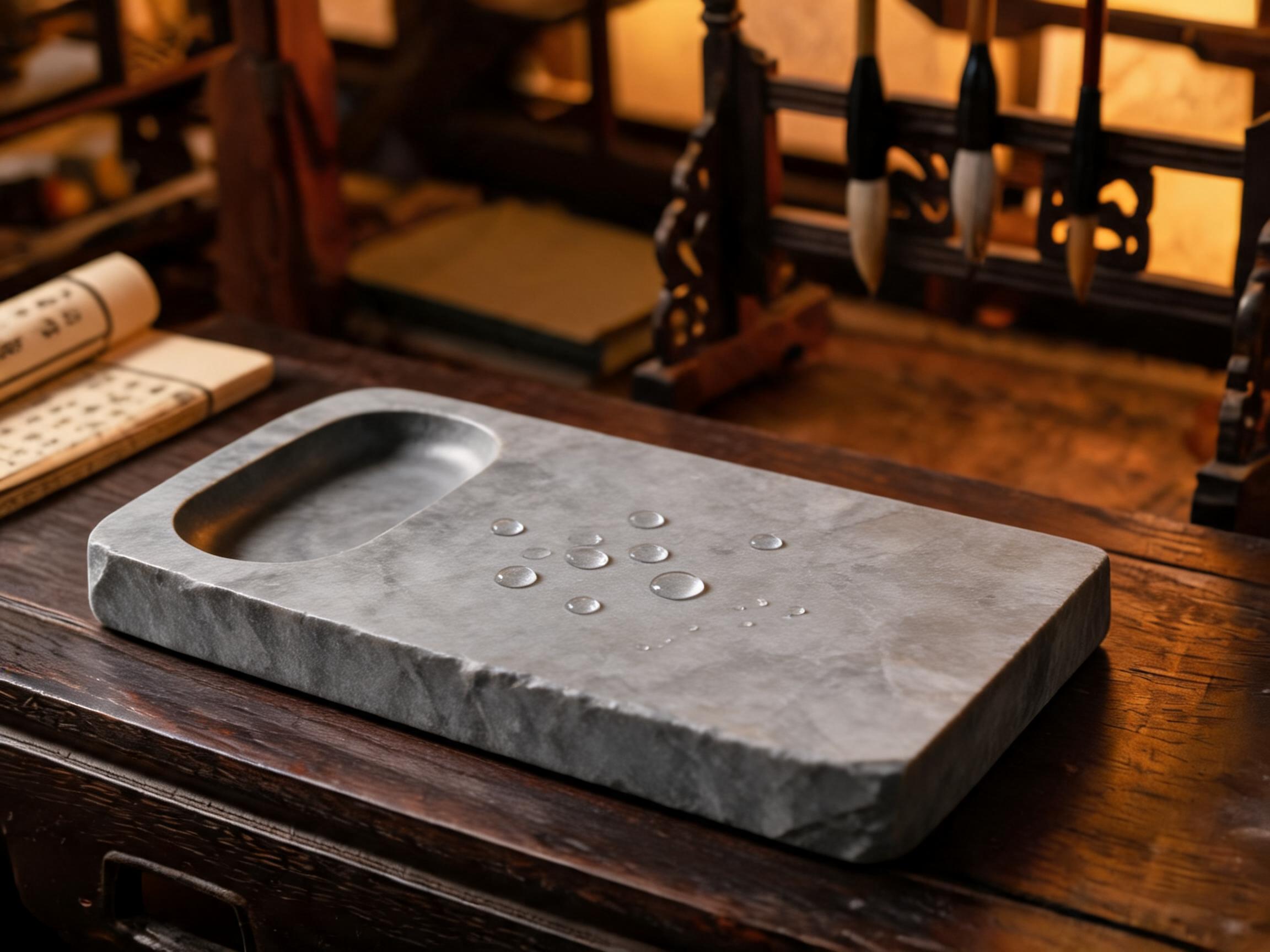
A practical selection guide for overseas B2B buyers—calligraphy schools, stationery distributors, gift retailers and temple supply buyers—covering why stick ink is ground on a stone, what to check in the grinding surface, how Duan, She and practice-grade stones differ, and how to match format and portability to your program type.
Buyer's Guide · Ink Grinding Stone
An ink grinding stone is not an accessory—it is the working surface that turns a solid ink stick into usable liquid ink. For schools, distributors, gift programs and temple supply buyers, the stone you pair with your ink sticks decides how consistently students and calligraphers can work, how much preparation time each session takes, and how well the product holds up in storage and transport. This guide walks through the selection criteria that matter when sourcing an ink grinding stone for stick ink, and how to match a stone to the program you are buying for.
- Stick ink must be ground on a stone with water; the stone's surface controls ink flow consistency.
- Surface feel and grain uniformity matter more than decorative carving for daily grinding.
- Duan and She stones serve collectors and institutions; practice-grade stones serve classrooms and bulk supply.
- Format and portability—studio size vs. travel formats with a protective case—should follow how the stone will be used.
- Match the stone to your program type before comparing individual SKUs.
Why Stick Ink Is Ground on a Stone
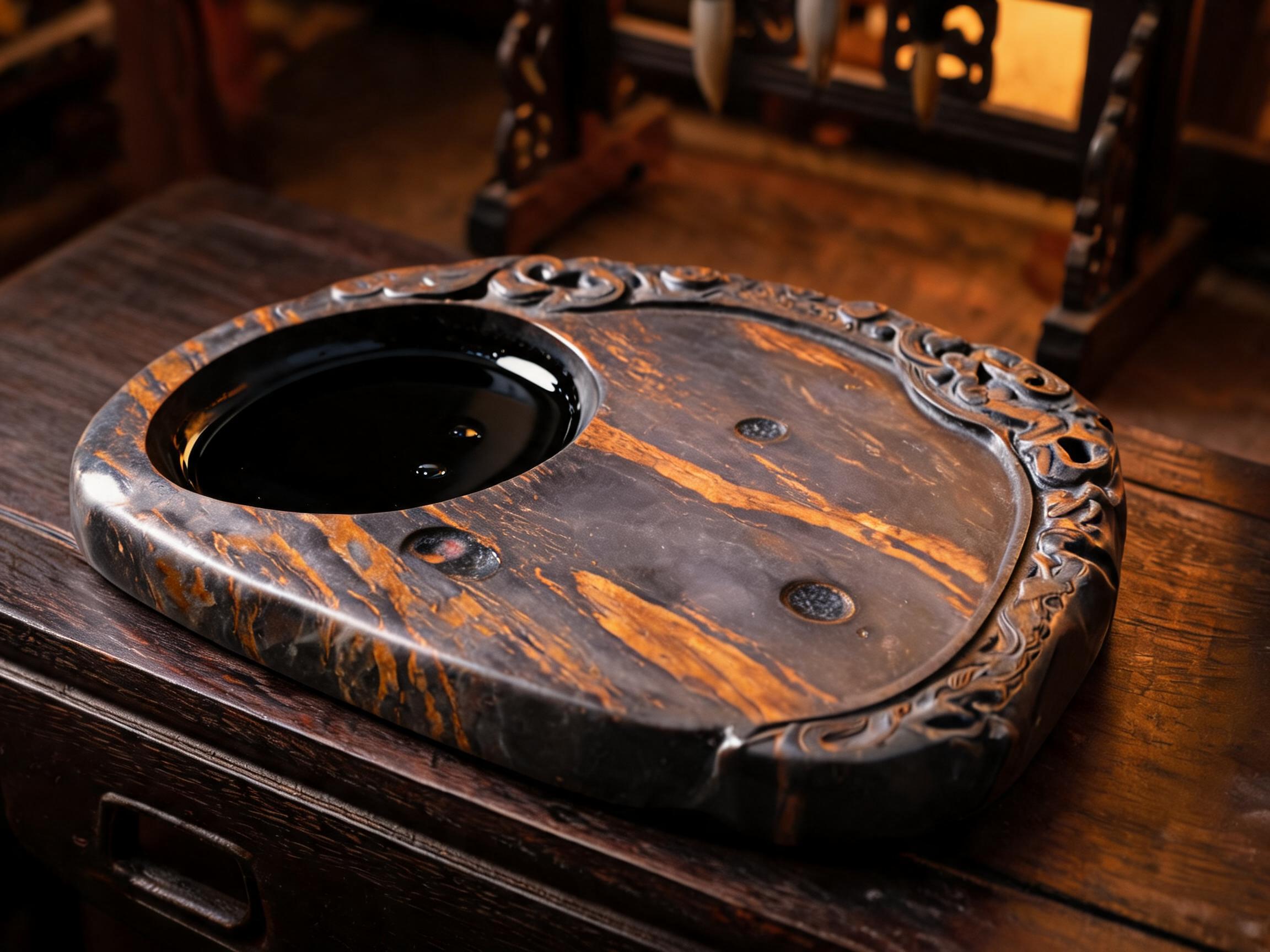
An ink stick is a solid block of soot-based ink. To use it, you place a small amount of water on the stone and grind the stick against the surface until the ink reaches the desired concentration. The stone's role is to abrade the stick evenly and hold the resulting liquid ink in the reservoir area. A consistent grinding surface means the stick wears down predictably and the ink reaches working consistency without grit or uneven patches. For a school running dozens of sessions, that consistency is the difference between a smooth lesson and constant re-grinding; for a collector, it is the difference between a stone that serves the ink and one that distracts from it.
What to Check in the Grinding Surface
Surface feel and consistency are the first things to evaluate, because they directly affect how the stick wears and how the ink behaves.
- Uniform grain. A stone with even grain grinds the stick at a steady rate. Uneven grain can produce scratches on the stick or patches of ink that do not mix evenly.
- Surface feel. The stone should feel smooth enough to guide the stick without grabbing, yet textured enough to cut ink from the stick efficiently. Buyers evaluating samples should test with the ink stick they intend to sell or distribute.
- Structural integrity. Cracks, soft spots or inclusions can shorten a stone's working life. Suppliers that test stone integrity before shipment give buyers a more predictable product for resale.
- Reservoir clarity. The ink pool area should be easy to rinse and inspect; a clean reservoir helps maintain ink quality between sessions.
For classroom supply, these checks are practical: order a sample, grind a test stick, and observe whether the ink reaches usable consistency without excessive effort. For collector pieces, the same checks apply, but the stone's grain and finish are also judged as part of the object itself.
Stone Categories and What Each Suits
Ink stones are commonly discussed by their material and quarry origin. The three categories below cover the main buying decisions, from premium collector stones to practice-grade classroom supply.
| Category | What it is | Best suited to | Buyer considerations |
|---|---|---|---|
| Duan | Stone from verified Zhaoqing quarry sources, hand-selected grain, premium grinding performance | Calligraphy studios and collectors | Higher-end positioning; pair with quality ink sticks and present grain and finish as part of the value |
| She | Stone from verified Wuyuan quarry sources, fine grain, structural integrity testing | Collectors and cultural institutions | Fine grain and tested integrity support institutional and collection programs |
| Practice grade | Affordable stone with a consistent grinding surface | Calligraphy schools and educational distributors | Cost control and repeatability for bulk school supply |
The Classic Duan Inkstone is a natural choice for calligraphy studios and collectors who want a stone that performs well and reads as a premium piece. The She Inkstone Premium offers fine grain and structural integrity testing, which matters when the stone is sold to cultural institutions or assembled into collections. For schools and educational distributors, the Practice Inkstone keeps the grinding surface consistent at an affordable level, so a program can equip many students without sacrificing the basic grinding experience.
Format and Portability: Studio Pieces vs. Travel Formats
How the stone will be used should guide its format. A stone that stays on a desk in a studio has different requirements from one that travels in a case between classrooms or demonstration sites.
- Studio pieces. Larger, weightier stones suit dedicated calligraphy spaces, where the stone does not move between sessions. These are typically chosen for feel and presence, and are often paired with higher-end ink sticks.
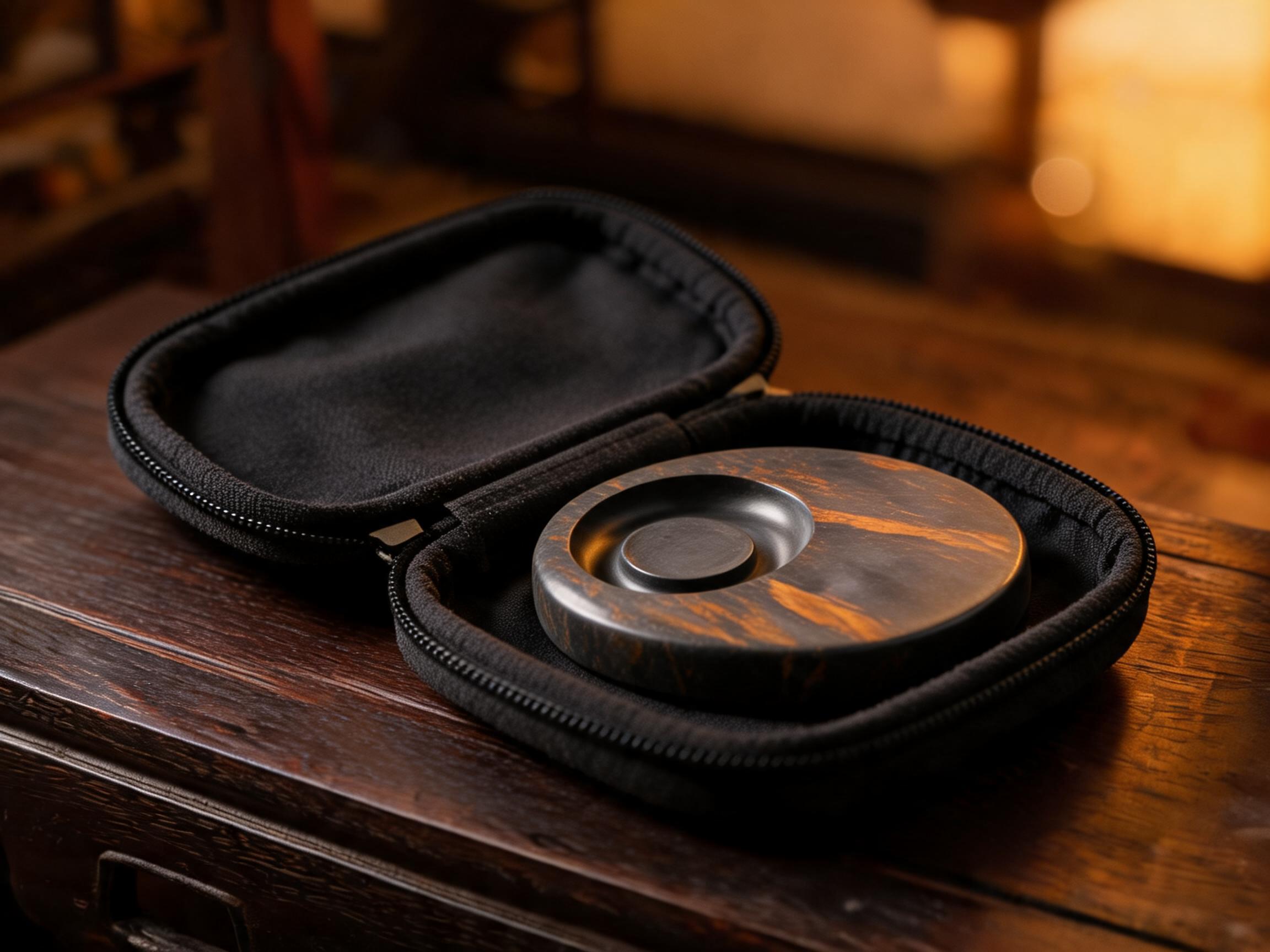
- Travel formats. A compact travel inkstone with a protective case suits traveling calligraphers, mobile school programs and demonstrations. The case protects the grinding surface and reservoir during transit.
- Program storage. For schools that store stones between sessions, case or tray design affects how well the stone is protected and how easily it can be distributed and collected.
The Compact Travel Inkstone is designed for calligraphy studios, traveling calligraphers and school programs, with an optimized grinding surface and a protective case. When a program involves movement—between classrooms, campuses or event venues—the case is a practical procurement feature, not a cosmetic one.
Matching the Stone to Your Program
The right stone depends on what the buyer is building. The same underlying product line can serve different programs in different configurations.
School bulk supply
For calligraphy schools and educational distributors, consistency and cost control are the priorities. Practice-grade stones with a consistent grinding surface let a program equip many students without variance between units. Pairing them with a student practice Hui ink stick keeps the program practical: the stick is designed for practice use, and the stone provides the surface to grind it. Bulk programs should confirm with the supplier how stones are packed and consolidated for institutional orders.
Collector and gift programs
For cultural retailers and premium gift programs, the stone is both a tool and a presentation object. The Carved Decorative Inkstone is hand-carved with patterns and supplied with a certificate of authenticity, which suits collectors and premium cultural gift programs. These stones are typically paired with higher-grade ink sticks—the supplier also lists premium pine soot and oil soot Hui ink sticks—so the gift or collection reads as a complete set. Buyers sourcing for gift programs should decide whether the stone is presented alone, with an ink stick, or as part of a larger cultural set.
Temple and cultural institution supply
Temples and cultural institutions often need stones that are durable enough for regular use and appropriate for the setting. The She Inkstone Premium, with its fine grain and structural integrity testing, suits collectors and cultural institutions. For high-volume temple supply where many practitioners grind at once, buyers may combine institutional-grade stones with practice-grade stones depending on the space and the level of use.
Putting the Criteria Together
When comparing stones from a supplier's range, a practical order of evaluation is:
- Program type. School bulk supply, gift and collector programs, and institutional supply each prioritize different features.
- Grinding surface. Check grain uniformity, surface feel and structural integrity against the ink stick you plan to pair with the stone.
- Stone category. Duan and She for premium and institutional positioning; practice grade for classroom economics.
- Format. Studio pieces for fixed calligraphy spaces; compact travel formats with cases for programs that move.
- Pairing. Match the stone grade to the ink stick grade so the set is coherent for the buyer's customer.
For specific packing configurations, mixed-stone orders or program quantities, confirm details with the supplier before finalizing a purchase order.
FAQ
Can I use any ink stick on any grinding stone?
Stick ink is designed to be ground on a stone, but the stone's surface affects how the stick wears. Match the stone grade to the intended use: practice-grade stones for student practice sticks, and higher-grade Duan or She stones for premium sticks and collector sets.
Do I need a travel case for school programs?
If stones are stored and distributed between sessions or moved between classrooms, a compact travel inkstone with a protective case reduces handling risk. For fixed studio setups, a studio-format stone may be more suitable.
What does the certificate of authenticity cover?
The Carved Decorative Inkstone is supplied with a certificate of authenticity as listed. Buyers should confirm with the supplier what the certificate states and how it is packed with the stone.
How do I evaluate a stone sample?
Grind the ink stick you plan to sell or distribute on the sample stone and observe whether the ink reaches usable consistency evenly. Check the surface for uneven grain, cracks or soft spots, and inspect the reservoir for ease of cleaning.
Next Step
Once you know whether your program needs practice-grade classroom supply, premium collector pieces, compact travel formats or carved gift stones, the next step is to compare the supplier's inkstone range against those criteria. Review the Practice Inkstone for school and distributor programs, the Classic Duan Inkstone for studios and collectors, the Compact Travel Inkstone for programs that move, and the Carved Decorative Inkstone for gift and collection programs. Confirm quantities, packing and any program-specific requirements directly with the supplier before ordering.