
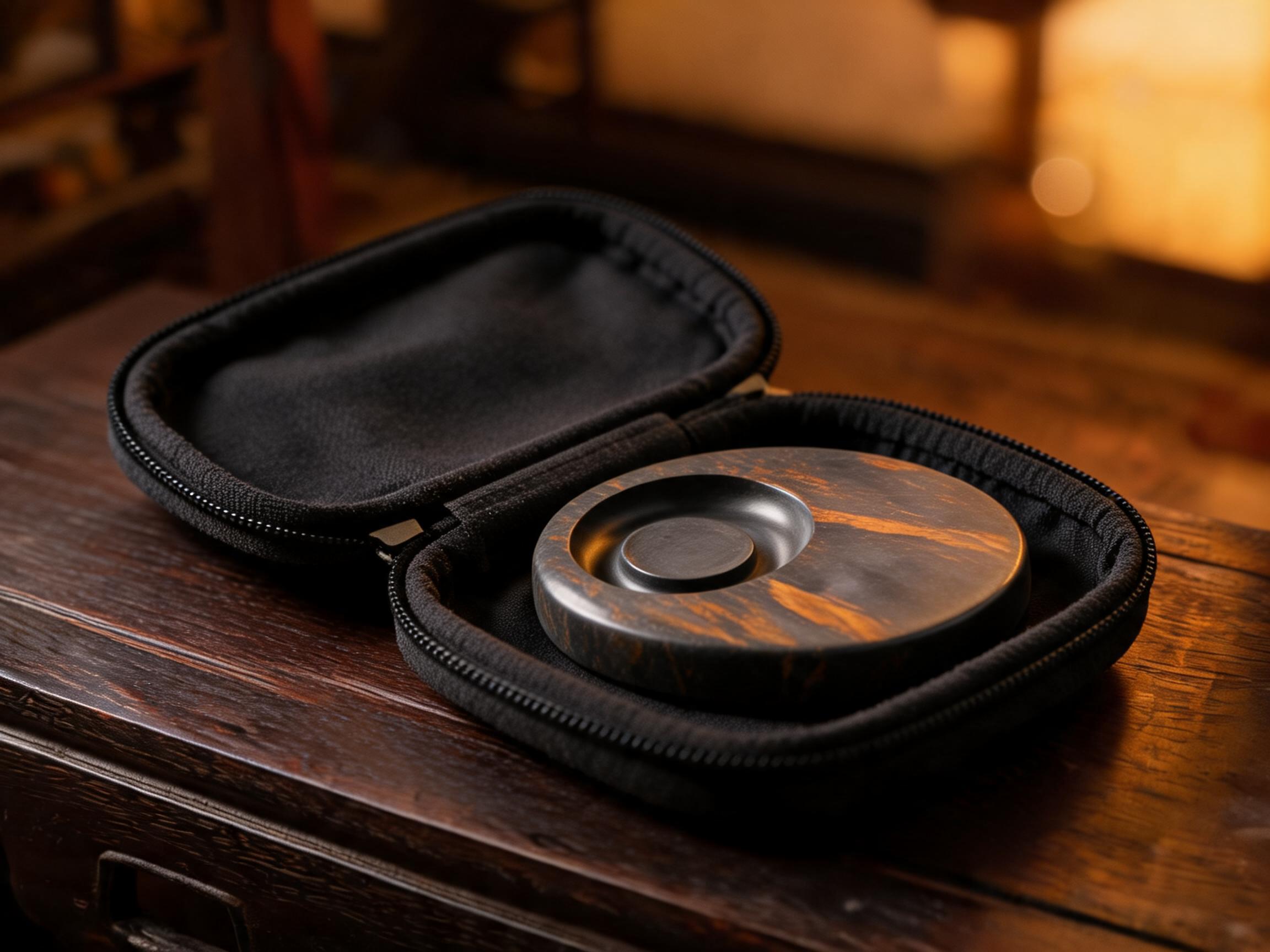
A compact inkstone only works if the grinding surface is sized for the brush you pair with it. This guide covers where the compact format belongs (classroom programs, travel workshops, gift retail), where it does not fit, the undersized-grinding-surface failure mode to test for, and the bulk-buying checks — durability, case labeling, MOQ, lead time — that program buyers should confirm before ordering. Includes a use-case comparison of the compact travel and practice inkstone lines.
Buyer's guide
The most common complaint about compact inkstones is not size. It is that the stone will not grind ink properly. A teacher opens a box of small stones before a calligraphy class, a student wets the stone, and the ink stick skates across a surface too short to build a pool. The problem is not the format itself — it is a grinding surface that was scaled down faster than the ink stick was.
This guide is for schools, mobile workshop organizers, and art-supply distributors planning bulk purchases of compact stones. It covers where the compact format is the right choice, where it is not, the grinding-surface failure mode to test for, and the checks to put into a program purchase order for both compact travel and classroom stones.
- A compact inkstone works only when its grinding surface is matched to the ink stick it will be used with.
- Compact suits classroom kits, travel workshops, and gift retail price points — it does not replace a full-size stone for large-format brushwork.
- Demand per-stone grinding test reports, not just a batch statement, and confirm that each stone ships in an individual protective case.
- For program durability, ask for the daily-use rating from the classroom line before mixing it into student kits.
When the compact format is the right choice
Compact inkstones are a logistics decision as much as an aesthetic one. A program that ships 200 student kits to a workshop venue has different constraints from a studio that keeps a full-size stone on a desk. The compact format fits three buyer situations well:
- Classroom programs: student kits need a stone that fits a desk, a tray, and a backpack without dominating them. A practice inkstone sized for daily handling is the fitting choice here, because student use means repeated wet-dry cycles and transport between classes.
- Travel and mobile workshops: a compact travel inkstone with an individual protective case is the format built for a kit that leaves the studio.
- Gift retail and price-point programs: a small stone set at an accessible retail tier reaches buyers who are not ready for a full studio setup.
The compact format is the wrong choice when the intended work is large-format brushwork. A stone whose length is measured in centimeters rather than a full desk footprint will not carry the ink volume or the arm travel that large characters demand, no matter how well it is finished. Program buyers should separate "students carry this to class" from "students paint large banners" before choosing a line.
The undersized grinding surface failure mode
The failure mode that matters is mechanical. An ink stick needs a grinding path long enough to build a usable pool of ink at the low end. Shrink the stone and shrink the path, and the stick either cannot complete a stroke cleanly or the student stops to add water again and again. In a classroom, that reads as "the stone is bad," even when the stone is well made to the wrong proportion.
The size range confirms which format is which. Compact travel stones run from 8cm to 12cm in length, with the grinding surface optimized for that compact format rather than simply cropped from a larger blank. Classroom practice stones run 10-15cm and are built around the grinding demands of daily student use.
This is why a per-stone grinding test matters for bulk orders. Batch language is easy to write; a per-stone report tells you that the individual stone in the individual case was checked for grinding performance. The compact travel line is tested stone by stone, and the grinding test reports ship with the order. The practice line is tested per batch, with a durability check alongside it. If your purchase order only says "grinding performance checked," you have not said whether one stone was checked or every stone.
Classroom program purchasing checks
Four checks decide whether a program order holds up after the first month of classes.
Durability, stated as a rated use period
Student kits are hard on stones. Ask for a durability rating in service terms, not just material terms. The practice line is rated for daily student use and carries a durability rating of 2+ years with proper care. Put that rating in the order documents so the classroom line is not substituted with a travel stone later.
Packaging that survives a backpack
Individual protective cases are not optional for travel and classroom kits. Every compact travel stone ships in its own protective case; cases can carry custom labeling from 100+ pieces. If your program includes school branding, confirm the case-labeling threshold before the artwork is drawn.
Labeling and MOQ
Both lines support program branding. The practice line supports custom label printing on packaging with the school name. Both start at MOQ 100 pieces, with custom case labeling on the compact travel line from 100+ pieces. Plan labels and cases on the same timeline as the stones, not after.
Lead time and capacity
Both lines run 25-35 days after sample approval. If a program ships on a term schedule, the sample approval date — not the purchase order date — is the one to plan backward from. Monthly capacity supports 5,000+ compact inkstones, so large program orders are not the constraint; approval timing usually is.
Inspection is a separate line item. Both lines carry AQL inspection per shipment, which gives the receiving program a defined sampling standard to point to if a carton does not match the approved sample.
Compact travel vs. classroom practice: use-case comparison
The two lines overlap in size and diverge in purpose. Match the line to the program, not to the price.
| Program need | Compact travel inkstone (GMO-INK-005) | Practice inkstone (GMO-INK-003) |
|---|---|---|
| Typical setting | Travel kits, mobile workshops, gift retail | Classroom programs, student kits |
| Length range | 8cm to 12cm | 10-15cm |
| Grinding surface | Optimized for compact format | Tested per batch |
| Testing stated | Individual test per stone; reports ship with order | Grinding surface test + durability test + AQL inspection |
| Durability | Not stated as a rated period | Rated for daily student use; 2+ years with proper care |
| Packaging | Individual protective case per stone | Packaging supports custom school-name label printing |
| MOQ | 100 pieces; case labeling from 100+ pieces | 100 pieces |
| Lead time | 25-35 days after sample approval | 25-35 days after sample approval |
Read the table by program, not by feature count. A gift-retail buyer needs the individual case and the smaller footprint; a school buyer needs the rated durability and the larger grinding path. Mixing them is the most common ordering mistake in this category.
Both lines begin with a sample. Confirm on the sample what the bulk order must repeat: grinding behavior with your ink stick, the case fit, and the label position. Case labeling and school-name printing should be confirmed at the sample stage, not added after production is scheduled.
FAQ for bulk buyers
Can a compact inkstone replace a full-size stone for a calligraphy course?
For student practice at desk scale, yes — that is the purpose of the classroom practice format. For large-format brushwork, no. Choose the format by the stroke size the course will actually produce.
How do I verify grinding performance across a bulk order?
Ask which stones were tested and what document travels with the shipment. The compact travel line is tested individually and the grinding test reports ship with the order; the practice line is tested per batch alongside a durability test. Match the evidence level to the risk in the program.
Can we put the school name on the packaging or the case?
Yes. The practice line supports custom label printing on packaging with the school name. The compact travel line supports custom case labeling from 100+ pieces. Confirm artwork and position on the sample.
What should the purchase order specify beyond MOQ and lead time?
Name the line, the length range, the testing evidence expected with the shipment, the packaging format (individual protective case where applicable), the labeling requirement, and AQL inspection per shipment. Those five lines prevent most substitution disputes.
If you are comparing a compact travel inkstone and a practice inkstone for the same program, request both samples with your own ink stick and run the same grinding test on each. Starting from a matched sample is faster than resolving a mismatch after the order ships.