A practical sourcing guide for B2B buyers evaluating Chinese inkstone manufacturers: Duan vs She stone, quality checks on grain and carving, MOQ, and OEM customization.
For overseas distributors, art supply dealers, and cultural gift buyers, finding a reliable inkstone manufacturer in China is a matter of matching stone type, quality control, and commercial terms. This guide covers the two main stone categories—Duan and She—how to verify quality in a factory sample, what MOQ and customization to expect, and how to evaluate a supplier's process from raw stone to packed shipment.
Key takeaways for buyers
- Duan inkstone (from Zhaoqing, Guangdong) is known for fine, smooth grinding; She inkstone (from Anhui/Jiangxi) is a hard, dense alternative.
- Quality checks: inspect grain pattern, test grinding feel with a real ink stick, and look at carving consistency.
- Typical MOQ for a mid-range classic Duan inkstone is 50 pieces; custom engraving is available from the same factory.
- Ask for a grain grading certificate per shipment if you need consistent quality across orders.
Duan vs She stone: what you need to know
The two most respected inkstone stones in Chinese calligraphy are Duan and She. Each has different characteristics that affect grinding performance, durability, and price—so your choice should match your target market's preferences.
Duan inkstone (端砚)
Duan stone is quarried in the Zhaoqing area of Guangdong Province. It is prized for its fine, even grain, which produces a smooth ink with a rich consistency. The stone's natural patterns—often called "eyes" or "veins"—are part of its appeal. For calligraphers, a good Duan inkstone is a long-term tool: it grinds ink quickly without being too abrasive.
She inkstone (歙砚)
She stone comes from the Shexian area (Anhui) and parts of Jiangxi. It is generally harder and denser than Duan, which means it grinds more slowly but holds a very fine edge for detailed work. She inkstones often show distinctive dark tones and subtle striations. They are a solid option for buyers who want a different price point or a stone with a harder feel.
| Feature | Duan inkstone | She inkstone |
|---|---|---|
| Origin | Zhaoqing, Guangdong | Shexian, Anhui / Jiangxi |
| Hardness | Fine, relatively soft | Harder, denser |
| Grinding feel | Smooth, fast ink release | Slower, more controlled |
| Typical buyer preference | Calligraphy purists, gift market | Those seeking a harder stone |
| Price point | Generally higher | Often more accessible |
Many factories, including Gu Mo Craft Technology, specialize in one or both types. If you are sourcing both, a single supplier with a complete production chain can simplify logistics and quality control.
How to verify inkstone quality before ordering
You are buying a product that will be judged by end users (calligraphers, students, gift recipients) on both function and appearance. Here are the three checks that matter most.
Grain and natural pattern
Look at the surface. A quality inkstone has a consistent, natural grain—not painted or artificially applied. The pattern should be visible on the grinding surface and the sides. Ask the factory to show you the actual stone before polishing; this is where you can see whether the grain is natural or a print.
Grinding feel
This is the functional test. Take a standard ink stick and grind it on the surface with a little water. A good inkstone should:
- Release ink quickly and evenly
- Not be too slippery or too rough
- Produce a smooth, consistent ink with no gritty particles
If you are ordering remotely, ask the factory for a video of this test. A reputable manufacturer will be happy to show you.
Carving and finish
Examine the carving quality, especially on decorative pieces. Look for clean lines, no chipped edges, and a smooth transition between carved and flat areas. For custom engraving (e.g., a company logo), ask for a pre-production sample to confirm the depth and clarity of the engraving.
"The stone's grain is the fingerprint of the quarry. A reliable factory can show you exactly where the stone comes from and how it is selected."
What to expect from a factory: MOQ, customization, and process
When you contact an inkstone manufacturer, you want clear answers on three commercial points: minimum order quantity, customization options, and how the production process is controlled.
MOQ and order terms
For a classic Duan inkstone in the 15–25 cm range, a typical MOQ is 50 pieces. This is a practical level for a first order—enough to test the market without overcommitting. Some factories offer lower MOQs for practice-grade inkstones, which are often used for student sets. If you need a larger order, ask about tiered pricing and lead time.
Customization and OEM
Most B2B buyers want some form of customization:
- Custom engraving – logos, brand names, or decorative motifs on the inkstone surface or box.
- Packaging – custom boxes with your branding, often in wood or cardboard.
- Size variations – adjusting the length within the 15–25 cm range to suit your market.
Gu Mo Craft Technology offers custom engraving on its classic Duan inkstone line. Always request a sample of the engraving before mass production.
Quality control and documentation
A reliable factory should be able to provide a grain grading certificate per shipment. This document confirms the quality level of the stone in that batch. This is especially important if you are selling to customers who care about the authenticity of Duan stone. Ask whether the certificate is issued by the factory or by an independent body.
Supplier evaluation checklist
Use this list when you shortlist inkstone manufacturers:
- Does the factory have a complete production chain (from raw stone to packaging)?
- Can they show you the quarry source for Duan stone?
- Do they offer a sample before bulk order?
- What is their MOQ for the product you want?
- Can they provide a grain grading certificate per shipment?
- What customization options are available (engraving, packaging)?
- What are the target markets they already serve? (e.g., Southeast Asia, Japan/Korea, Middle East, Europe, Africa)
Product lines to consider
Here are three typical product categories you might source from a Chinese inkstone factory:
| Product | Typical use | Key features |
|---|---|---|
| Classic Duan Inkstone | Calligraphy, gift market | Natural Duan stone, 15–25 cm, hand-polished, custom engraving available, MOQ 50 pcs |
| She Inkstone Premium | Serious calligraphers, collectors | Harder She stone, premium finish |
| Practice Inkstone | Students, beginners, test orders | More affordable, suitable for large volume |
Common pitfalls when sourcing inkstones
Avoid these mistakes that often trip up first-time importers:
- Choosing on price alone – a very cheap inkstone may be made from synthetic material or low-grade stone that will not grind properly.
- Not checking the grinding surface – some decorative inkstones are not actually meant for grinding; they are purely ornamental. Confirm the intended use.
- Skipping the sample – always order a sample or a small trial batch before committing to a full container.
- Ignoring packaging – inkstones are heavy and fragile. Check that the factory uses protective packaging suitable for international shipping.
Making your first order
When you are ready to move forward, contact the factory with a clear specification:
- Stone type (Duan or She) and size range (e.g., 20 cm length)
- Quantity (above MOQ)
- Customization needs (engraving, packaging)
- Target market (so they can advise on appropriate designs)
- Request a sample and a grain grading certificate for the batch
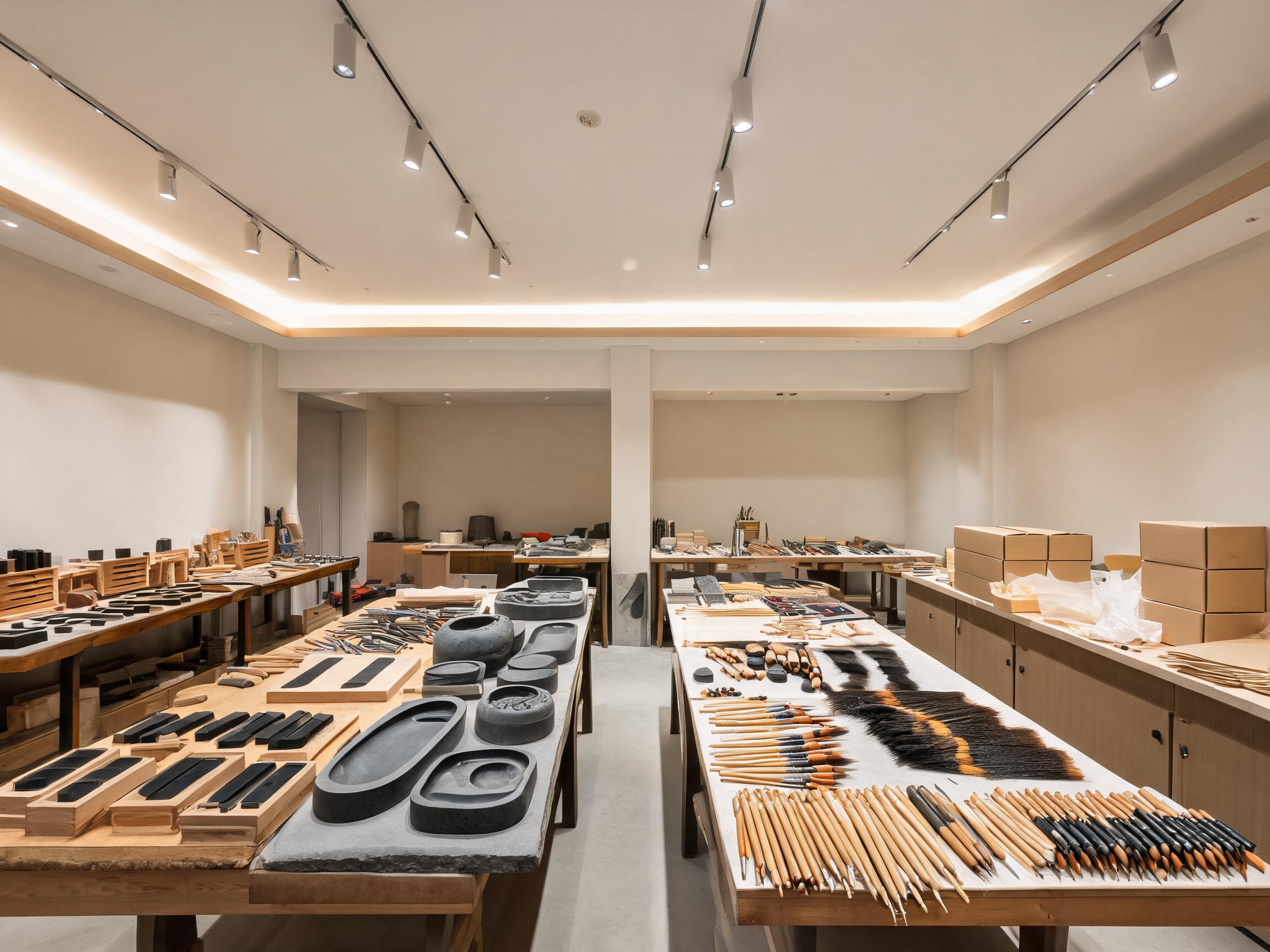
If you are sourcing from a company like Gu Mo Craft Technology, which is rooted in Duan inkstone cultural resources and has a complete industrial chain from raw material selection to packaging and shipment, you can expect a single point of responsibility for quality and delivery. Their target markets include Southeast Asia, Japan/Korea, the Middle East, Central/Eastern Europe, Africa, and the Chinese diaspora in the Americas—so they are experienced with export requirements.
Ready to source? Prepare your specifications, ask for samples, and verify the grain quality before you commit to a large order. A reliable factory will welcome your questions.