
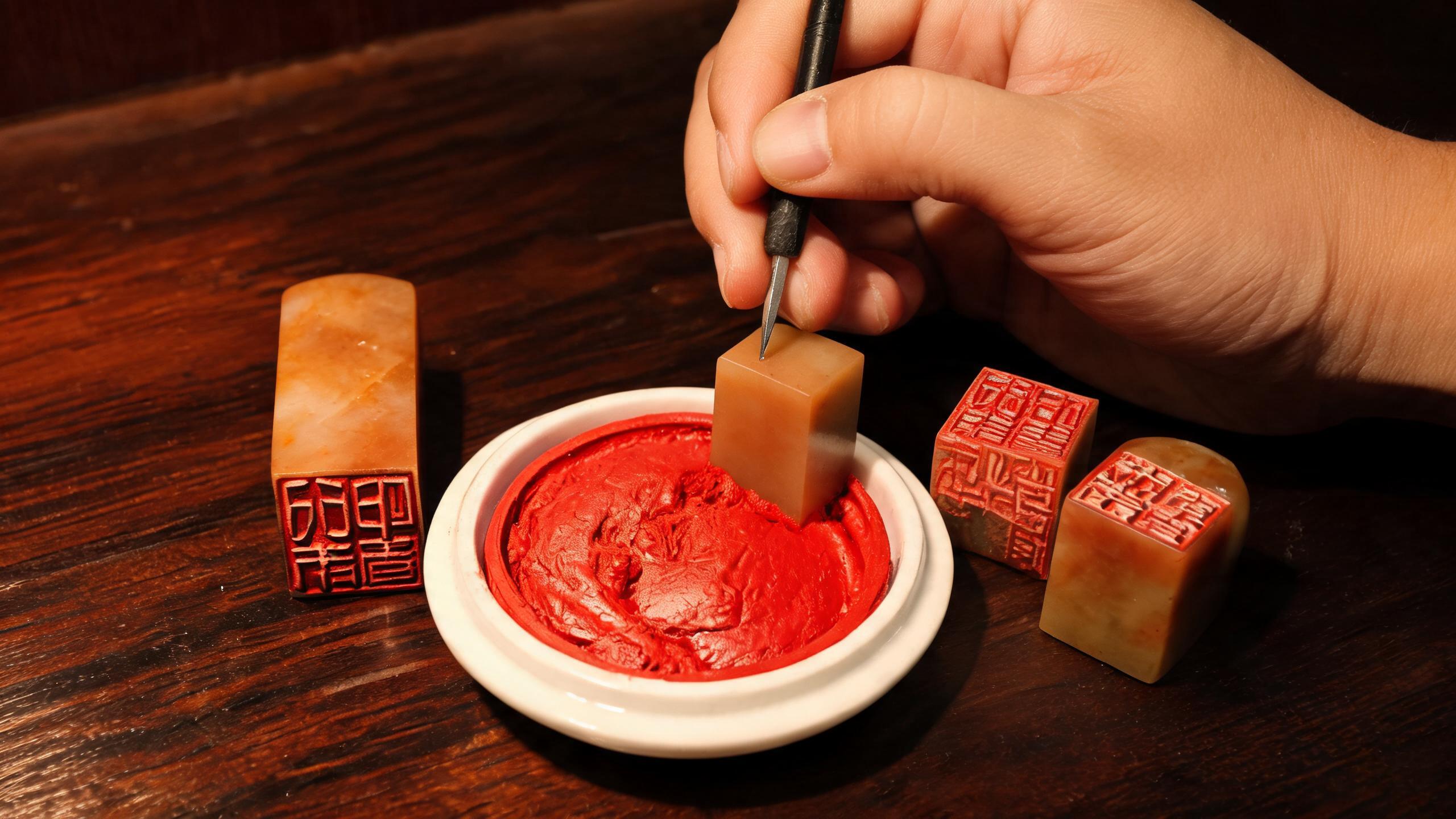
A practical guide for B2B buyers sourcing custom Chinese seal engraving services, covering the engraving workflow, name and leisure seals, Japan/Korea hanko and Chinese diaspora markets, and religious/ceremonial uses.
BUYER GUIDE
Chinese seal engraving is a niche but steady B2B import category. Buyers range from stationery retailers in Japan and Korea to cultural product distributors serving Chinese diaspora communities, plus religious and ceremonial supply chains. If you are sourcing name seal engraving wholesale or a custom seal engraving service, the decisions that matter are not about aesthetics alone—they are about material, workflow, tolerances, packaging, and compliance. This guide walks through the practical side of sourcing Chinese seal engraving as a professional buyer.
- Understand the three main seal categories—name seals, leisure seals, and ceremonial/religious seals—each with different material and finishing requirements.
- Confirm the engraving workflow (design proof → carving → inspection → packaging) and request clear MOQ and lead-time terms before committing.
- For Japan/Korea hanko markets, verify size standards, handle shapes, and red ink pad compatibility; for diaspora and religious markets, check character accuracy and material purity.
- Ask for material certificates and engraving samples, not just photos, to assess quality.
- Clarify whether the supplier offers OEM branding, custom packaging, and drop-shipping, as these affect your margin and customer experience.
1. The Custom Engraving Workflow: What to Expect
A reliable custom seal engraving service follows a repeatable process. Knowing the steps helps you set expectations with your own customers and spot weak suppliers early.
Typical workflow:
- Design proof: You send the text (name, phrase, logo) in the required script (seal script, regular script, or simplified/traditional forms). The supplier provides a digital or hand-drawn layout for approval.
- Material preparation: The blank is cut, sanded, and polished to the specified dimensions. For stone seals, this includes checking for cracks or inclusions.
- Carving: The engraver carves the design—either by hand (for high-end stone) or with CNC/laser for consistent batch production.
- Inking and testing: A test impression is taken to verify character clarity and depth.
- Inspection and packaging: Each seal is checked for defects, then wrapped with a protective case or box.
| Workflow Stage | Key Questions for Supplier |
|---|---|
| Design proof | How many revisions are included? What file formats do you accept? |
| Material | Can you provide material samples? What is the hardness and durability? |
| Carving | Is it hand-carved, CNC, or laser? What is the minimum order for each? |
| Inspection | What is your defect rate and replacement policy? |
| Packaging | What packaging options are available? Can we custom-print the boxes? |
2. Name Seals vs. Leisure Seals: Different Products, Different Sourcing
Two main product lines dominate the market: name seals (姓名章) and leisure seals (闲章). They serve different purposes and have different sourcing criteria.
Name Seals
Used for personal identification—signing documents, artwork, or official paperwork. In East Asian cultures, a name seal is often as important as a signature. Key sourcing points:
- Character accuracy: The name must be carved exactly as provided. A single wrong stroke makes the seal unusable.
- Material: Common materials include stone (e.g., balin stone, qingtian stone), wood, acrylic, and metal. Stone is preferred for high-end personal seals; acrylic is common for promotional items.
- Size: Typical sizes range from 1.5 cm to 3 cm square, with larger sizes for official or ceremonial use.
- Script: Seal script (篆书) is traditional, but many buyers request regular script (楷书) or simplified characters for readability.
Leisure Seals
Used by artists, calligraphers, and collectors to mark artwork or books. These seals often feature idioms, poetic phrases, or personal mottos rather than names. Sourcing considerations:
- Design flexibility: Leisure seals allow more creative freedom—shapes can be round, oval, or irregular, and the carving can be more decorative.
- Material variety: In addition to stone, leisure seals may use wood, ceramic, or even jade, depending on the target price point.
- Packaging: Often sold as gift items, so the box and presentation matter more than for name seals.
3. Japan/Korea Hanko Market: Specific Requirements
The Japanese and Korean markets have a strong tradition of personal seals (hanko in Japan, dojang in Korea). If you are sourcing for these markets, pay attention to the following:
- Size standards: Japanese hanko commonly use 15mm, 18mm, or 21mm diameter for personal use, with 25mm or larger for business. Korean dojang sizes are similar but may vary by region.
- Handle style: Japanese hanko often have a rounded or tapered handle, while Korean seals may have a flatter top. Confirm the handle shape with your supplier.
- Ink pad compatibility: Japanese hanko are typically used with red ink pads (shuniku). Ensure the seal surface is smooth enough to pick up ink evenly.
- Material preference: In Japan, stone and wood are traditional, but acrylic and plastic are popular for low-cost, high-volume hanko. In Korea, wood and stone are common, with a preference for darker woods.
- Engraving depth: For hanko used in banking or official documents, the engraving must be deep enough to produce a clear impression. Ask for a test impression on paper.
4. Chinese Diaspora and Religious/Ceremonial Use
The Chinese diaspora market spans North America, Southeast Asia, and Europe. These buyers often purchase seals for personal identity, cultural heritage, or business use. Religious and ceremonial seals serve a separate niche.
Diaspora Market
- Character set: Many diaspora customers use traditional Chinese characters (繁体字). Confirm whether your supplier can carve both simplified and traditional forms.
- Cultural accuracy: For names, verify the correct characters and order. A seal with a wrong character is a complete loss.
- Gift packaging: Diaspora buyers often purchase seals as gifts or for family members. Attractive packaging and a certificate of authenticity can add value.
Religious and Ceremonial Seals
These seals are used in temples, Taoist rituals, and traditional ceremonies. They may include deity names, temple names, or auspicious phrases. Key sourcing considerations:
- Material purity: Some ceremonial seals require specific materials (e.g., certain stones or woods) for ritual purposes. Ask the supplier if they can source these.
- Size and weight: Ceremonial seals are often larger and heavier than personal seals. Confirm the maximum size the supplier can produce.
- Engraving complexity: Ceremonial seals may have intricate designs with multiple characters or symbols. Ensure the supplier has experience with complex carvings.
- Compliance: For religious items, some countries have import restrictions. Check with your customs broker before ordering.
5. Sourcing Checklist: What to Ask a Supplier
Before you place an order, use this checklist to evaluate a custom seal engraving service:
- MOQ: What is the minimum order quantity for custom designs? Is it lower for standard designs?
- Lead time: How long does production take for 100, 500, or 1,000 pieces? Add shipping time.
- Material samples: Ask for physical samples of the materials you plan to order, not just photos.
- Engraving samples: Request a few finished seals with different character types to assess quality.
- Packaging options: What standard packaging is included? What are the costs for custom boxes or pouches?
- OEM branding: Can the supplier engrave your logo on the seal or the box?
- Quality control: What is their inspection process? What happens if a seal is defective?
- Export experience: Have they shipped to your target country before? Do they handle export documentation?
6. Common Mistakes to Avoid
- Assuming all seals are the same: A seal for a Japanese hanko buyer is not the same as one for a Chinese diaspora customer. Clarify the end-use before ordering.
- Skipping the proof: Always approve a digital proof or a physical sample before mass production. A verbal confirmation is not enough.
- Ignoring material quality: Low-cost acrylic may crack or lose its finish. For premium markets, invest in stone or high-grade wood.
- Not testing the ink impression: A seal that looks good in the hand may not produce a clean impression. Ask for a test on paper.
- Overlooking packaging: For gift and cultural products, packaging can make or break the sale. Budget for it.
7. FAQ
Q: What is the typical MOQ for custom name seal engraving?
MOQs vary by supplier. Some accept orders as low as 10 pieces for standard designs, while custom designs may require 50 or 100. Always confirm the MOQ for your specific design.
Q: Can I order a single prototype before bulk?
Many suppliers offer a sample or prototype service, but it may cost more per piece. Ask for the sample cost and whether it is deducted from the bulk order.
Q: What materials are best for high-end name seals?
Stone (such as balin or qingtian) is traditional and valued for its texture and durability. For a more affordable option, wood (boxwood or rosewood) is a good choice. Acrylic is best for budget or promotional items.
Q: How do I ensure the characters are correct?
Provide the exact characters in a text file, and ask the supplier to send a clear photo of the proof before carving. For names, specify the language (simplified or traditional) and the script style.
Q: Do suppliers ship internationally?
Most Chinese suppliers export worldwide. Confirm the shipping terms (FOB, CIF, etc.) and the Incoterms before you order.
8. Final Thoughts
Sourcing Chinese seal engraving is straightforward once you understand the product categories and the quality controls that matter. Whether you are buying name seal engraving wholesale for a stationery business or commissioning a custom seal engraving service for a cultural project, the key is to verify materials, approve proofs, and set clear terms with your supplier. Ask questions, request samples, and build a relationship with a supplier who can deliver consistently.
If you are evaluating a supplier, ask for their workflow, material options, and a sample order. A reputable supplier will be happy to walk you through the process.