A practical B2B sourcing guide for buyers of Shoushan seal stone wholesale. Covers stone grading systems, quality judgment criteria, collectible value factors, and supplier selection for gift and collector channels. Includes comparison tables, a supplier checklist, and FAQ.
BUYER GUIDE · SHOUshan STONE WHOLESALE
Why Shoushan Stone Matters for Your Gift & Collectible Line
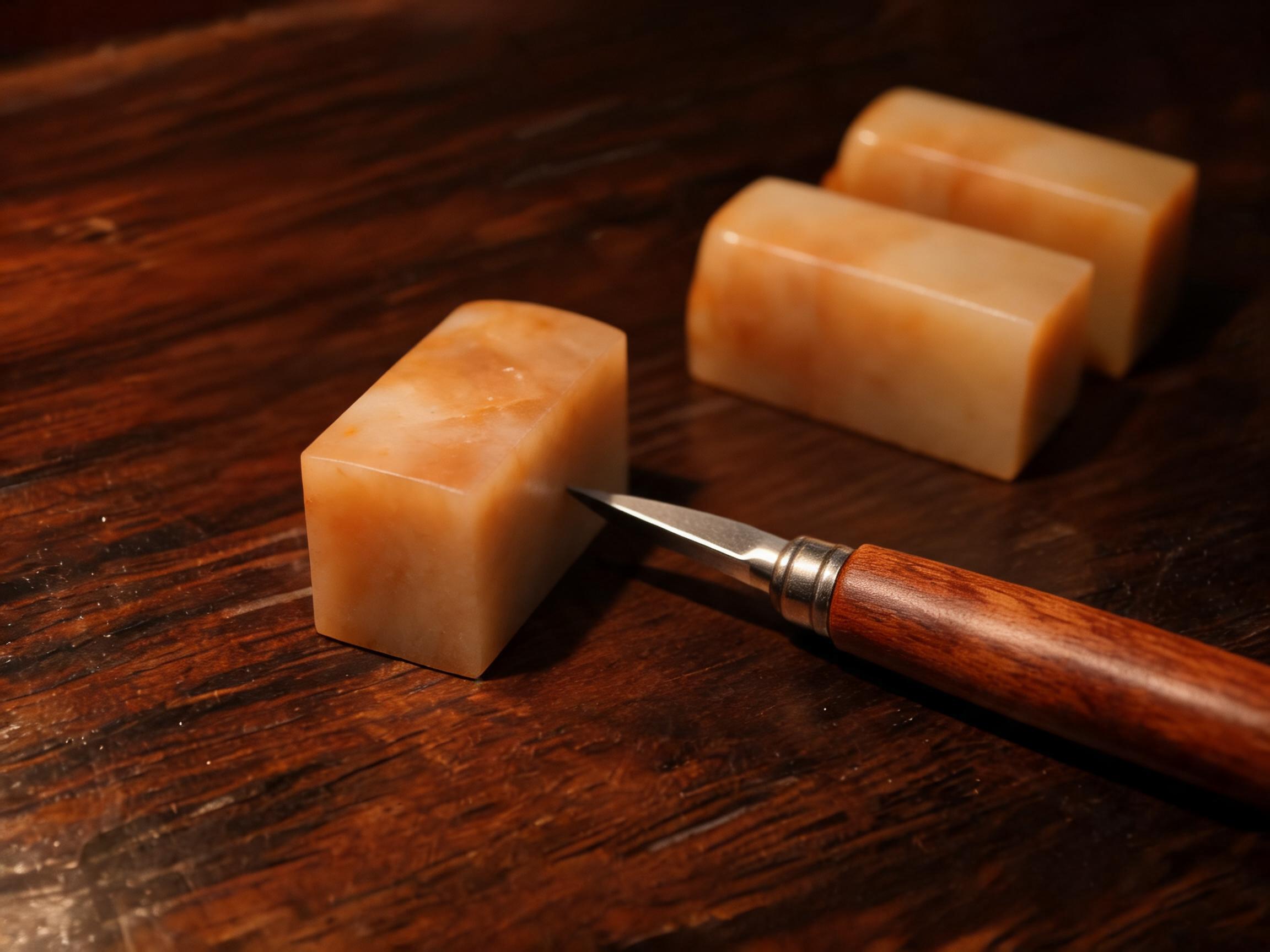
If you source Chinese seal stamps for a gift catalog, auction house, or collector retail channel, Shoushan stone is the material your buyers will ask for by name. For over 400 years, carvers in Fujian Province have used this soapstone family for chop seals — the personal name stamps used in Chinese calligraphy, art authentication, and official documents. Unlike mass-produced resin or synthetic stamps, a genuine Shoushan stone Chinese name stamp carries material value that appreciates with the quality of the stone itself.
This guide covers what a B2B buyer needs to know before placing a Shoushan seal stone wholesale order: how stone is graded, how to judge quality at inspection, what drives collectible value, and how to structure a wholesale selection that matches your channel.
- Shoushan stone is graded by mine origin, color purity, and translucency — not by brand name.
- High-grade stones (Tianhuang, Furong, Duyangkeng) are priced per gram and sold with certificates.
- For gift channels, mid-grade stones with clean carving offer the best margin-to-risk ratio.
- Always request batch photos, hardness tests, and certificate copies before committing to a container or case order.
Understanding Stone Grading: The Four Tiers
Shoushan stone is not a single material. It is a family of pyrophyllite-based stones quarried from the Shoushan village area near Fuzhou. Commercial grading follows a combination of mine origin, color, and texture. Here is the tier system most Chinese suppliers use:
| Grade | Representative Types | Color Profile | Typical Use |
|---|---|---|---|
| Collector Grade | Tianhuang (field stone), Furong, Duyangkeng | Warm honey-yellow, orange, translucent "flesh" tones | Investment pieces, museum-grade carvings, auction lots |
| Premium Grade | Gaoshan, Qiangong, Shanjiaoyuan | Bright reds, greens, whites with high color purity | High-end gift seals, limited edition carvings |
| Commercial Grade | Duntou, Liuyuan, common white/grey | Mixed tones, visible veining, moderate translucency | Retail gift sets, mid-range Chinese name stamps |
| Utility Grade | Mixed tailings, heavily veined stone | Opaque, uneven color | Practice carvings, low-cost promotional items |
For a premium Shoushan stone wholesale program, you will most often be quoted Commercial and Premium grades. Collector grade material is rarely offered in bulk — it is typically sold piece-by-piece at auction or through specialist dealers.
How to Judge Quality at Inspection
When a supplier sends you photos, samples, or you inspect at a trade fair, use these five criteria. They apply to any chop seal, regardless of the carving style.
1. Translucency (Tou)
Hold the stone against a strong light. Higher-grade Shoushan stone transmits light through thin edges. A completely opaque stone is either low-grade or a different material (e.g., synthetic resin). Premium stones show a warm, even glow.
2. Color Purity
Look for a single dominant color with minimal clouding. A pure white or pure red stone commands a premium. Stones with mixed grey or brown patches are graded lower, even if the carving is excellent.
3. Texture & "Flesh" (Rou)
Run a fingernail across the surface. Genuine Shoushan stone feels waxy and slightly oily — this is the "flesh" feel that collectors prize. It should not feel chalky (over-dried) or plastic-like (treated).
4. Veining & Cracks
Inspect under magnification. Hairline cracks significantly reduce value. Some veining is natural and acceptable in Commercial grade, but any crack that runs through the carving face is a defect. Ask the supplier to declare crack-free pieces in the packing list.
5. Carving Quality
For a Chinese seal stamp, the carving on the top (the "lion" or "mountain" motif) should have clean lines and no chipped edges. The seal face (the bottom, where the name is engraved) must be perfectly flat — a warped face will not print evenly.
What Drives Collectible Value
If you are sourcing for collectors or high-end gift programs, understand the three value drivers. They determine what you can charge and what you should pay.
Mine Origin
Tianhuang stone — historically quarried from rice paddies, not mines — is the most famous and expensive. It is sold by the gram, often exceeding gold prices. Only a few hundred kilograms are produced annually. For wholesale, you will rarely see true Tianhuang. What you will see is "Tianhuang-adjacent" material: Gaoshan or Duyangkeng stones with similar warm tones. These are legitimate but should be labeled accurately.
Carving Subject & Artist
Traditional subjects (mythical beasts, landscape scenes, lotus) hold value better than modern abstract designs. If the carving is signed by a recognized master, the piece moves from "craft" to "art." For wholesale, unsigned but well-executed carvings are the sweet spot — they carry a craftsmanship premium without the artist markup.
Age & Provenance
Antique seals (pre-1949) with documented provenance are auction items, not wholesale goods. For new production, the value is in the stone quality and carving, not age. Be wary of suppliers claiming "antique" status on mass-produced pieces — this is a common red flag.
Wholesale Selection Strategy by Channel
Your buying criteria should differ depending on who your end customer is.
| Channel | Recommended Grade | Order Mix | Price Sensitivity |
|---|---|---|---|
| Collector / Auction | Collector & Premium | Small lots, individual pieces, certificate included | Low — value is in the stone |
| Gift / Corporate | Premium & Commercial | Matched sets, boxed with silk, engraving service | Medium — presentation matters |
| Retail / Souvenir | Commercial & Utility | High volume, standard sizes, low unit cost | High — margin is in the volume |
For gift channels, consider offering a Chinese name stamp customization service. The seal face is engraved with the recipient's name in Chinese characters (or a romanized transliteration). This turns a generic stone into a personalized gift, which supports a higher retail price. Confirm with your supplier whether they offer engraving in-house or outsource it — turnaround time and quality consistency vary significantly.
Supplier Checklist for Shoushan Seal Stone Wholesale
Before you place a Shoushan seal stone wholesale order, verify the following with your shortlisted suppliers:
- Stone origin declaration: Can they state the specific mine or region (e.g., Gaoshan, Furong) in writing? Vague answers like "Shoushan area" are a warning sign.
- Certificate availability: For Premium and Collector grades, a certificate of authenticity from a recognized gemology lab (e.g., Fuzhou Shoushan Stone Testing Center) should be included per piece.
- Hardness documentation: Genuine Shoushan stone is soft (Mohs 2.5–3.5). It should be carveable with a steel knife. If the supplier claims it is "hard as jade," the material is not Shoushan.
- Batch consistency: Ask for a "run of production" photo — 10 to 20 pieces from the same batch — not just the hero shot. This shows you the actual quality spread.
- MOQ and lead time: Typical MOQs for Commercial grade start at 50–100 pieces. Premium grade is often sold per piece or in lots of 5–10. Lead times for custom engraving run 7–15 days depending on volume.
- Packing for export: Stone is heavy and brittle. Confirm the packing method — foam inserts, individual boxes, and outer carton weight limits for air vs. sea freight.
Common Pitfalls in Sourcing
Three mistakes appear repeatedly in B2B sourcing of Chinese seals:
1. Confusing Shoushan with other soapstones. Stones from Qingtian (Zhejiang) or Balin (Inner Mongolia) are also used for seals but are different materials with different values. A supplier quoting "Shoushan" prices for Qingtian stone is either misinformed or deceptive. Ask for the specific mine name.
2. Ignoring the seal face. Buyers fixate on the carved top and ignore the flat bottom. A warped or chipped seal face is a functional defect — the stamp will not print. Inspect the face of every sample, not just the decorative side.
3. Over-buying Collector grade for gift channels. Unless your clientele is specifically high-end collectors, Premium and Commercial grades offer better turnover. Collector grade ties up capital in slow-moving inventory.
FAQ
Q: Is Shoushan stone suitable for everyday use as a name stamp?
Yes, for light use. The stone is soft and can be re-carved or re-polished. For heavy daily stamping (e.g., in an office), a harder material like jade or metal is more practical. Shoushan is preferred for artistic and ceremonial use.
Q: How do I verify a stone is not dyed or treated?
Dyed stones show uneven color concentration in cracks and crevices. Treated stones (often waxed or oiled) feel slick and may lose their luster over time. Request an untreated sample and compare. A reputable supplier will declare treatment status.
Q: Can I get custom shapes and sizes for wholesale?
Yes. Standard seal sizes are 1.5×1.5 cm, 2×2 cm, and 2.5×2.5 cm for the face, with heights from 4 to 8 cm. Custom sizes are available but increase cost and lead time. Confirm the supplier's minimum for custom dimensions.
Q: What is a fair price range for Commercial grade wholesale?
Pricing varies by stone quality, size, and carving complexity. As a reference, Commercial grade seals typically range from a few USD to around 20 USD per piece at wholesale. Premium grade starts higher and is often quoted per piece with a certificate. Always request a current price list with grade specifications — do not rely on fixed catalog prices.
Q: Do you offer engraving services for names in English or Chinese?
Engraving services are commonly available from Shoushan stone suppliers. Confirm whether they handle romanized names (English letters) or only Chinese characters. Some suppliers outsource engraving, which affects quality consistency — request a sample of their engraving work before placing a large order.
Next Steps for Buyers
Sourcing premium Shoushan stone wholesale is a relationship business. The stone is finite, grading is nuanced, and quality varies batch to batch. Start with a small sample order — 10 to 20 pieces across grades — to calibrate your quality standards before committing to a container or a long-term contract.
When you are ready to discuss specifications, MOQ, and pricing, contact our team with your target grade, volume, and end-market channel. We will provide batch photos, current price lists, and certificate samples for your evaluation.