
A cross-tradition sourcing guide for distributors stocking Asian calligraphy supplies. It compares Chinese shufa, Japanese shodo and Korean seoye brush, ink, paper and inkstone preferences, maps practical stocking combinations by market, and lists the pre-order confirmations that prevent the most common mismatches.
Asian Calligraphy Supplies by Tradition: How Chinese, Japanese and Korean Buyer Needs Differ
A buyer in Seoul, a buyer in Osaka and a buyer in Singapore's Chinese-bookshop district may all search for asian calligraphy supplies, but they are not shopping for the same shelf. Chinese shufa, Japanese shodo and Korean seoye share a brush-and-ink lineage, yet the working tools differ in stiffness, ink format, paper grain and whether a stone belongs in the starter kit at all. For distributors, the cost of ignoring those differences shows up as dead stock: stiff wolf-hair brushes sitting unsold in a market that wants soft goat hair, or premium inkstones tying up capital where buyers expect to start with bottled ink.
This guide compares the three traditions at the level that matters for purchase orders, then maps the brush, ink, paper and inkstone combinations that fit different export markets. It closes with the mismatches that recur in pre-orders and the confirmations worth settling before a deposit.
- Brush stiffness is the first filter: soft goat hair suits running and cursive work, stiff wolf hair suits regular and clerical script.
- Ink format splits markets more sharply than brush type — sticks anchor gifting and practice-grade assortments, bottled liquid ink anchors volume and beginner kits.
- Inkstones are a considered purchase, not an entry item; stock them beside stick ink, not beside liquid ink.
- Paper width and roll length drive freight and shelf decisions more than paper grade alone.
- Every mismatch in this article is preventable with four pre-order confirmations.
The Three Traditions at a Glance
All three traditions use a tapered brush, carbon-based black ink, absorbent paper and, historically, a grinding stone. The divergence is in emphasis.
| Dimension | Chinese shufa | Japanese shodo | Korean seoye |
|---|---|---|---|
| Script range dominating demand | Broad: regular, clerical, running and cursive all in active use | Strong formal-script and kana traditions alongside free running styles | Hangul and Hanja practice; strong beginner and school-adjacent demand |
| Brush feel most requested | Both soft and stiff; script decides | Soft, resilient tips favored for fluid strokes | Mixed; soft tips common for Hangul letterforms |
| Ink format | Stick ink for serious work, bottled for practice | Stick ink retains ceremonial and gift weight | Bottled ink dominant in practice and teaching |
| Paper | Raw xuan-type bark paper, sized and unsized variants | Thin, highly absorbent sheets for kana; thicker for formal works | Absorbent practice paper, often in sheet or pad format |
| Inkstone | Duan and She stones as collectible, graded objects | Suzuri as a daily tool and a gift object | Less central; stones appear in gift and advanced sets |
Treat this table as a starting hypothesis for assortment planning, not a rule about individual customers. A shodo school and a Chinese calligraphy academy can both order the same brush if the script being taught overlaps.
Brush Differences: Soft Goat Versus Stiff Wolf
Brush hair is where a distributor makes the first and most visible assortment decision.
Soft tips for flowing scripts
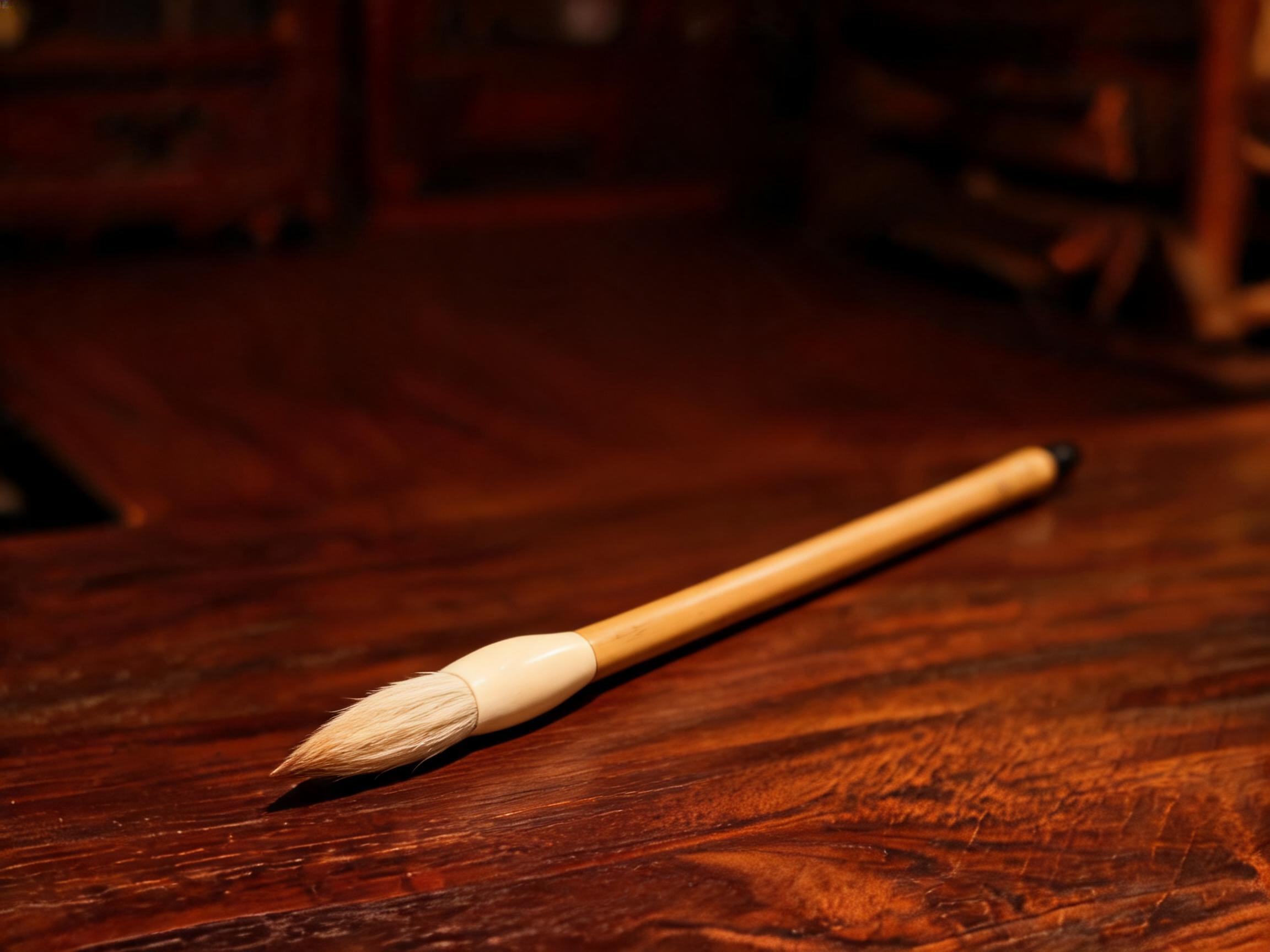
The Goat Hair Soft Tip Brush GMO-CB-002 is built from selected length-graded goat hair on a 23cm natural bamboo handle, with a soft tip intended for running and cursive script. Length grading matters because it keeps tip behavior consistent across a batch; a buyer assembling a multi-size range can rely on the tips behaving alike. MOQ is 100 pcs with a 25–35 day lead time.
Stiff tips for structured scripts
The Wolf Hair Stiff Tip Brush uses length-graded wolf hair with hand-formed tips and two-step ferrule binding, aimed at regular and clerical script. The stiffer tip holds a line under pressure, which is what those scripts ask for. Mixed sizes are available in one wholesale order — useful for markets where a single buyer wants a full size run rather than a single-size carton.
What this means for stock
A market weighted toward running and cursive work pulls toward the soft goat brush. A market weighted toward formal script teaching pulls toward the stiff wolf brush. Most distributors end up carrying both, with the split set by what local schools and studios actually teach — a question worth asking directly rather than inferring from country alone.
Ink Format: Stick, Liquid and the Buyer in Between
Ink format is the second filter, and it changes the whole order profile.
Stick ink is ground on a stone and mixed with water to the desired density. That process is part of the practice in Chinese and Japanese traditions and carries gift and ceremonial weight in both. The Oil Soot Hui Ink Stick Classic GMO-HIS-002 is refined oil soot with a natural binder producing a rich glossy black, offered in 30g–150g weights, MOQ 50 pcs, 30–45 day lead time. The weight range lets a distributor build a tiered offer — lighter sticks for practice sets, heavier sticks for gift packaging.
Bottled liquid ink removes the grinding step. The Premium Bottled Calligraphy Liquid Ink GMO-LIQ-001 is refined soot with natural binder in 100ml, 250ml and 500ml, with 24 months shelf life unopened and tamper-evident caps. MOQ is 100 bottles. The shelf life figure and tamper-evident closure both matter for sea freight and for retail channels where stock turns slowly — a distributor can hold inventory longer without reformulation risk, and the cap gives a visible integrity check on the shelf.
In practice, bottled ink is the volume driver in beginner, school and workshop channels; stick ink sells in smaller quantities at higher unit value and forms the bridge to inkstone sales. Carrying one without the other leaves a gap: a customer who buys a stone and has no stick has nothing to grind.
Paper and Inkstone Preferences
Paper: width and roll length before grade
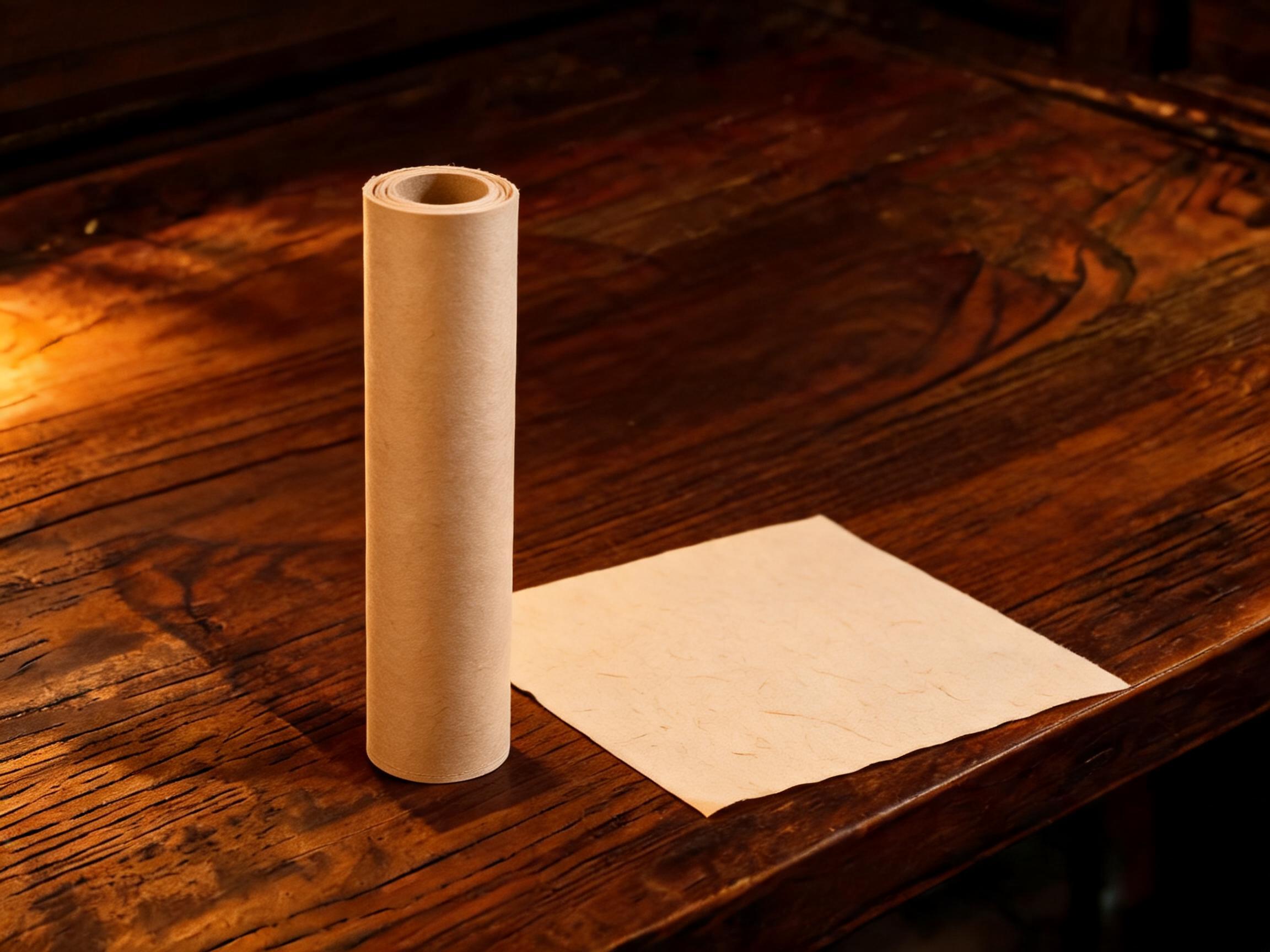
The Xuan Paper Roll GMO-XP-004 is bark-fiber based, supplied in widths of 50cm, 70cm and 97cm, in lengths of 10m, 20m and 50m, with custom widths from 30cm to 150cm, MOQ 50 rolls. For a distributor, the 50cm width suits practice and classroom use; 70cm covers most hanging-scroll work; 97cm serves large-format and exhibition calligraphy. Roll length is a capital decision as much as a product one — a 10m roll moves faster in a small shop, while a 50m roll suits a distributor supplying studios.
Japanese and Korean buyers often expect cut sheets and pads alongside rolls, particularly for kana and Hangul practice. Xuan rolls can be cut downstream, but the cut-and-pack step is a local decision, not something a roll supplier performs by default.
Inkstone: a considered purchase
The Classic Duan Inkstone GMO-INK-001 is natural Duan stone from a verified Zhaoqing quarry, 15–25cm in length, with a grain grading certificate per shipment, MOQ 50 pcs. In the Chinese tradition a graded Duan stone is a collectible object, and the per-shipment grain certificate supports that positioning. In Japan the suzuri plays a similar daily-and-gift role. In Korea the stone is less central to beginner practice.
The planning consequence is simple: inkstones belong with stick ink in the assortment, and they suit gift and advanced segments rather than entry kits. Stocking stones beside bottled ink creates a display that sells neither.
Stocking Combinations by Market
The following combinations are planning templates, not prescriptions. Adjust the ratios to what your accounts actually teach.
| Market profile | Anchor items | Supporting items | Notes |
|---|---|---|---|
| Southeast Asia Chinese-community retail | Goat hair soft brush; xuan rolls 50cm and 70cm | Bottled ink 250ml/500ml; Hui ink sticks for gift sets; Duan stones for premium display | Mixed script demand; gift packaging matters around festival seasons |
| Japan and Korea | Soft-tip brushes; bottled ink; cut-sheet paper sourced locally or cut from rolls | Stick ink and stones for gift and advanced segments | Buyers often have established domestic paper and stone preferences; lead with brushes and ink |
| Middle East and Central/Eastern Europe | Bottled ink 100ml/250ml; soft and stiff brush mixed-size orders | Xuan rolls 50cm; ink sticks as cultural gift items | Newer calligraphy markets; beginner kits outsell collectible items |
| Africa and the Americas (Chinese communities) | Bottled ink; soft-tip brushes; 50cm xuan rolls | Stick ink and stones for community schools and gift retail | Freight favors concentrated, high-turn SKUs over wide roll widths |
Two rules cut across all four rows. First, match inkstone volume to stick ink volume — stones without sticks stall. Second, keep at least one soft and one stiff brush SKU in every market, because script mix varies within countries and even within a single school network.
Common Mismatches and Pre-Order Confirmation Checklist
Most order problems trace back to an unstated assumption. These are the ones worth catching before a deposit.
Frequent mismatches
- Brush stiffness assumed from country. A Japanese buyer may need stiff wolf hair for formal script; a Chinese buyer may want soft goat hair for cursive. Ask which scripts the end users practice.
- Inkstone ordered with liquid ink. Stones ship, then sit. Confirm the buyer also carries stick ink and understands the grinding step.
- Roll width sized to the buyer's warehouse rather than the end user's work. A 97cm roll is not a substitute for two 50cm rolls if the market works small.
- Paper format taken as universal. Roll stock is not cut sheets; confirm whether the buyer can cut and pack locally.
Pre-order confirmation checklist
- Script mix. Which scripts will end users practice? This sets the soft/stiff brush ratio.
- Ink format split. Estimated stick versus liquid volume, and whether the buyer carries stones.
- Paper format. Roll or sheet, and which of the 50cm, 70cm, 97cm widths or a custom width between 30cm and 150cm.
- Packaging and shelf requirements. Gift packaging for stick ink and stones; tamper-evident caps for bottled ink in retail channels.
These four answers, plus the lead times above (25–35 days for goat hair brushes, 30–45 days for ink sticks), give enough to build a purchase order that matches the shelf it is going to.
FAQ
Can one brush type serve all three traditions?
A soft goat tip and a stiff wolf tip cover most script ranges across the three traditions, but the ratio between them differs by market. Stocking both and sizing the split to the buyer's script mix is more reliable than picking one.
Is bottled ink acceptable for serious calligraphy?
Bottled ink removes the grinding step and suits practice, teaching and volume channels. Stick ink ground on a stone remains the format for work where the process is part of the practice, and it is the natural companion to any inkstone order.
Why does the Duan inkstone ship with a grain grading certificate?
Natural Duan stone varies, and buyers positioning stones as collectible or gift items need a per-shipment record of grain grading. The certificate supports that positioning; it is issued per shipment, not per stone.
What is the minimum order for a mixed brush order?
Wolf hair stiff tip brushes are available in mixed sizes within one wholesale order. Confirm the size breakdown with the supplier when placing the order, since the MOQ applies to the order rather than to each size.