
A selection guide for B2B buyers that maps each core sumi-e technique — ink grinding, stroke control, tonal gradation and bleed behavior — to the tool attributes worth comparing before you stock or program a purchase. Includes supplier questions and a comparison table for retail chains, calligraphy schools and art-supply distributors.
Tool selection for buyers
Sumi-e fails or succeeds on a small set of tool relationships: a stone that grinds consistently, a brush that releases ink you can control, and a paper whose bleed you can predict. This guide maps four core techniques to the attributes a buyer should compare.
Each sumi-e technique stresses one tool attribute more than the others. Grinding ink tests the inkstone surface; stroke control tests brush hair grade and tip construction; tonal gradation tests ink density; bleed behavior tests paper fiber and sizing. Compare tools by those attributes, then confirm the exact specification with the supplier.
- Why technique should drive the purchase order
- Ink grinding on the inkstone
- Stroke control and brush pressure
- Tonal gradation of ink
- Bleed behavior on raw paper
- Comparing tools against technique
- Questions to put to a supplier
Why technique should drive the purchase order
Sumi-e supplies are often bought as components: an ink stick, a brush, a stone, a ream of paper. That component view works for a gift seller assembling a boxed set, but it does not work for a calligraphy school, a painting studio, or a retailer whose customers will return a product because it behaves the wrong way on a known technique.
The reliable way to compare tools is to start from the method the end user will perform and trace back to the attribute that method tests. A student learning to grind ink needs a stone with a consistent grinding surface; a student learning cursive script needs a brush whose tip holds a charge of ink without collapsing; a painter building tonal areas needs an ink stick whose density holds steady as strokes layer.
Below, each technique is paired with the concrete tool attribute a buyer should compare. Where a specification matters, request the exact value from the supplier rather than inferring it from a photo or a product name.
Technique 1: Grinding ink on the inkstone
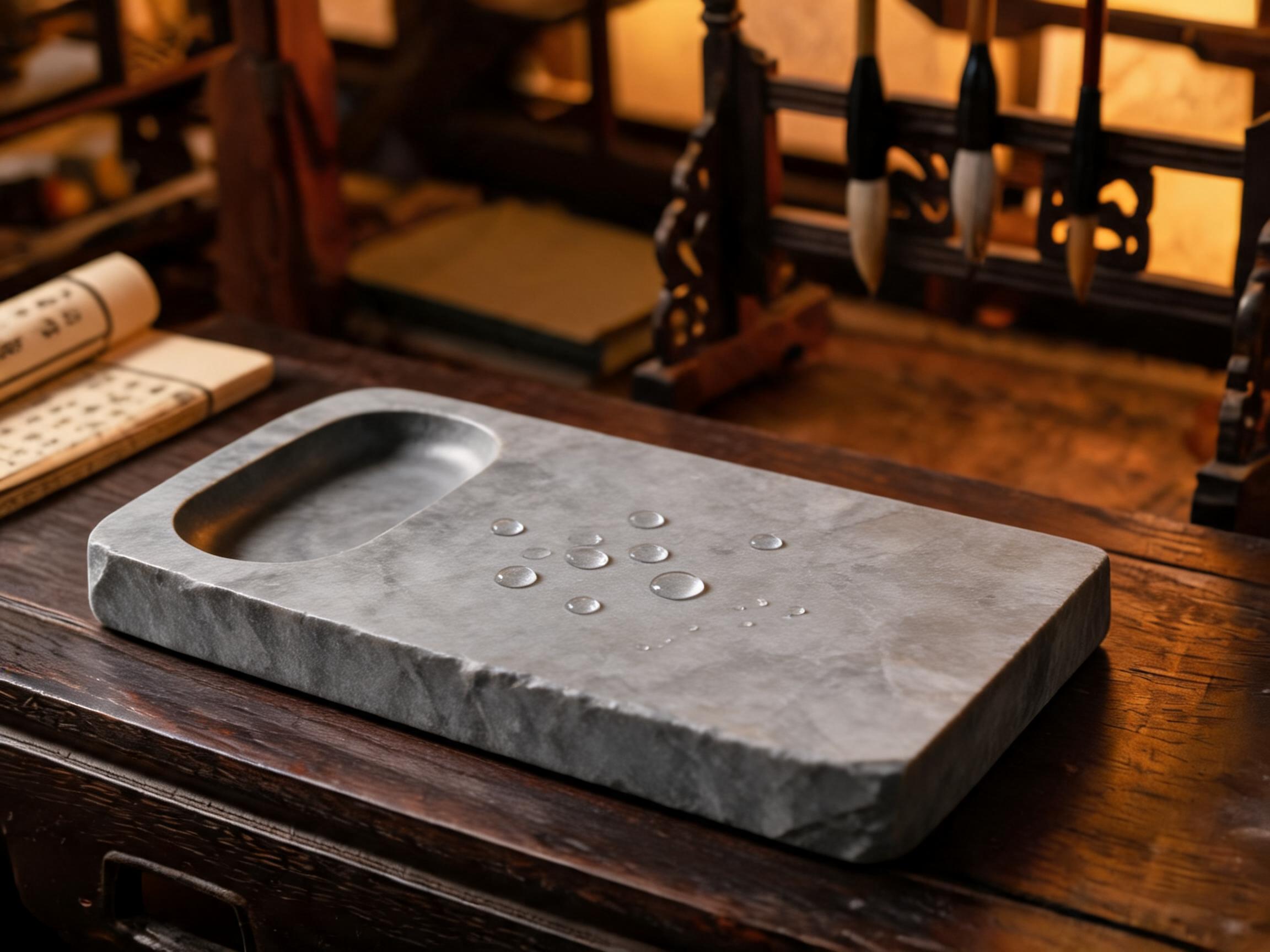
Grinding ink is the first technique most students learn, and it is also the technique that most directly qualifies the inkstone. What matters is whether the stone presents a consistent abrasive surface across its working area. A stone that grinds unevenly produces ink at an uneven rate, and a student grinding with hand pressure cannot correct for that surface variation.
For B2B buyers, the comparison attributes are surface consistency, flatness, and how the stone is finished. A practice-oriented stone intended for schools and educational distributors is graded on repeatability rather than on collection-grade appearance. Guangdong Gumo Crafts Technology Co., Ltd. (Gumo Craftworks, founded 2011) supplies a Practice Inkstone (SKU GMO-INK-003) described as an affordable practice inkstone with a consistent grinding surface, designed for calligraphy schools and educational distributors.
For a school buyer, the questions are practical: Will the supplier confirm the actual dimensions of the working surface? What is the stone's thickness? Is the grinding surface prepared the same way from batch to batch? Those are specification questions, not marketing questions, and a supplier who can answer them plainly has told you something useful about how the goods are made.
Technique 2: Stroke control and brush pressure
Stroke control is the technique that separates a brush intended for regular and clerical script from one intended for running and cursive script. The difference is not quality; it is a design decision about hair grade, tip taper, and how much the tip deflects under pressure.
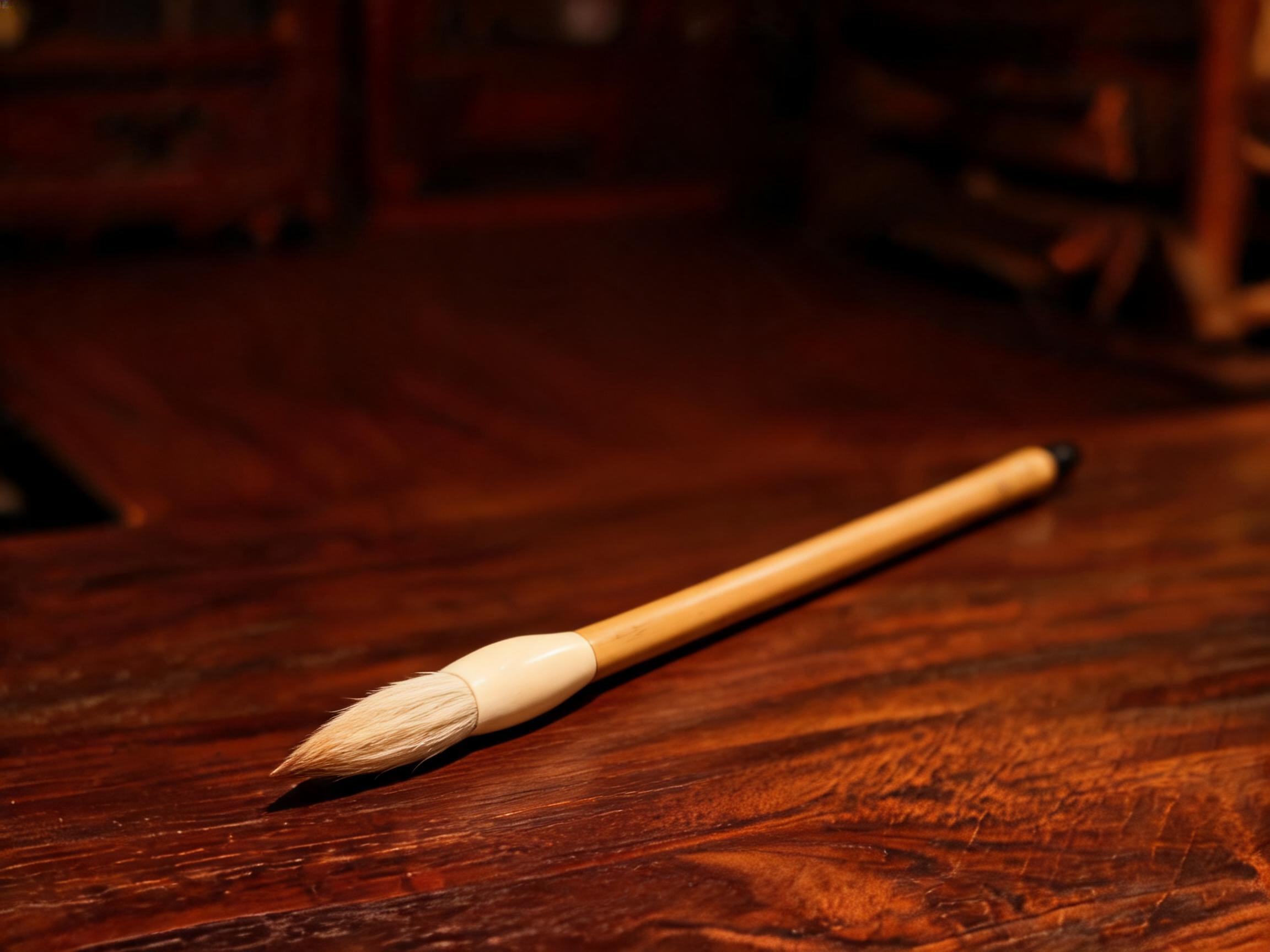
For running and cursive work, the brush should hold a substantial charge of ink and recover its shape after pressure. The comparison attributes are the hair length grading, the blend of hair, whether the tip is consolidated tight enough to keep a pointed end, and the brush's balance in the hand.
Gumo Craftworks supplies a Goat Hair Soft Tip Brush (SKU GMO-CB-002) listed with length-graded hair and tested ink absorption, designed for running and cursive script. For buyers, the attribute to compare is the length grading within each size band — that is what determines whether every brush in a shipment behaves alike. A distributor stocking a school program should ask how uniform the size and other specifications are from unit to unit, and whether the supplier can confirm the exact values per size.
Do not stop at hair type. Ask: what is the exact tip length in each size, what is the handle length, and is the ferrule fitted so the hairs cannot work loose in transit? The answers matter more than the label on the box.
Technique 3: Tonal gradation of ink
Tonal gradation is the technique a painter relies on when layering washes and building depth. It tests the ink stick rather than the brush. The relevant attributes are how the ink behaves when diluted, whether it stays consistent in density across a batch, and the tone it produces at full strength.
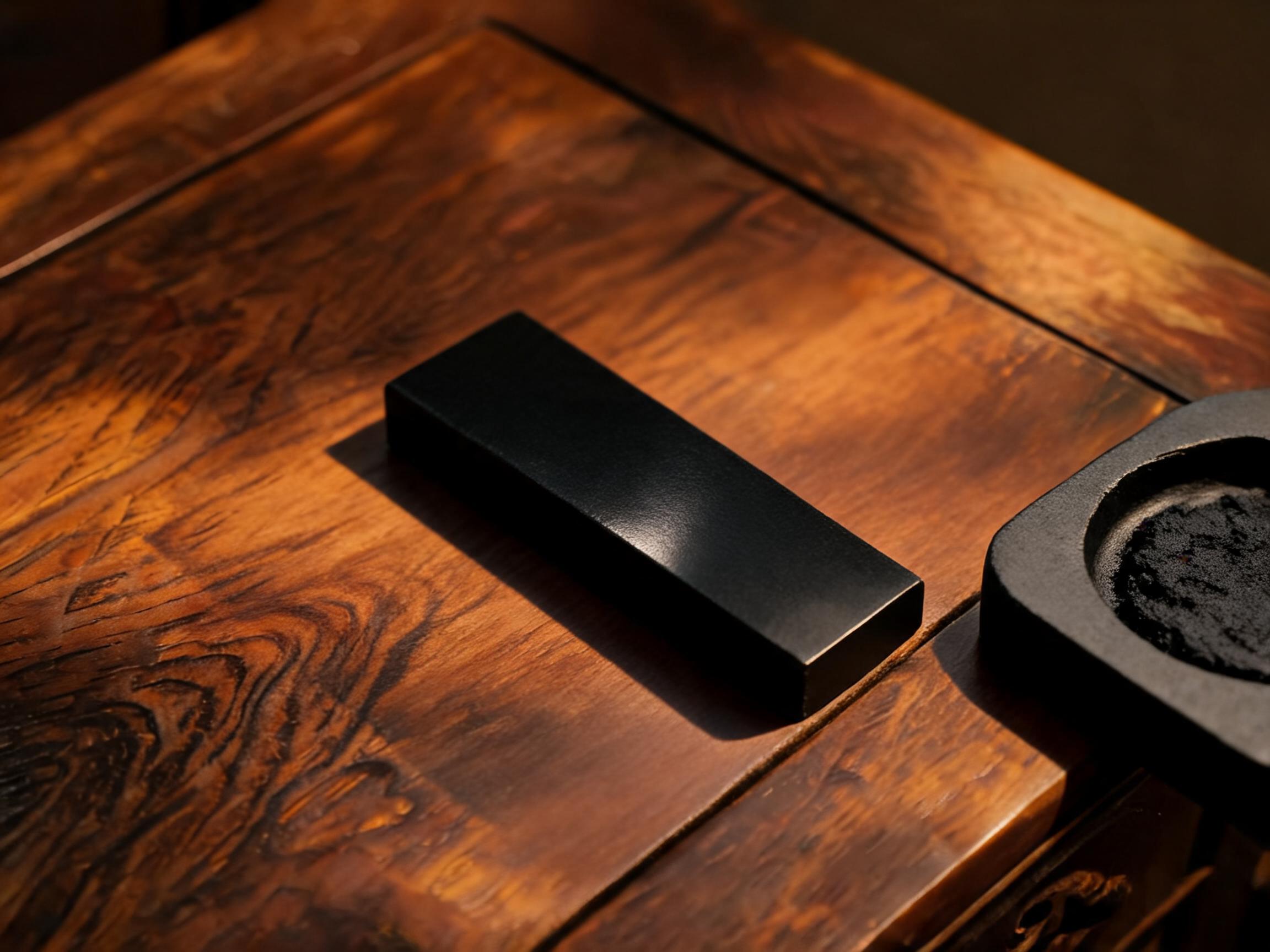
For wholesalers and professional studio buyers, the comparison should distinguish oil soot and pine soot formulations, because the two behave differently in dilution. Gumo Craftworks supplies an Oil Soot Hui Ink Stick Classic (SKU GMO-HIS-002) described as a rich glossy black tone with consistent ink density, ideal for professional calligraphy studios and art supply wholesalers.
A buyer comparing ink sticks should request the exact weight and dimensions of each stick, the soot type, and the packaging format — boxed, paper-wrapped, or in a Four Treasures set. For gift assortments sold overseas, packaging is a real specification, since it affects freight damage and shelf presentation.
Technique 4: Bleed behavior on raw paper
Bleed is the technique attribute most often discovered late. Ink spreads differently on raw (unprocessed) Xuan paper than on sized or processed paper, and the difference determines whether a student's stroke stays crisp or feathers at the edge.
For painting studios and calligraphy schools, compare the paper on fiber content, thickness (listed as gram weight), and the level of control over ink spread the supplier can confirm. Gumo Craftworks supplies Raw Xuan Paper Professional (SKU GMO-XP-001) described as traditional bark fiber with controlled ink bleed, for professional calligraphers and painting studios.
The practical buying question is not "is this good paper?" but "does this paper's bleed match the technique my customers will perform?" A buyer stocking a school program and a buyer stocking a painting studio may need different bleed characteristics from the same nominal product. Confirm the exact gram weight and sheet size with the supplier before committing a purchase order.
Comparing tools against technique
The table below maps each core sumi-e technique to the tool it stresses and the attribute a buyer should compare. It is a decision aid, not a specification sheet — the exact values must come from the supplier.
| Technique | Tool stressed | Attribute to compare | Buyer to prioritize this |
|---|---|---|---|
| Grinding ink | Inkstone | Grinding surface consistency, flatness, working-surface dimensions | Calligraphy schools, educational distributors |
| Stroke control | Brush | Hair grade and length grading, tip taper, tip consolidation, balance | Schools teaching running and cursive script, studios |
| Tonal gradation | Ink stick | Soot type, density consistency, tone at full strength, stick weight | Art-supply wholesalers, professional studios |
| Bleed behavior | Paper | Fiber content, gram weight, level of ink-spread control | Painting studios, professional calligraphers |
Attributes listed are the ones that differentiate behavior; request exact specifications from the supplier before ordering.
Questions to put to a supplier
The fastest way to judge whether a supplier can support a sumi-e program is to ask specification questions and see which ones come back with a value, which come back with a restatement of the product name, and which are simply not answered.
- Inkstone: What are the working-surface dimensions and thickness? Is the grinding surface prepared to a stated flatness, and is that consistent across a production run?
- Brush: What is the exact tip length per size? How is hair length graded, and can the supplier confirm the blend? What is the handle length and material?
- Ink stick: What is the soot type, the stick weight, and the packaging format? Is density consistency a stated attribute or a marketing phrase?
- Paper: What is the gram weight and sheet size? How would the supplier describe the level of ink bleed control, and does that description apply to raw rather than processed paper?
- Sets and OEM: For Four Treasures sets and private-label programs, what can be customized — packaging, labeling, assortment — and what cannot?
Gumo Craftworks supplies Hui ink sticks in pine soot and oil soot, calligraphy brushes, inkstones, Xuan paper and Four Treasures sets, with OEM/ODM support. Use those categories as a starting point, but evaluate each SKU on the technique it is meant to serve rather than on the breadth of the catalog.
What to decide before you request a quote
A buyer who can state the technique — grinding, stroke control, tonal layering, bleed — and the attribute that technique tests will get a more useful answer than a buyer who asks for "good sumi-e supplies." The former gives a supplier something to specify against; the latter invites a generic response.
Set your requirement in that order: technique, then attribute, then specification values you need confirmed, then packaging and assortment needs for your market. Keep a record of the values the supplier confirms, and compare across suppliers on the same attribute rather than on price alone. A cheap inkstone with an unconfirmed surface, or a brush whose tip length is not stated, is not a cheaper product — it is an unknown one.
The unresolved points are the ones you have not yet asked about. Confirm them with the supplier, and make your comparison on the answers, not the brochure.