
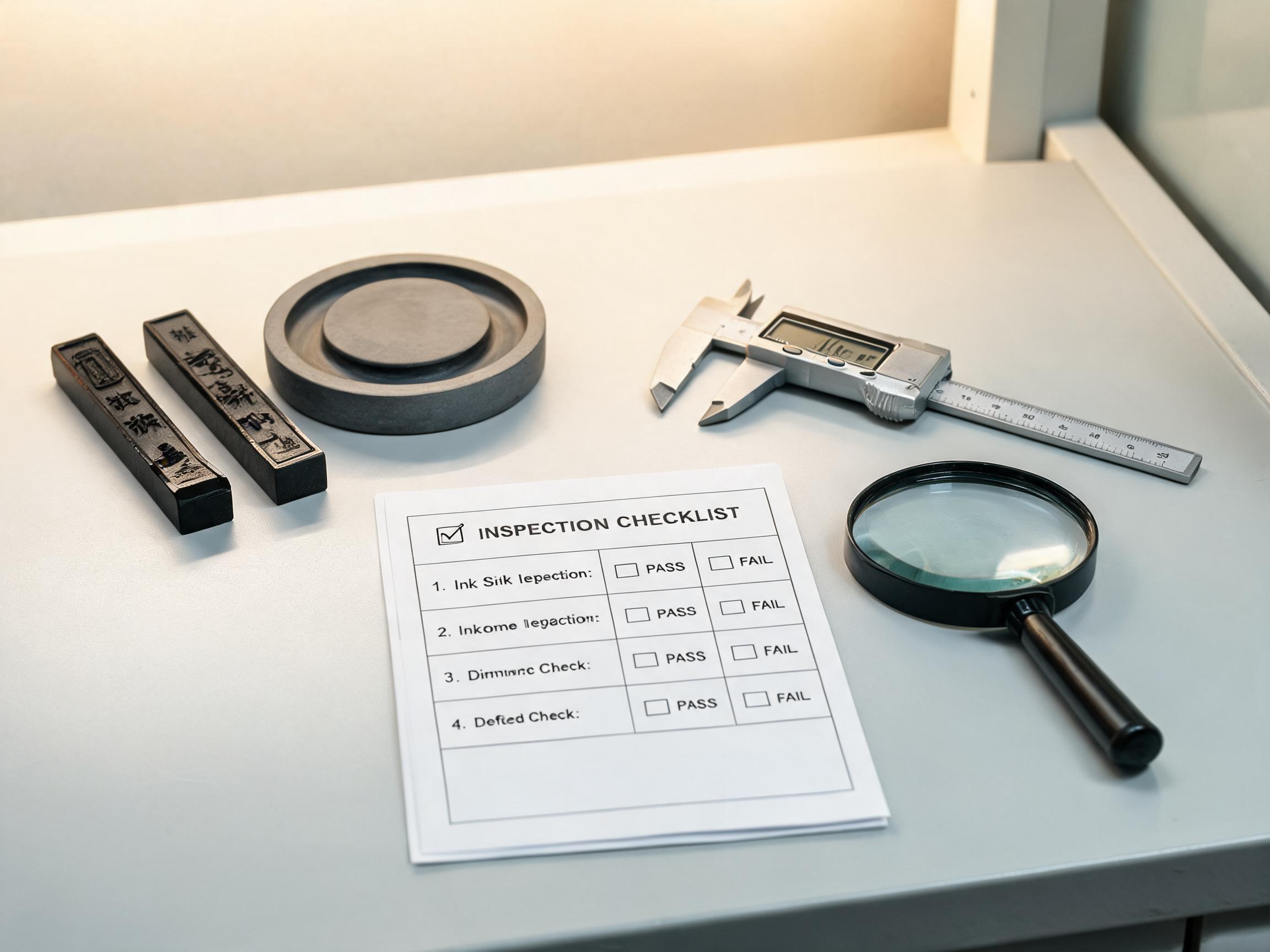
A practical procurement guide for overseas importers evaluating Chinese ink sticks. Learn how soot type and grade affect performance, what MOQ and packaging terms to expect, and how to vet a manufacturer before placing a bulk order.
Procurement Decision Guide
Importers searching for a Chinese ink stick usually arrive with the same three questions: what the stick is actually made of, why two sticks that look alike carry different prices, and how to tell whether a factory can deliver repeatable quality at volume. This guide answers those questions in the order a buyer needs them — material and grade first, then MOQ and packaging, then a supplier-evaluation checklist you can run before committing to a purchase order.
Key takeaways
- Soot type — oil soot versus pine soot — is the single biggest driver of grade, surface finish, and price band.
- MOQ scales inversely with unit size and decoration: student sticks start at 200 pcs, commemorative gold-edge sticks at 30 pcs.
- Ask for batch-level QC photos and export documentation before you negotiate price; a supplier who cannot provide them is a risk at any price.
- Match the product line to the sales channel: school supply, calligraphy retail, gift, or collector.
In this guide
- What an ink stick is made of
- Types and grades compared
- MOQ and packaging by product line
- How to judge quality before ordering
- Supplier evaluation checklist
- FAQ
What an ink stick is made of
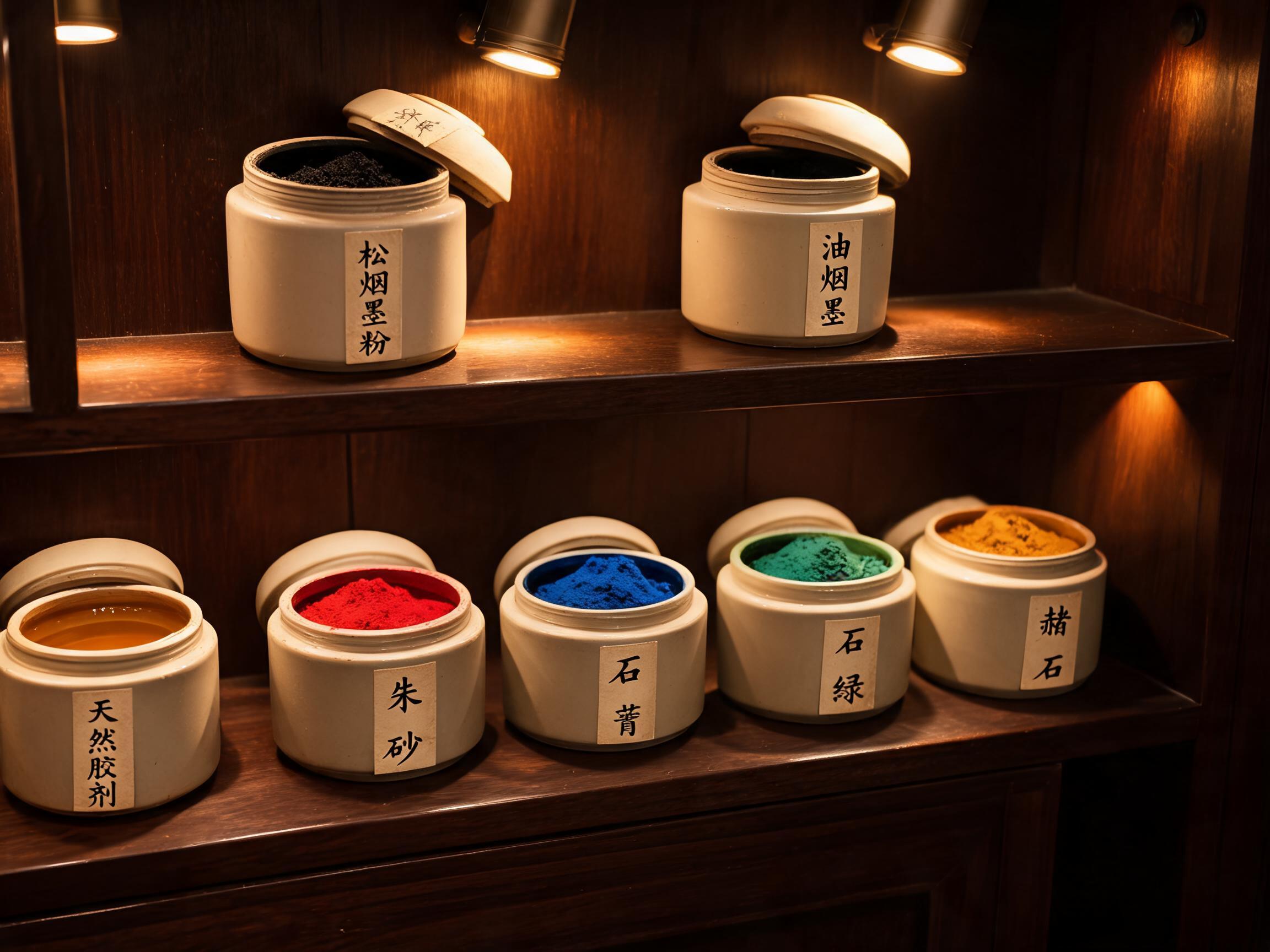
An ink stick is a solid ink concentrate. The maker refines soot, blends it with a natural binder, pounds the mixture, presses it into a mold, and then shade-dries the formed stick. The buyer grinds the stick on an inkstone with water to produce liquid ink for brush calligraphy and painting.
Two material choices dominate the export catalog:
- Soot type. Oil soot and pine soot are the two common bases. They differ in particle character, which shows up in the ink's tone and in how the stick polishes.
- Binder. A natural binder holds the soot together and releases it evenly during grinding. Binder quality and mixing consistency affect whether every stick in a batch behaves the same way.
For an importer, the practical consequence is simple: soot type and binder discipline are what you are really buying. Carving, gold edging, and gift boxes are decoration applied on top of that base.
Types and grades compared
The table below maps the four product lines a typical importer will encounter to their material, weight range, MOQ, and best-fit channel. Use it to shortlist before you request samples.
| Product line | Material | Weight per stick | MOQ | Surface / finish | Best-fit channel |
|---|---|---|---|---|---|
| Student Practice Hui Ink Stick | Pine soot with natural binder | 20g–50g | 200 pcs | Plain, no carving | School supply, bulk education |
| Oil Soot Hui Ink Stick Classic | Oil soot with natural binder | 30g–150g | 50 pcs | Smooth polished | Calligraphy retail, studio |
| Premium Pine Soot Hui Ink Stick | Premium pine soot | — | — | — | Collector, premium retail |
| Commemorative Gold-Edge Hui Ink Stick | Pine soot with 24K gold edge | 100g–300g | 30 pcs | Gold edge, custom engraving | Gift, commemorative edition |
Two patterns are worth noting. First, MOQ falls as unit weight and decoration rise — a 30-piece run of gold-edge commemorative sticks is viable because the per-unit value is high, while a plain student stick needs a 200-piece run to be economical. Second, the weight range tells you which channel the line was designed for: 20g–50g sticks are consumables, 100g–300g sticks are display or gift objects.
MOQ and packaging by product line
Student and practice lines
The Student Practice Hui Ink Stick is built for cost-effective, repeatable grinding performance in bulk packaging for school supply. At a 200-piece MOQ, it suits distributors serving art-education programs and stationery wholesalers who need a stable, low-decoration item.
Classic and premium lines
The Oil Soot Hui Ink Stick Classic carries a 50-piece MOQ and offers custom label and gift box options — the configuration most calligraphy retailers and studio suppliers ask for. The Premium Pine Soot Hui Ink Stick sits above it for buyers whose customers compare grades rather than price.
Commemorative and gift lines
The Commemorative Gold-Edge Hui Ink Stick runs from 100g to 300g with a 30-piece MOQ. It ships with a premium magnetic-closure gift box, commemorative edition numbering, and OEM brand file support. This is the line to quote when a corporate client or museum shop needs a numbered, branded object rather than a working ink stick.
How to judge quality before ordering
Ink sticks are hard to evaluate from a photograph alone. These checks separate a supplier who controls the process from one who resells:
- Batch consistency. Ask whether ink density is controlled per batch. A supplier who tracks this can explain how they keep stick-to-stick behavior stable; one who cannot is guessing.
- Surface inspection. A smooth, polished surface on the classic line indicates the stick was pressed and dried under control. Cracks, warping, or uneven tone are drying and pressing defects.
- Grinding behavior. Request a sample and grind it yourself. The stick should release ink evenly without grit or excessive pressure.
- Documentation. Batch-level QC photo reports and export-ready documentation are the minimum evidence a factory can provide. If these are unavailable, treat the quality claim as unverified.
Supplier evaluation checklist
Run this list against any candidate manufacturer before you discuss price:
- Does the company own its core craft — soot refining, binder mixing and pounding, mold pressing, and shade drying — or does it outsource production?
- Can it quote a specific weight range and MOQ per line, or does it answer only in generalities?
- Will it provide batch-level QC photo reports for the order you are placing?
- Does it support custom labels, gift-box design, and OEM brand files where your channel needs them?
- Can it prepare export-ready documentation for your destination market?
- Does it offer a sample that matches the production line, not a hand-finished showpiece?
Gu Mo Craft Technology, based in Guangdong and founded in 2011, is an integrated design, manufacturing, QC, and export enterprise working in traditional craft. Its core craft covers ancient soot-refining, binder mixing and pounding, mold pressing, and shade drying, and its product lines include Hui ink sticks, calligraphy liquid ink, scholar desk sets, handmade inkstones, brushes, seal-carving supplies, xuan paper, and craft ornaments. Products ship to Southeast Asia, Japan and Korea, the Middle East, Central-Eastern Europe, Africa, and Chinese-diaspora markets in the Americas. Buyers can request samples and a quote matched to their channel.
FAQ
What is a Chinese ink stick made of?
Soot and a natural binder. The soot is refined, mixed and pounded with the binder, pressed into a mold, and shade-dried. Oil soot and pine soot are the two common bases, and the choice affects tone, surface finish, and price band.
Is a sumi ink stick the same as a Chinese ink stick?
Yes. "Sumi" is the Japanese reading of the same character used for ink in Chinese. A sumi ink stick and a Chinese ink stick refer to the same class of solid ink product; the difference is market convention and packaging, not the basic material.
What MOQ should I expect?
It depends on the line. Plain student sticks start at 200 pcs, classic oil soot sticks at 50 pcs, and commemorative gold-edge sticks at 30 pcs. Higher-value, decorated items carry lower MOQs because the per-unit value supports a smaller run.
Can I order custom labels and gift boxes?
Yes, on the lines that offer it. The Oil Soot Hui Ink Stick Classic supports custom label and gift box options, and the Commemorative Gold-Edge line supports OEM brand files, custom engraving, and a premium magnetic-closure box. Confirm the exact configuration for your order with the supplier.
How do I verify quality before a bulk order?
Request a production-line sample, grind it, and inspect the surface. Then ask for batch-level QC photo reports and confirm the export documentation for your market. A supplier who provides all three is a lower-risk partner than one who provides only a price.
Next step
If you are sourcing for a school-supply, calligraphy-retail, gift, or collector channel, the fastest path is to state your target weight range, MOQ, and packaging requirement, then request a sample from the matching line. Gu Mo Craft Technology accepts OEM customization, gift-set design, and bulk export orders, and can quote against your channel requirements.