
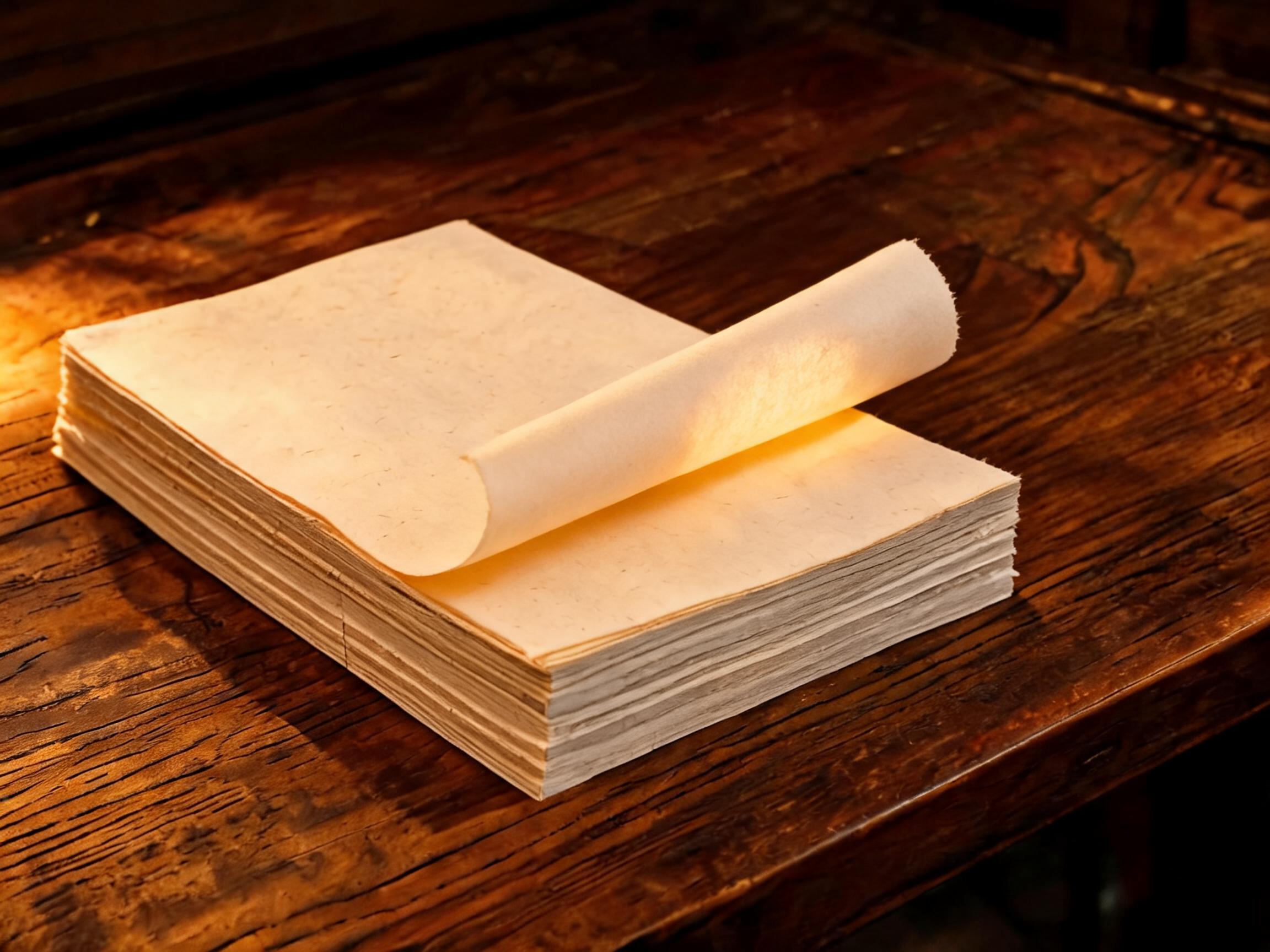
A technical walkthrough of xuan paper manufacturing for importers and art supply buyers: what xuan paper is made of, how traditional sheet formation works, how raw and treated finishing change brush behavior, and how batch testing and documentation let you verify a supplier's process claims before you commit to volume.
Buyers who source xuan paper for painting, mounting, or resale usually face the same problem: suppliers describe their paper with words like "premium" and "traditional," but the claims do not tell you whether two batches will behave the same way on a brush. This article explains the actual production chain — fiber, sheet formation, finishing, and batch testing — so you can judge a supplier's process claims against evidence rather than adjectives. It is a technical explanation, not a purchasing checklist; the buying guides on this site cover selection separately.
Key takeaways
- Xuan paper is made from natural bark fiber (qingpi) processed in the traditional way; the fiber and sheet formation decide how ink behaves.
- Raw and treated xuan paper differ mainly in finishing: raw sheets stay unprocessed, while treated paper carries a controlled sizing layer for fine-brush work.
- Batch consistency — not a single sample sheet — is what determines whether your second order matches your first.
- Ask for the bleed test record, thickness consistency check, and aging stability documentation, and check that they cover the actual batch you receive.
What xuan paper is made of
Xuan paper is a plant-fiber paper made from natural bark fiber — the material known in Chinese production as qingpi — put through a traditional processing sequence. That description is deliberately narrower than the marketing often suggests. The defining characteristics of the paper come from the fiber preparation and from how the sheets are formed by hand, not from an additive list. A supplier who cannot describe their fiber source and processing steps in concrete terms is describing a category, not a product.
This matters to buyers because "what is rice paper made of" and "what is xuan paper made of" are often treated as the same question when they are not. Rice paper is a loose English-language label applied to a range of Asian papers, and the term tells you almost nothing about fiber content, absorbency, or archival behavior. Xuan paper made from bark fiber behaves differently from wood-pulp or mixed-fiber sheets sold under the same English name. When you compare quotes across suppliers, compare what the sheet is actually made from, not the English label on the invoice line.
Fiber behavior you can verify
Bark fiber that has gone through traditional processing produces a sheet that accepts ink gradually, which is what painters rely on for graded wash and visible brush structure. You cannot confirm fiber identity from a photograph. You can confirm it through behavior: a documented ink bleed test on a known batch, and consistency of that behavior between the sample you approve and the bulk shipment.
How sheet formation works
Sheet formation is the step that separates handcrafted xuan paper from machine-laid substitutes, and it is the step most often summarized in one vague sentence in supplier marketing. Without inventing process details a supplier has not documented, what a buyer needs to understand is the logic: skilled formation is what produces uniform thickness across a sheet and predictable ink response, and it is also the source of the batch-to-batch variation you must manage contractually.
Because formation is a manual, skill-dependent step, the correct question is not "is it handmade?" but "how does the supplier control and document the variation that handmade formation introduces?" That is where a production process claim becomes testable. A supplier with a real process can point to a thickness consistency check across sheets in a batch. One without it can only repeat that the process is traditional.
Raw versus treated finishing
Finishing determines how the sheet behaves under a brush, and this is the single most common source of mismatch between what a buyer orders and what they intended to buy.
| Grade | Finishing | Behavior under the brush | Typical use |
|---|---|---|---|
| Raw xuan paper | Unprocessed — no sizing layer applied | High absorbency; ink spreads into the fiber, producing soft edges and graded washes | Freehand ink painting and calligraphy where bleed is part of the stroke |
| Treated xuan paper | Controlled sizing layer applied | Restricted absorption; lines hold their edge with minimal spreading | Gongbi fine-brush work and detailed line painting |
The raw grade is what most overseas professional buyers mean when they ask for unprocessed xuan paper, and it is the grade available as Raw Xuan Paper Professional. It comes in a standard sheet of 69 cm x 138 cm, with custom sizes from 50 cm x 100 cm up to 97 cm x 180 cm. Treated xuan paper carries a controlled sizing layer for fine-brush work; the two grades are not interchangeable, and a supplier should be able to tell you which one a given quote refers to before you compare it against another supplier's price.
Batch testing: how process claims become evidence
Every supplier says their paper is consistent. The difference is whether consistency is measured and reported. For raw xuan paper, the checks that carry real information for a buyer are the following.
- Ink bleed test with a documented bleed radius. Ink is applied under defined conditions and the spread is recorded. The value of this test is not the number itself in isolation — it is that the same measurement exists for the sample and for the bulk batch, so you can compare them.
- Thickness consistency check. Confirms that thickness holds across sheets within a batch, which is the practical consequence of controlled sheet formation.
- Aging stability test. For archival-grade material, this addresses whether the paper remains stable over long storage. The professional raw grade carries archival-grade aging stability documented at 100+ years.
These records matter because they shift quality from opinion to comparison. When you approve a sample, you are approving a measured behavior; when bulk arrives, you can check whether that behavior holds. Paper grade certificates and bleed test records ship with every order for the professional raw grade, so the document trail follows the goods rather than sitting in a supplier's marketing folder.
Aging stability and archival claims
Archival claims are worth pressing on, because the underlying question is whether the paper you buy this year will still be suitable when a mounted work is re-examined years later. Aging stability testing with documented 100+ year results is a specific claim with a specific scope. Ask what material was tested and under what conditions. A general statement that paper is "archival" is not the same as a test result attached to the grade you are ordering.
Capacity and lead time in practice
Process quality is only useful if it can be repeated at volume. For buyers planning seasonal programs, the practical parameters for the professional raw grade are a minimum order quantity of 200 sheets and a lead time of 30–45 days after sample approval. That sequence matters: sample approval comes first, and the bleed test record you receive with bulk should correspond to the approved sample's behavior. FOB, CIF, and DDP terms are available, which lets you model landed cost against whichever incoterm your forwarder prefers.
Capacity context is useful for judging whether a supplier can take repeat business rather than one-off orders. This manufacturer has produced xuan paper since 2011, with monthly capacity above 20,000 sheets.
What to confirm with a supplier
Most of what you need to verify can be settled with a short list of direct questions. Ask which grade the quote covers — raw or sized — and confirm the finishing in writing, because the same fiber can be sold either way and the difference changes the paper's behavior under a brush. Ask for the batch test records for bleed radius, thickness consistency, and aging stability, and confirm that those records will correspond to the batch actually shipped, not to a separate reference lot. Confirm the sample approval step and what documentation accompanies the bulk order. Finally, confirm dimensions against your own cutting plan: the standard 69 cm x 138 cm sheet and the custom range from 50 cm x 100 cm up to 97 cm x 180 cm cover many requirements, but the size that minimizes waste depends on the formats you sell.
Suppliers that answer these questions with documents tend to be the ones whose second shipment looks like their first. If a supplier cannot produce a bleed test record for the grade being quoted, treat the quality claim as unverified until they can.