
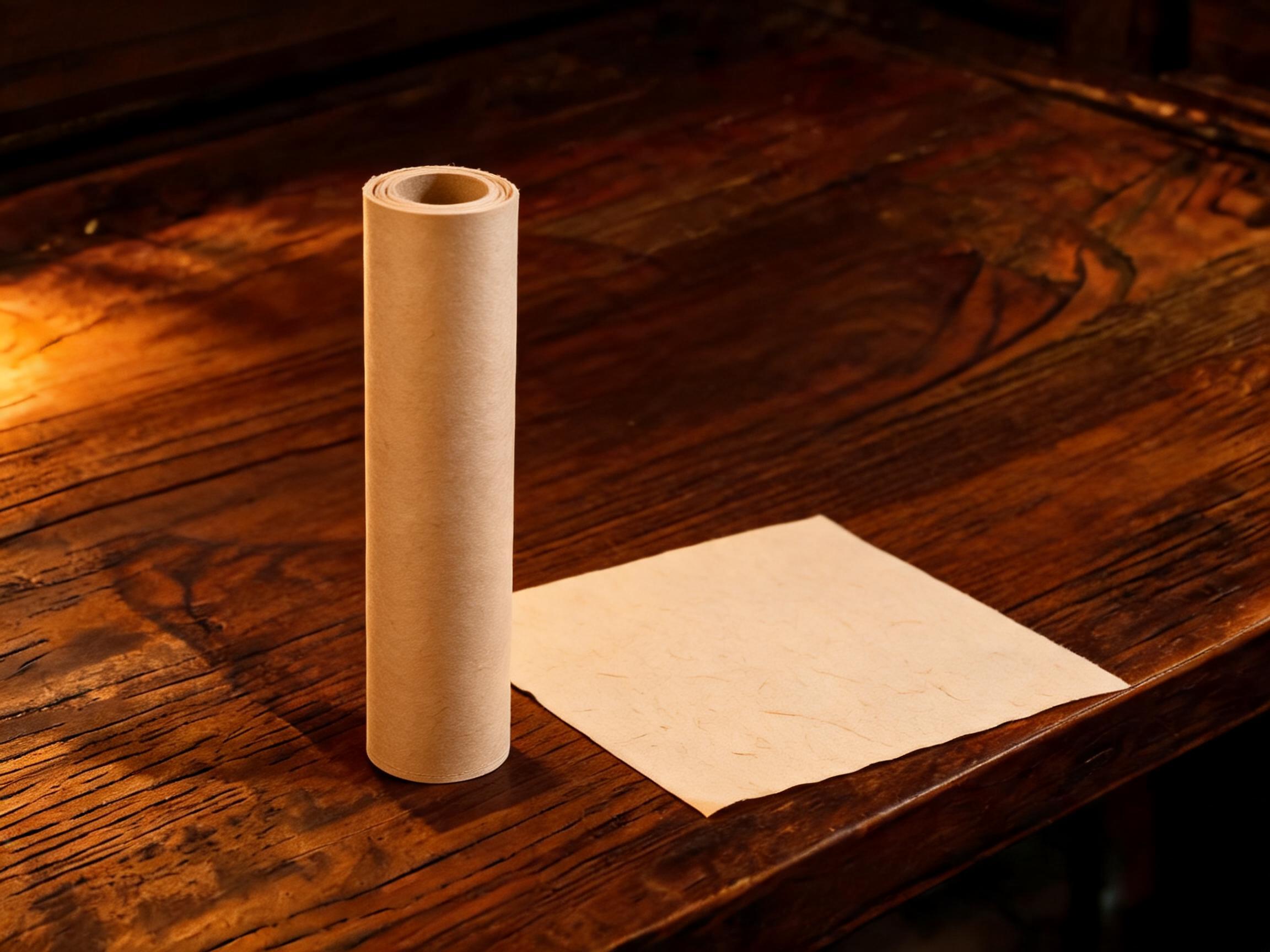
A practical prep guide for art supply distributors, studios, and school programs: flattening rolled Xuan, avoiding creases, testing ink absorption, and matching prep to raw or treated grades — with stocking notes for raw, student, and roll formats.
Preparation and Use
Rolled or flat-packed Xuan paper rarely arrives ready to write on. Sheets can carry a light curl, a fold line, or a drier surface than the artist expects. For distributors, studios, and school programs, a short conditioning routine avoids wasted sheets and inconsistent results. This guide covers flattening, crease control, moisture handling, and how to test absorption on a corner before committing a full sheet. It also explains how preparation differs between raw and treated grades, and what to consider when stocking.
- Unroll or unstack Xuan gently; never pull a sheet flat by force.
- Let the paper adjust to room conditions before writing.
- Test ink on a corner before starting a full sheet.
- Raw and treated Xuan behave differently — match prep to grade.
Why Xuan Paper Needs Preparation
Xuan paper is a bark-fibre paper, and its behaviour on the brush depends on how the sheet sits on the desk. A sheet that has been rolled tightly can retain a curve that lifts the centre off the surface; a creased sheet can channel ink along the fold. Neither problem is a defect — both are handled before writing.
Grades also differ. Raw Xuan is unsized and absorbent, so it responds quickly to ink. Treated Xuan, used for fine-line Gongbi work, carries a sizing treatment that slows absorption. The same flattening routine works for both, but the absorption test and the writing approach do not.
Step 1: Flatten the Sheet Without Adding Creases
Working from a roll
Rolled paper should be unrolled on a clean, dry surface and allowed to relax under light weight. Place the sheet between clean blotters or plain paper if the surface is dusty. Use flat weights along the edges rather than pressing hard on the centre. Do not flex the sheet back and forth to speed it up — that is how creases and fibre damage start.
If you stock Xuan Paper Roll, note that it is wound under controlled tension and packed in a reinforced tube carton. This reduces set-in creases from transport, but the paper still benefits from a short rest period after unrolling.
Working from flat sheets
Flat sheets are easier to handle. Lay several sheets on a dry board and let them settle. If a corner has lifted, weight it lightly. Avoid stacking heavy objects directly on a single sheet, which can transfer texture from the object to the paper.
In humid conditions, paper may feel soft and slightly damp. Move it to a drier room with good air circulation before writing. Do not use direct heat such as a hair dryer — it can dry the sheet unevenly.
Step 2: Let the Sheet Adjust to Room Conditions
Paper takes on moisture from the air. A sheet that has just come out of a sealed pack or a cold truck may behave differently from one that has sat on the desk for a while. Allow sheets to adjust before the first stroke. The exact time depends on your climate and storage, so there is no single figure that fits every studio. Judge by feel: the paper should lie flat, feel neither brittle nor damp, and show no visible curl at the edges.
Keep the working area out of direct sunlight and away from air-conditioning vents. Rapid drying can pull the sheet out of shape midway through a piece.
Step 3: Test Ink Absorption on a Corner
This is the step most often skipped, and it is the one that prevents a ruined full sheet. Every batch of Xuan paper can vary slightly, and raw versus treated grades respond very differently.
- Use a corner or edge. Make one or two test marks with the same ink and brush you plan to use.
- Watch the spread. Raw Xuan will bleed outward into the fibre. Treated Xuan for Gongbi keeps the line tighter.
- Check the reverse. Turn the sheet over to see how far the ink has travelled through.
- Adjust before you commit. If the line spreads more than you want, reduce the water in your brush or change your ink load. If the line feels dry, load more.
For distributors and studios, a quick corner test also protects trainees and students from writing on a sheet that behaves unexpectedly.
Matching Preparation to the Grade
| Grade | General behaviour | Preparation focus |
|---|---|---|
| Raw Xuan | Unsized, absorbent; ink spreads quickly | Flatten well, test bleed radius on a corner, control brush load |
| Treated Xuan (Gongbi) | Sizing slows absorption; lines stay crisper | Flatten and adjust to room conditions; test line neatness rather than spread |
| Student practice sheets | Practice-grade, consistent within a batch | Simple flattening; corner test still useful for ink load |
These are general differences between raw and treated Xuan. Always confirm the specific grade with your supplier, because sizing levels vary between products and batches.
Stocking Notes for Distributors and Programs
Different buyers need different formats. A studio running daily practice sessions uses far more small sheets than a calligraphy gallery preparing exhibition pieces. Matching format to use reduces waste and handling time.
Raw Xuan Paper Professional
The Raw Xuan Paper Professional (SKU GMO-XP-001) is a bark-fibre qingpi paper in a standard 69×138 cm sheet, with custom sizes from 50×100 cm to 97×180 cm. It is supplied with batch ink bleed testing and documented bleed radius, plus archival grade aging stability documented for 100+ years. MOQ is 200 sheets, with a lead time of 30–45 days after sample approval. This format suits workshops and studios that want a documented raw grade and a consistent starting point for conditioning.
Student Practice Xuan Paper
The Student Practice Xuan Paper (GMO-XP-003) comes as 33×69 cm practice sheets with batch absorption testing. MOQ is 1000 sheets. School programs and high-volume teaching studios can use these for daily exercises while reserving finer grades for finished work.
Xuan Paper Roll
The Xuan Paper Roll (GMO-XP-004) is bark-fibre based, available in widths of 50, 70, and 97 cm (custom 30–150 cm) and lengths of 10, 20, and 50 m. MOQ is 50 rolls. Controlled-tension winding and reinforced tube cartons help prevent creases in transit, which reduces conditioning time at the destination. Rolls suit studios that cut sheets to their own sizes, and buyers who want to avoid the storage footprint of large flat stock.
Common Preparation Mistakes
- Pulling a rolled sheet flat. This stretches the fibre and creates wavy edges. Unroll and weight instead.
- Writing on a cold or damp sheet. Let the paper reach room temperature first.
- Skipping the corner test. A five-second test can save a full sheet.
- Using one prep routine for all grades. Raw and treated Xuan need different ink loads, even if the flattening step is the same.
- Storing rolls upright for long periods. Horizontal storage with the tube supported helps the paper keep its shape.
FAQ
Can I iron Xuan paper to flatten it? Direct heat is not recommended. It can dry the sheet unevenly. Unroll and weight it under light pressure instead.
How do I know if a batch is consistent? Ask your supplier for batch test records. Raw Xuan Paper Professional is supplied with batch ink bleed testing and documented bleed radius; Student Practice Xuan Paper carries batch absorption testing. These records help you compare batches before committing.
Should I test every sheet? Test on a corner before a full piece, especially with a new batch or a new grade. One test mark is usually enough once you know the paper.
Does treated Xuan need different preparation? The flattening step is similar, but treated Xuan for Gongbi resists ink more than raw Xuan. Test line neatness rather than bleed spread.
Next Step
If you are sourcing Xuan paper for a studio, school program, or distribution line, request a sample and run the corner test on the grade you plan to stock. Confirm sizing, sheet or roll format, MOQ, and lead time with your supplier before placing a bulk order.