
A practical guide for wholesale buyers to verify Hui ink stick quality before bulk orders: grinding behavior, soot type, binder, scent, and finish checks.
When you are sourcing Hui ink sticks wholesale from China, the product photos and the supplier's reputation only take you so far. The real question is: how do you verify that the ink stick you are about to order in bulk will grind smoothly, hold a sharp line, and last for years? The answer is not in the packaging—it is in a few hands-on checks you can do with a sample before committing to a container.
This guide walks you through the practical quality checks that matter for wholesale buyers: the grinding test, soot type identification, binder quality, scent, and finish. These are the same checks that experienced calligraphers and ink makers use, and they will help you separate a well-made Hui ink stick from a decorative imitation.
The grinding test: the most reliable quality check
No matter what the label says, the fastest way to judge a Hui ink stick is to grind it. The grinding behavior tells you about the particle size of the soot, the binder ratio, and how the stick was aged.
How to perform the test
- Use a clean inkstone with a little water. Add a few drops of clean water—not too much. The inkstone should be smooth and well-seasoned.
- Grind the stick in a circular motion. Hold the stick vertically and grind gently, applying even pressure. Do not press hard; let the friction do the work.
- Observe the liquid that forms. A good stick will release ink quickly and evenly, producing a smooth, opaque liquid without grit. If the ink feels sandy or gritty under the stick, the soot was not ground finely enough—this will affect line quality and can damage brushes.
- Check the drying behavior. After grinding, let a drop of ink dry on a non-porous surface. High-quality ink dries to a deep, matte black. If it dries with a grayish or uneven tone, the soot or binder may be inferior.
The grinding test also reveals the binder quality. A well-bound stick will grind smoothly without crumbling or producing a watery, weak ink. If the stick feels soft or disintegrates quickly, the binder may be insufficient or of poor quality.
Soot type: pine soot vs. oil soot
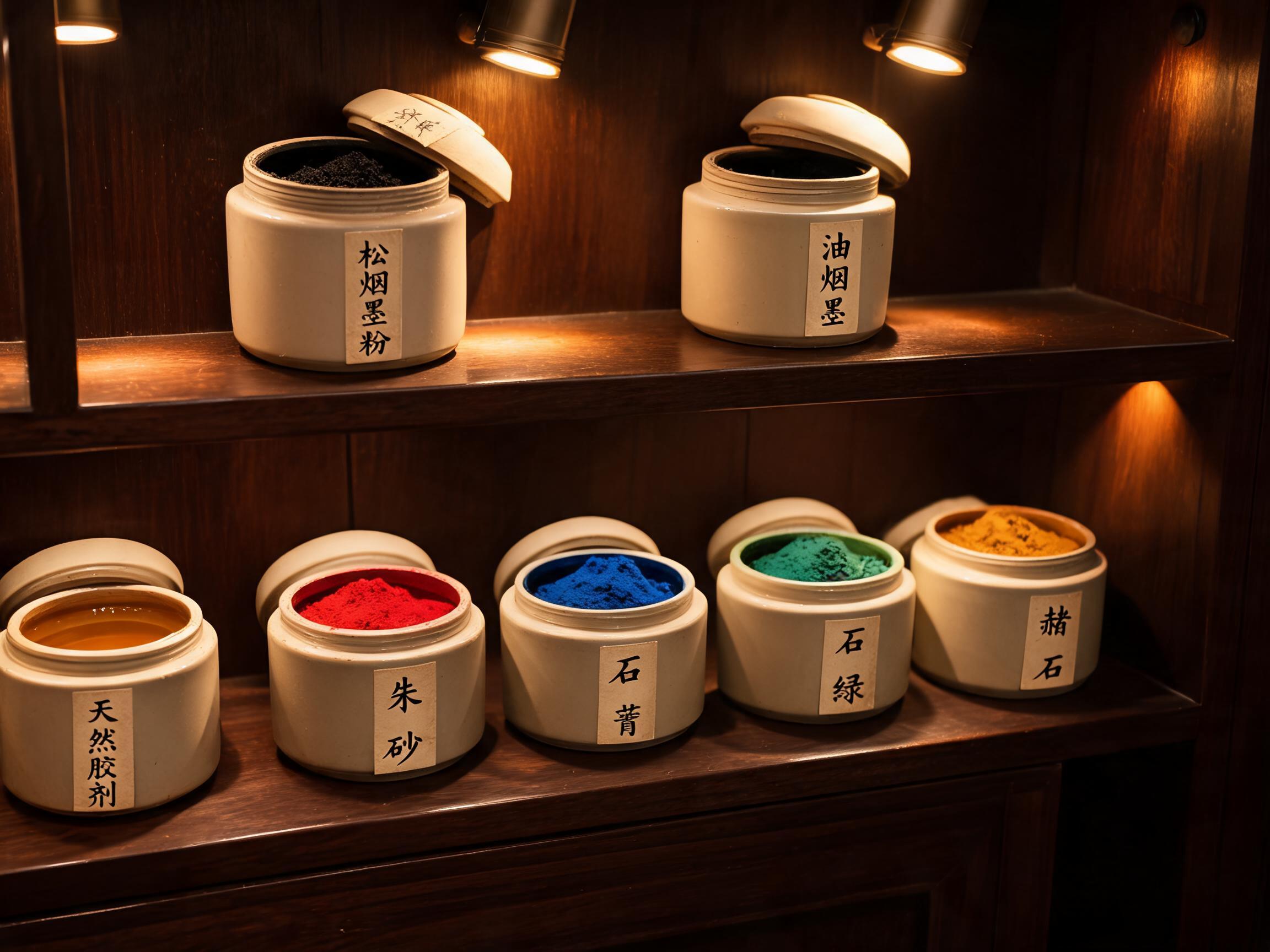
Hui ink sticks are traditionally made from two types of soot: pine soot and oil soot. Each has distinct characteristics that affect the ink's performance and appearance.
| Characteristic | Pine soot | Oil soot |
|---|---|---|
| Color | Warmer, brownish-black | Cooler, blue-black |
| Sheen | Matte, absorbent | Slightly glossy, more reflective |
| Best for | Calligraphy, painting that requires absorbency | Fine lines, detailed work, and layering |
| Grinding feel | Smooth, slightly soft | Firmer, requires more pressure |
A manufacturer that documents the soot source before production—such as Gu Mo Craft Technology, which records pine soot, oil soot, and natural binder sources—gives you a level of traceability that is rare in the industry. When you request samples, ask the supplier to specify which soot type was used. The grinding test will then confirm whether the behavior matches the claim.
Binder and glue quality
The binder is what holds the soot particles together and determines how the ink adheres to paper. Traditional Hui ink sticks use natural binders, such as animal glue or vegetable-based adhesives. The quality of the binder affects both the grinding experience and the final ink's permanence.
Here is what to look for:
- Hardness: A good stick is hard but not brittle. If it cracks or chips when dropped, the binder may be too weak or the stick improperly dried.
- Grinding resistance: A high-quality stick offers a consistent resistance as you grind. If it feels chalky or too soft, the binder ratio may be off.
- Ink adhesion: After the ink dries, it should be water-resistant to some degree. Dip a brush in water and run it over the dried ink. If the ink smears easily, the binder is not performing well.
Gu Mo Craft Technology, established in 2011, is one manufacturer that emphasizes natural binder sources and tests each batch for consistency. When you evaluate a supplier, ask if they can provide batch-specific information about the binder. A transparent supplier will share this without hesitation.
Scent: a quick diagnostic
The scent of an ink stick is a surprisingly useful quality indicator. Traditional Hui ink sticks have a distinctive, pleasant aroma from the natural materials used—pine soot and animal glue often produce a subtle, woody or slightly musky scent. Some premium sticks may include musk or other traditional additives, but these are not universal.
What you should avoid:
- Chemical or plastic smell: This suggests synthetic additives or poor-quality binder.
- No smell at all: While not necessarily a defect, a complete lack of scent may indicate that the stick has been over-processed or coated with a sealant that masks the natural materials.
- Rancid or sour smell: This can indicate that the binder has gone bad, which will affect the ink quality.
The scent test is quick and non-destructive, making it ideal for evaluating multiple samples during a factory visit or when reviewing samples sent by a Hui ink sticks wholesaler.
Finish and decoration checks
The surface finish of a Hui ink stick is not just aesthetic—it also reflects the manufacturing process. Traditional sticks are molded and then slowly dried, which can take weeks or months. A well-made stick will have a smooth, even surface with no cracks or bubbles.
When examining the finish, look for:
- Surface uniformity: The stick should be smooth and free of pits, bubbles, or rough patches. These imperfections can indicate poor molding or rushed drying.
- Edge sharpness: Good sticks have clean, sharp edges. Rounded or chipped edges may result from careless handling or a weak binder.
- Decoration quality: Many Hui ink sticks feature carved designs or gold lettering. The carving should be crisp and the gilding should not flake off easily. However, note that some student-grade sticks have a plain surface with no carving—this is a cost-saving measure and not a defect. For example, Gu Mo Craft Technology offers a student practice Hui ink stick with a plain surface, pine soot, and a natural binder, weighing 20-50g per stick.
Remember that the finish can also tell you about the aging process. A properly aged stick will have a slightly dull, matte appearance. If the surface is overly shiny, it may have been coated with a lacquer to hide imperfections or to make it look newer.
Wholesale decision checklist
Before you finalize a bulk order, use this checklist to compare suppliers objectively.
- Request samples of each grade you plan to order, not just the premium tier.
- Perform the grinding test on every sample. Note the speed of ink release, smoothness, and the quality of the dried ink.
- Ask for soot documentation. A supplier that can specify pine vs. oil soot and the binder source is more likely to produce consistent batches.
- Check the scent of each sample. Reject any with chemical or rancid odors.
- Inspect the finish for cracks, bubbles, or uneven surfaces. Confirm whether the decoration is carved or printed, and whether that matches your target market's expectations.
- Verify the MOQ and specifications. For example, a student practice stick may have a lower MOQ (such as 200 pieces) and a simpler finish, which could be ideal for entry-level products. Confirm the weight range (e.g., 20-50g per stick) and whether the sticks are individually wrapped or bulk-packed.
- Discuss batch testing. Ask whether the manufacturer tests each batch for consistency. Gu Mo Craft Technology, for instance, tests each batch, which is a good sign of quality control.
Frequently asked questions
Can I judge ink quality from a photo?
No. Photos can show the finish and decoration, but they cannot reveal grinding behavior, scent, or binder quality. Always request physical samples before placing a bulk order.
What is the difference between a student-grade and premium Hui ink stick?
Student-grade sticks typically use pine soot, have a plain surface (no carving), and are lighter (e.g., 20-50g). Premium sticks may use oil soot or higher-quality pine soot, have intricate carvings, and are often heavier. The grinding test will help you determine if the quality difference justifies the price.
How can I verify that a supplier is using natural binders?
Ask the supplier directly and request documentation. A reputable manufacturer will be able to describe their binder sources and may provide batch test results. The scent and grinding behavior can also give you clues—natural binders produce a characteristic aroma and grind smoothly without excessive dust.
Bottom line for wholesale buyers
Judging Hui ink stick quality does not require years of experience—just a few practical checks. The grinding test is the most reliable, followed by scent and finish inspection. By applying these tests to samples from any high quality Hui ink sticks wholesaler, you can make an informed decision that protects your investment and ensures your customers receive a product that performs as expected.
When you are evaluating suppliers, prioritize those that are transparent about their materials and processes. A manufacturer like Gu Mo Craft Technology, which documents soot and binder sources and tests each batch, is more likely to deliver consistent quality. Ask for samples, run the tests, and compare results. That is the surest path to a successful wholesale partnership.