A practical buyer's guide to selecting Huizhou (Hui) ink sticks for wholesale: pine soot vs oil soot, weight and size options, matching inkstones, OEM customization, and QC/export documentation.
BUYER GUIDE · HUIZHOU INK
If you are sourcing chinese calligraphy ink stick products for resale in gift or collector channels, the first decision is not price. It is which ink formulation, weight range, and finish will match the end customer you serve. This guide walks through a selection framework for Huizhou (Hui) ink sticks—covering pine soot vs oil soot, weight and size options, pairing with inkstones, OEM customization, and the quality-control and export documentation you should expect from a supplier.
- Choose oil soot for rich, glossy black and pine soot for a softer, matte tone—match to your customers' calligraphy style and preference.
- Weight range 30g–150g per stick covers practice to collector segments; select by usage frequency and display purpose.
- Pair ink stick grade with inkstone grade—practice sets work with a basic Practice Inkstone, while premium sticks suit a Classic Duan Inkstone.
- OEM is available for patterns, specs, and packaging—useful for branding and market differentiation.
- Always request batch-level QC photo reports and confirm export documentation before ordering.
Why the buyer's selection decision matters
Wholesale buyers of chinese calligraphy ink stick products are not end users. Your customers—whether in Southeast Asia, Japan/Korea, the Middle East, Eastern Europe, Africa, or the Chinese diaspora in the Americas—will judge the product by how it grinds, how it performs on paper, and how it looks in a gift box. Getting the formulation and size wrong means returns, complaints, and lost repeat orders. The selection framework below is designed to prevent that.
Pine soot vs oil soot: which to stock?
Huizhou ink sticks are traditionally made from either pine soot or oil soot, each with distinct characteristics that appeal to different user segments.
| Attribute | Pine Soot Ink Stick | Oil Soot Ink Stick |
|---|---|---|
| Tone | Softer, matte black with a slight warm hue | Rich, deep black with a glossy sheen |
| Grinding feel | Faster to grind, less sticky | Smoother, requires more time but yields finer ink |
| Best for | Practice, calligraphy that favors subtle gradations | Artwork, collector pieces, formal writing |
| Price point | Generally more accessible | Premium positioning |
For a balanced wholesale inventory, consider stocking both. The Premium Pine Soot Hui Ink Stick appeals to value-conscious customers and those who prefer a traditional matte finish. The Oil Soot Hui Ink Stick Classic is a strong choice for collectors and gift buyers who expect a glossy, high-end result.
Weight and size: matching stick to customer segment
Huizhou ink sticks are available in a range of weights, typically from 30g to 150g per stick. The right weight depends on how the end user will use the product:
- 30g–50g: Ideal for travel sets, beginner practice, and as affordable gift items. Low commitment for new users.
- 60g–100g: The most versatile range for everyday calligraphy and mid-tier gifts. Balances usability and perceived value.
- 120g–150g: Best for serious practitioners, collectors, and premium gift boxes. Larger sticks last longer and feel more substantial.
When building your product mix, analyze your target market: if you sell to students or casual hobbyists, focus on smaller sizes; if you cater to collectors or high-end gift buyers, include the larger weights. The Student Practice Hui Ink Stick is a practical entry-level option to test demand.
Grinding pairing: ink stick + inkstone
The ink stick is only half the system. How it pairs with an inkstone affects grinding speed, ink quality, and user satisfaction. A rough, coarse inkstone will grind faster but may produce uneven particles; a smooth, fine inkstone yields a finer ink but takes longer.
For wholesale, you can offer complete sets that pair an ink stick with an appropriate inkstone. For practice-grade products, the Practice Inkstone is a cost-effective match. For premium sticks, recommend the Classic Duan Inkstone, which is known for its smooth grinding surface and is favored by serious calligraphers.
OEM customization: patterns, specs, and packaging
OEM is a powerful way to differentiate your product line. Suppliers like ours (founded in 2011, with an integrated chain from raw material selection to export) offer customization on ink stick patterns, specifications, and packaging. This means you can:
- Add your own brand logo or design to the stick surface.
- Choose specific weights and dimensions that fit your market.
- Design custom gift boxes that appeal to your customer base.
When discussing OEM, ask for clear specs on what is included: minimum order quantity (for reference, our oil soot classic has an MOQ of 50 pcs), lead time, and any setup costs. Always request samples before committing to a full production run.
Quality control and export documentation
For international wholesale, QC and documentation are non-negotiable. A reliable supplier should provide:
- Batch-level QC photo reports—so you can verify consistency across production runs.
- Export documentation—including packing lists, commercial invoices, and any certificates required by your destination country.
- Clear communication on material sourcing—know whether the stick uses natural binders and traditional soot-refining methods, which affect quality and market perception.
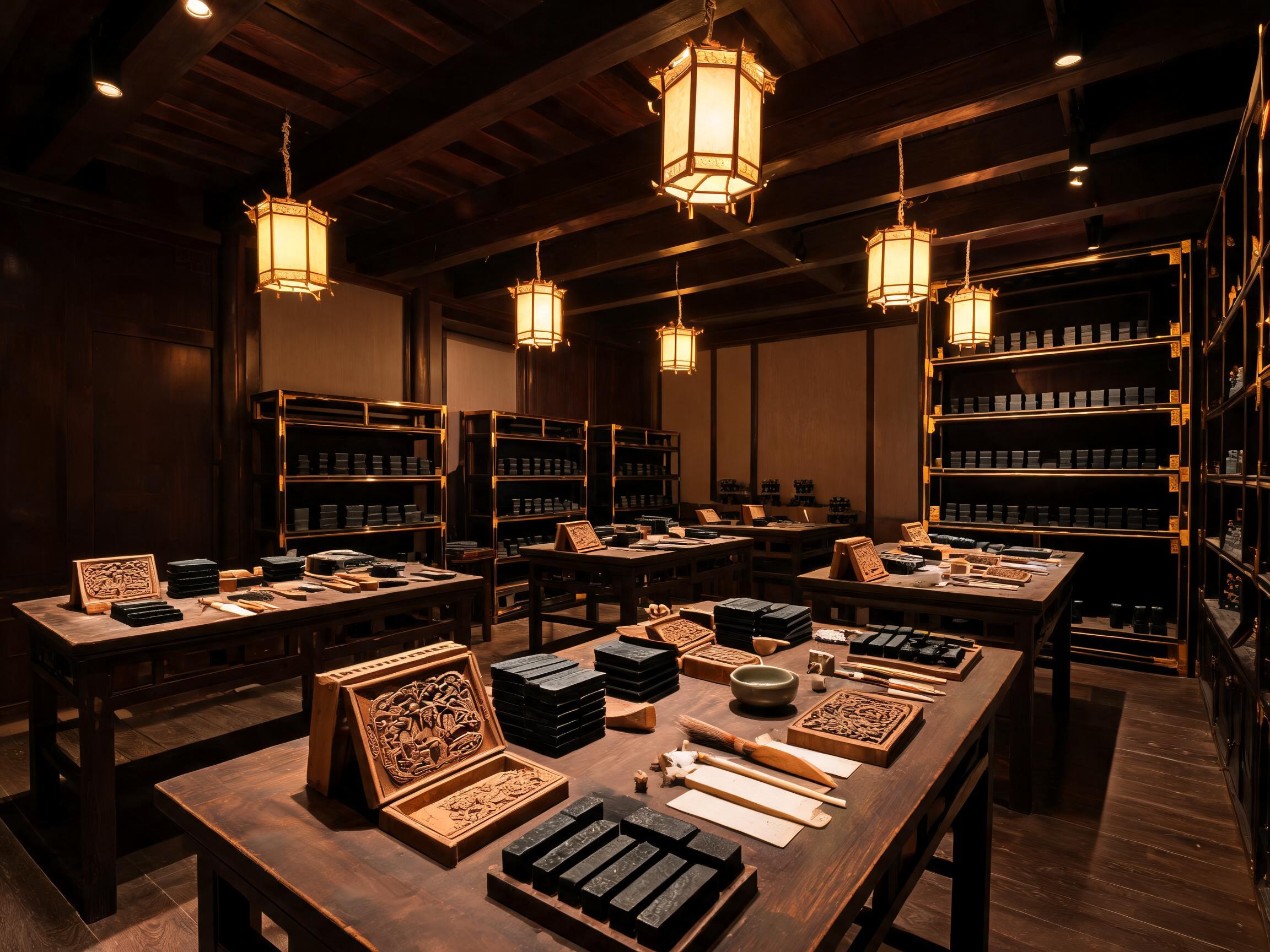
Ask your supplier about their production process: ancient-method soot refining, glue mixing and hammering, mold pressing, and air drying are traditional steps that indicate a quality product. Confirm these are part of their standard workflow.
Common mistakes to avoid when sourcing
- Choosing based on price alone—cheap sticks may crack, grind poorly, or contain low-grade soot that disappoints customers.
- Ignoring weight consistency—check that sticks are uniform in weight and size, especially for gift sets.
- Overlooking packaging quality—for gift channels, the box is part of the product. Ensure it protects the stick and looks premium.
- Skipping sample testing—always test grind quality, ink tone, and durability before placing a large order.
FAQ for wholesale buyers
What is the difference between pine soot and oil soot ink sticks?
Pine soot produces a matte, softer black; oil soot yields a glossy, deeper black. Choose based on your customers' preferences and the product's positioning.
What weight should I order for a first trial?
Start with a mix of 30g–50g for practice and 100g+ for premium lines. This lets you test demand across segments.
Can I get custom packaging for my brand?
Yes, OEM is available for patterns, specs, and packaging. Discuss your requirements with the supplier to understand MOQ and lead times.
How do I ensure consistent quality across batches?
Request batch-level QC photo reports and, if possible, visit the factory or request third-party inspection. A supplier with an integrated chain from raw materials to export is better positioned to maintain consistency.
Next steps
When you are ready to source chinese calligraphy ink stick products, use this framework to shortlist suppliers. Ask for product samples, verify their QC process, and confirm they can meet your volume and customization needs. For a starting point, review our Oil Soot Hui Ink Stick Classic and Premium Pine Soot Hui Ink Stick—both are available for wholesale with batch-level QC photo reports. Contact us to discuss your specific requirements and request a sample.