
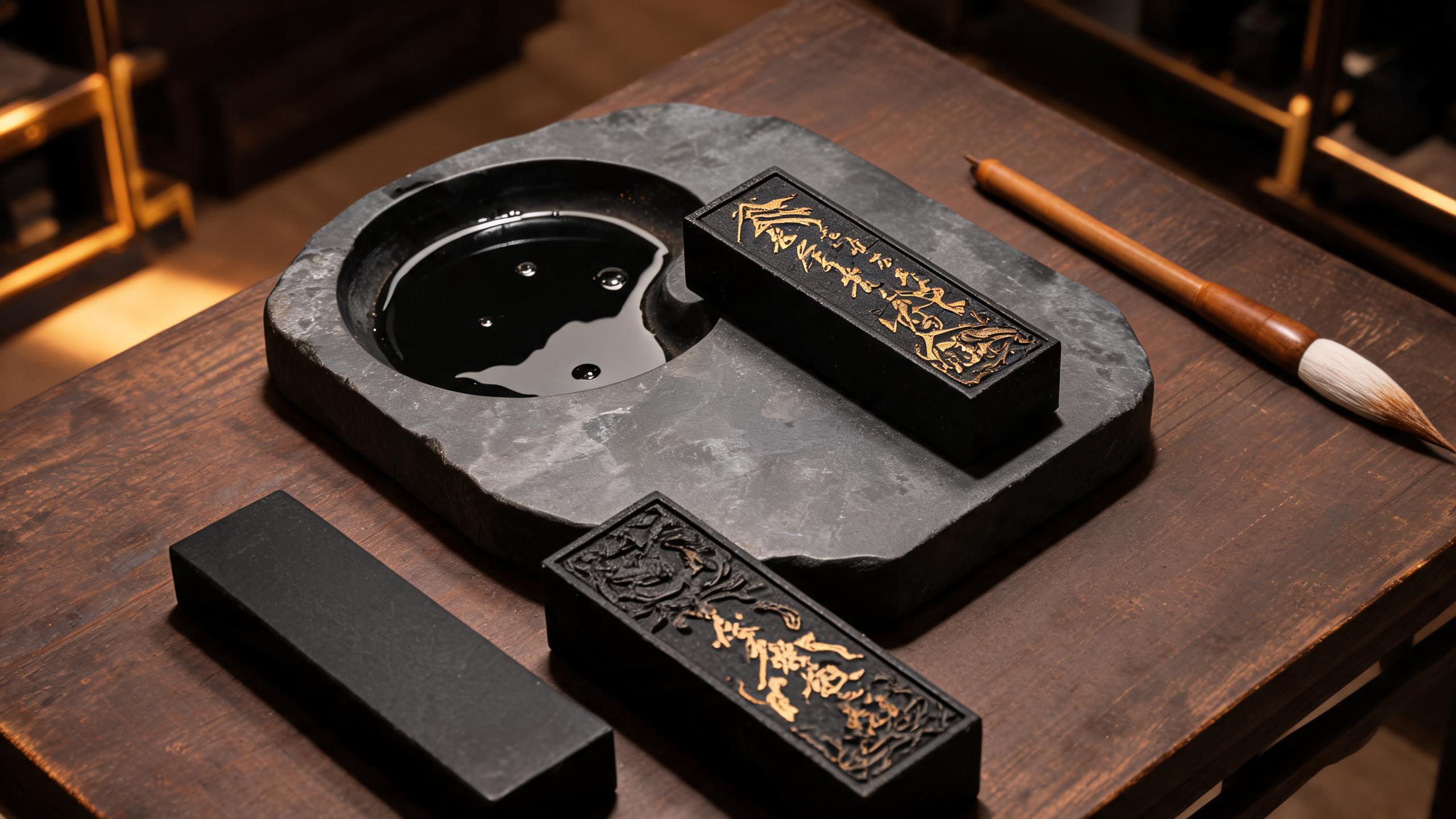
A practical guide for art supply dealers sourcing Chinese writing ink. Compare liquid ink and ink sticks, understand concentration and glue, learn storage best practices, and get tips on MOQ and quality judgment.
BUYER GUIDE
If you are an art supply dealer adding Chinese writing ink to your catalog, you need to make decisions that affect your inventory cost, shelf life, and customer satisfaction. This guide covers the key sourcing choices: liquid ink versus ink sticks, concentration and glue, storage, MOQ, and how to judge quality. It is written for buyers, not end users, so we focus on what matters for procurement.
- Liquid ink is ready to use, consistent, and easier for beginners; ink sticks offer traditional quality and longer shelf life but require grinding.
- Concentration (often labeled as "degree" or "Bé" scale) affects flow, opacity, and drying time – specify your target.
- Glue (binder) type and amount determine adhesion and sheen; more glue usually means more gloss but slower drying.
- Storage conditions (temperature, humidity, light) directly impact shelf life – request packaging that protects the product.
- MOQ varies widely; confirm with supplier and consider sample testing before bulk orders.
- Quality judgment requires checking color depth, flow, drying time, and absence of sediment – ask for spec sheets and samples.
Liquid Ink vs. Ink Stick: Which to Stock?
The first decision is product form. Both have distinct markets and logistics implications.
Liquid Ink (Calligraphy Liquid Ink Wholesale)
Liquid ink is pre-mixed, ready to use, and consistent in quality. It is the dominant choice for modern calligraphy and brush painting, especially for beginners and educational use. For dealers, liquid ink offers:
- Convenience: No grinding or preparation needed.
- Consistency: Each bottle has the same concentration and performance.
- Longer shelf life if sealed properly – typically 2–3 years unopened.
- Easier quality control: You can test a sample and replicate results.
However, liquid ink may contain preservatives and has a higher water content, which can affect the depth of black and the texture of strokes. Some purists prefer the traditional ink stick.
Ink Stick (Solid Ink)
Ink sticks are made from soot (lampblack) and glue, compressed into a solid form. Users grind them on an ink stone with water to produce fresh ink. For dealers, ink sticks offer:
- Traditional appeal: Preferred by serious calligraphers and artists.
- Longer shelf life: If stored dry, they can last for years without degradation.
- Higher perceived value: Can be sold as premium or gift items.
- Lower shipping weight compared to liquid (less water).
But ink sticks require more customer education, and the grinding process can be a barrier for casual users. Also, quality varies significantly among manufacturers – the same stick can produce different results depending on the water and grinding technique.
| Factor | Liquid Ink | Ink Stick |
|---|---|---|
| Convenience | Ready to use | Requires grinding |
| Consistency | High (bottled) | Variable (depends on grinding) |
| Shelf life | 2–3 years unopened | Many years if kept dry |
| Target customer | Beginners, students, casual users | Professionals, traditional artists |
| Shipping weight | Heavier (water content) | Lighter |
| Price point | Lower per unit | Higher per unit (premium) |
Understanding Concentration and Glue
Two parameters define ink performance: concentration and glue content. They are often overlooked but critical for customer satisfaction.
Concentration
Concentration refers to the amount of pigment relative to the liquid. In the industry, it may be indicated by a "degree" (e.g., 45° Bé) or simply described as "high" or "low." Higher concentration means:
- Darker, more opaque strokes.
- Better coverage on paper.
- Thicker consistency, which can clog pens if too high.
- Slower drying time.
For calligraphy, a medium concentration is often preferred for smooth flow. For painting, higher concentration may be desired for bold effects. As a dealer, you should specify the concentration you need based on your target market. Ask suppliers for a spec sheet that includes concentration values.
Glue (Binder)
Glue is the binder that holds the pigment particles together and adheres them to the paper. Traditional glue is animal-based (e.g., bone glue), while modern liquid inks may use synthetic binders. Glue affects:
- Adhesion: More glue means better sticking to the surface.
- Sheen: High glue content often gives a glossy finish.
- Drying time: More glue slows drying.
- Water resistance: Once dry, high-glue inks are more water-resistant.
For art supply dealers, it's important to know the glue type for safety and performance. Some customers may have allergies to animal products, so synthetic options are available. Always request the glue type and percentage in the product specification.
Storage and Shelf Life
Proper storage extends the life of both liquid ink and ink sticks. As a dealer, you need to ensure your warehouse conditions are suitable and that packaging protects the product during transit and on shelves.
Liquid Ink
- Store in a cool, dry place away from direct sunlight.
- Avoid extreme temperatures – freezing can cause separation, and heat can accelerate evaporation.
- Keep bottles tightly sealed to prevent drying.
- Check for sediment or skin formation on the surface – this indicates aging.
Ink Sticks
- Keep in a dry environment – humidity can cause mold or softening.
- Avoid direct sunlight to prevent cracking.
- Store individually or with protective wrapping to avoid scratches.
When importing, consider the climate of your destination. If you are shipping to a humid region, request moisture-proof packaging. For liquid ink, ensure the caps are sealed with an inner seal to prevent leaks.
MOQ and Supplier Negotiation
Minimum Order Quantity (MOQ) is a key commercial term. MOQs for Chinese writing ink vary widely depending on the product type and manufacturer.
- Liquid ink often has a lower MOQ, sometimes as low as 100–200 bottles for standard sizes (e.g., 250ml or 500ml).
- Ink sticks may have higher MOQs because they are produced in batches – typical MOQ could be 500 pieces or more.
- Custom packaging or private label usually increases MOQ – expect at least 1,000 units for custom bottles or boxes.
When negotiating, consider:
- Ask for a sample order before committing to bulk.
- Clarify whether the MOQ is per color/size or mixed.
- Discuss lead time – standard production may take 15–30 days, plus shipping.
- Request a price break for higher volumes, but be realistic about your storage capacity.
Always get the MOQ in writing and confirm the payment terms (e.g., T/T, L/C). For new suppliers, a 30% deposit is common, with balance before shipment.
How to Judge Quality
Quality is the most critical factor for repeat business. Here are practical tests you can do with samples:
Color Depth and Opacity
Apply a stroke on standard calligraphy paper. High-quality ink should produce a deep, rich black with even coverage. If the ink appears gray or streaky, it may be too diluted or of low pigment quality.
Flow and Consistency
Dip a brush and draw a line. The ink should flow smoothly without beading or skipping. If it is too thick, it may clog; if too thin, it will bleed on paper. Test on different paper types to see how it behaves.
Drying Time
After applying, note how long it takes to dry. For calligraphy, a moderate drying time is preferred – too fast may cause cracking, too slow may smudge. Compare with a reference product.
Sediment and Separation
For liquid ink, shake the bottle and inspect for sediment. Quality ink should be homogeneous; if particles settle quickly, it may indicate poor grinding or insufficient binder. For ink sticks, grind a small amount and check for gritty texture.
Smell and Safety
Ink should have a mild, non-toxic odor. Strong chemical smells may indicate low-quality solvents or preservatives. Request a Material Safety Data Sheet (MSDS) for liquid ink, especially if you sell to schools.
- Color depth and opacity
- Flow consistency on brush
- Drying time
- Sediment or separation
- Odor and safety documentation
Frequently Asked Questions
What is the typical shelf life of liquid ink?
Unopened, high-quality liquid ink can last 2–3 years. Once opened, it should be used within 6–12 months, depending on storage. Always check for changes in smell or consistency.
Can I sell both liquid ink and ink sticks?
Yes, many dealers stock both to cater to different customer segments. Liquid ink for beginners and convenience, ink sticks for traditionalists and professionals. It also diversifies your risk.
How do I choose the right concentration for my market?
If your customers are mainly students or hobbyists, a medium concentration (around 40–45° Bé) is safe. For professional calligraphers, offer a high-concentration option. Ask your supplier for recommendations based on usage.
Are there any import restrictions on ink?
Some countries have regulations on chemicals in inks, especially for children's products. Ensure your supplier can provide compliance documents such as EN71 or ASTM D-4236 if needed. Check with your local customs for specific requirements.
Next Steps for Sourcing
Before placing a bulk order, request samples from at least two suppliers. Compare them using the quality checklist above. Ask for detailed specifications, including concentration, glue type, and packaging details. Confirm MOQ, lead time, and payment terms in writing.
If you are looking for a reliable partner for calligraphy liquid ink wholesale or Chinese ink sourcing, we are happy to discuss your requirements. Contact us with your target market, desired volume, and any specific quality standards you need.