
A procurement guide for overseas B2B buyers comparing Chinese ink formats. Learn what Chinese ink is made of, how ink sticks, ink blocks and liquid ink differ, which format suits which sales channel, and how to evaluate a wholesale supplier. Includes a format comparison table, quality checks and an FAQ.
If you are sourcing Chinese ink for a distributor catalogue, a gift or collector channel, a religious venue or a school supply line, the first decision is not price — it is format. Ink sticks, ink blocks and liquid ink are made from related raw materials, but they behave differently in storage, in use and in what they let you sell. This guide compares the three formats on the points that actually affect a purchase order, and closes with a supplier-evaluation checklist.
Key takeaways
- All three formats are built on soot plus a natural binder; the difference is how the ink is formed, dried and packaged.
- Ink sticks suit gift, collector and practice channels; liquid ink suits volume, classroom and studio use.
- Judge a supplier on batch consistency, packaging integrity and export documentation — not on appearance alone.
In this article
What Chinese ink is made of
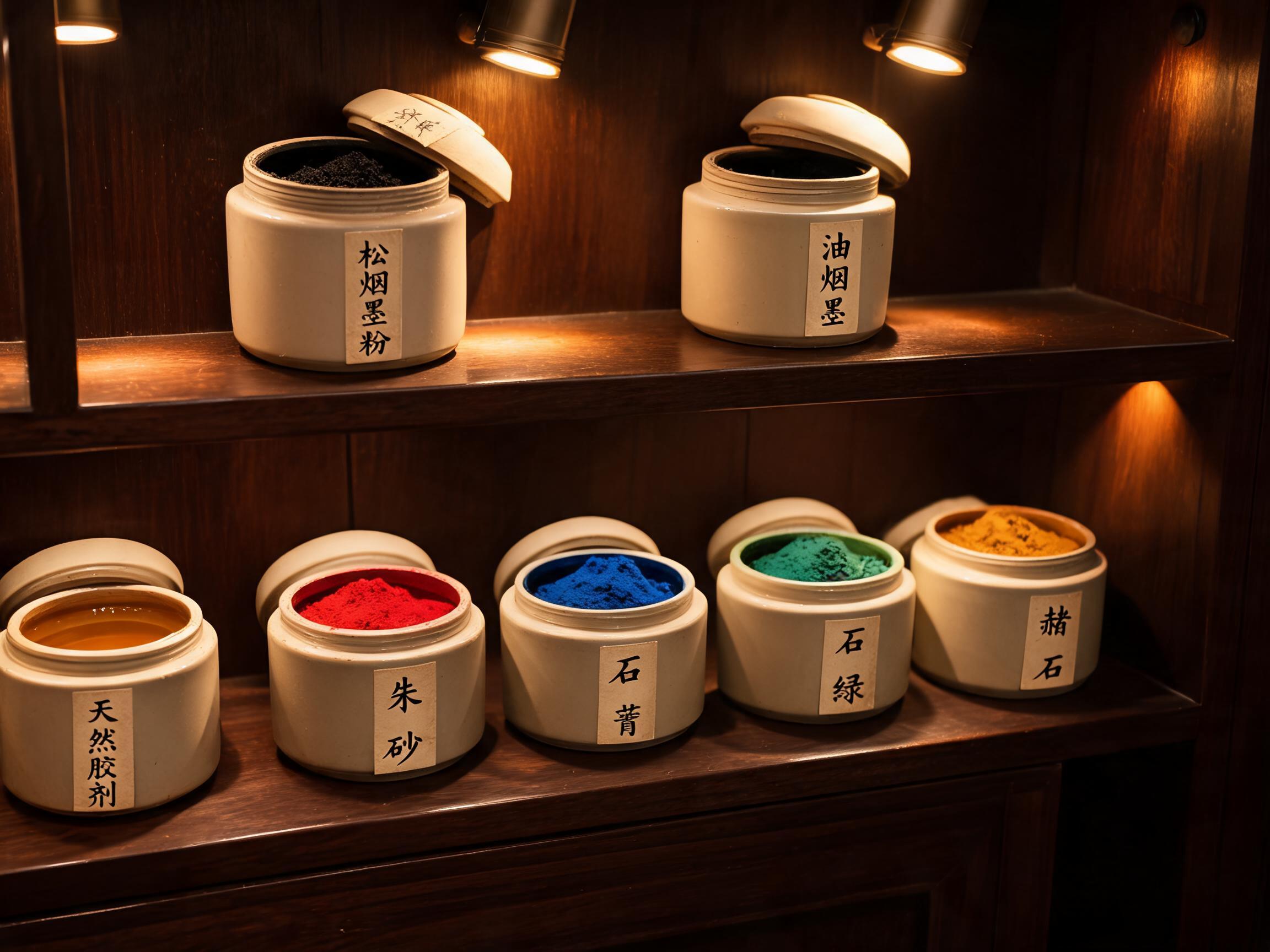
Chinese ink is a dispersion of fine soot in a binder, traditionally shaped and dried into a solid or bottled as a ready-to-use liquid. The soot source is the main variable: oil soot and pine soot are the two common types, and they are chosen for the tone and working behaviour the buyer wants.
In solid form, the process is roughly: refine the soot, mix it with a natural binder, pound the mixture, press it into a mold, then shade-dry the pressed stick or block. In liquid form, refined soot and binder are combined and bottled, so the buyer skips the grinding step entirely.
For a wholesale buyer, the practical consequence is simple: the raw-material story is similar across formats, but the handling story is not. A solid ink must be ground with water before use and needs protection from moisture and impact. A liquid ink is opened and used, but has a shelf life and depends on bottle sealing.
The three formats at a glance
Ink stick
A stick is a small, hand-held solid ink, typically 20g to 150g. It is ground on an inkstone with a little water. Sticks are the format most associated with calligraphy practice and with gift presentation, because they can be carved, polished or left plain and packed in a box.
Example: the Oil Soot Hui Ink Stick Classic is an oil-soot stick with a natural binder, 30g–150g per stick, smooth polished surface, MOQ 50 pcs, with custom label and gift box options and batch-level QC photo reports. For school and practice channels where cost per unit matters more than presentation, the Student Practice Hui Ink Stick is a pine-soot stick, 20g–50g, plain surface with no carving, MOQ 200 pcs, supplied in bulk packaging for school supply.
Ink block / ink cake
A block or cake is the same solid-ink concept in a larger, flatter pressed form. Buyers often treat blocks as a decorative or collector item rather than a daily-use consumable. The working difference from a stick is mainly presentation and surface area: a block offers a larger face for carving or relief, which is why it appears in desk sets and ornament assortments. For procurement, blocks sit in the same storage category as sticks — keep them dry, keep them from knocking against each other.
Liquid ink
Liquid ink is bottled, ready to pour, and needs no grinding. It is the format that scales for classrooms, studios and any channel where the end user wants to start writing immediately. Two product directions matter for wholesale:
- Premium Bottled Calligraphy Liquid Ink — refined soot with natural binder, 100ml/250ml/500ml, shelf life 24 months unopened, MOQ 100 bottles, tamper-evident sealed bottles, smooth flow, custom label and volume options, export QC documentation.
- Concentrated Matte Black Liquid Ink — concentrated refined soot, 250ml/500ml, deep matte black tone-matched, MOQ 100 bottles, acid-free, lightfast grade 5, tone consistency certificate included.
Format comparison table
| Point of comparison | Ink stick | Ink block / cake | Liquid ink |
|---|---|---|---|
| Form | Small solid stick, ground with water | Larger flat pressed solid | Bottled, ready to use |
| Typical size / volume | 20g–150g per stick | Pressed solid form | 100ml / 250ml / 500ml |
| Preparation needed | Grinding on an inkstone | Grinding on an inkstone | None |
| Storage risk | Moisture, impact, chipping | Moisture, impact, edge damage | Seal integrity; 24-month unopened shelf life |
| Presentation potential | Carved, polished, gift box | Largest carving / relief face | Label and volume customization |
| Typical channel | Gift, collector, practice | Collector, desk set, ornament | Classroom, studio, volume resale |
| Indicative MOQ | 50 pcs (classic) / 200 pcs (practice) | Confirm with supplier | 100 bottles |
Choosing a format for your channel
Match the format to how the end user will actually use the product, and to how much handling your distribution chain can tolerate.
- Gift and collector channels: solid ink carries perceived value because it can be carved, polished and boxed. A polished oil-soot stick in a gift box, or a block with a large carved face, fits a presentation set. Custom labels and gift-box design are the levers here.
- Religious and ceremonial venues: these buyers tend to reorder the same specification repeatedly. Consistency between batches matters more than novelty — ask for batch-level QC records and keep one specification locked.
- School and practice supply: liquid ink removes the grinding step and reduces mess, while a low-cost plain stick keeps the traditional practice method. Many school lines carry both: bulk practice sticks for teaching, liquid ink for convenience.
- Studio and art retail: liquid ink in 250ml and 500ml suits repeat use. If your buyers care about fade resistance on displayed work, the matte black liquid ink carries a lightfast grade 5 and an acid-free formulation, with a tone consistency certificate.
- Cross-border e-commerce: liquid ink is heavier and needs leak-proof sealing; solid ink is lighter per unit but can chip. Weigh shipping damage risk against unit value before you commit a container mix.
Quality-judgment points
You cannot judge ink from a photograph. These are the checks that separate a repeatable supply from a one-off lot.
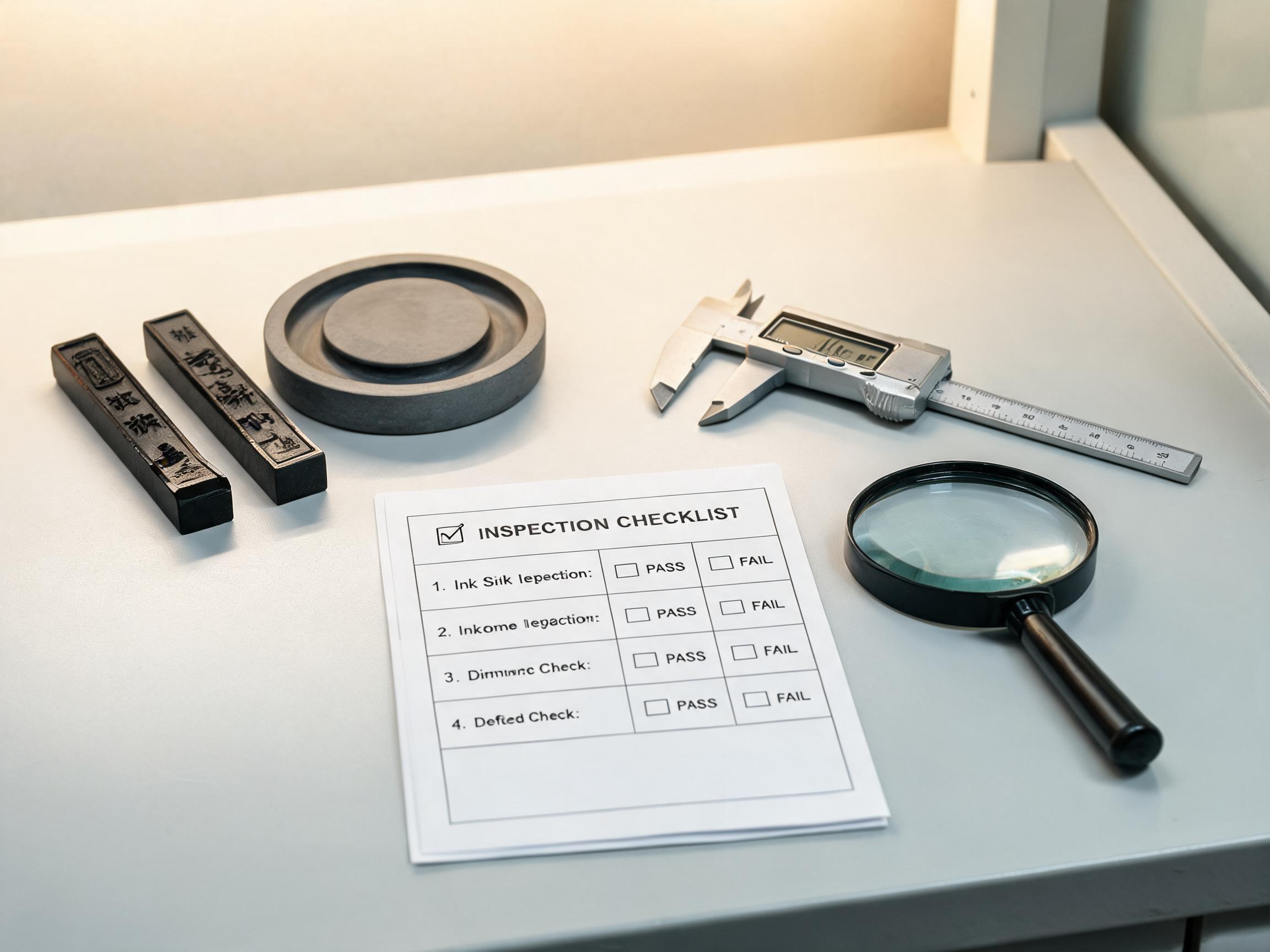
- Batch consistency. Ask whether the supplier holds density or tone constant across batches, and how that is recorded. For liquid ink, a per-batch density check and a tone consistency certificate give you something to compare against on the next order.
- Surface and structure (solid ink). A stick or block should be free of cracks and have an even surface. Chips and hairline cracks usually trace back to drying and handling, not to the buyer's storage.
- Seal integrity (liquid ink). Tamper-evident sealing protects both the product and your returns rate. Confirm the closure type and whether the bottle survives transit without weeping.
- Documentation. Export-ready documentation and QC photo reports at batch level let you verify what shipped without opening every carton.
- Customization fit. Custom labels, volumes and gift-box design are only useful if the supplier can hold them consistently across reorders. Confirm this before you build a branded line on it.
Supplier-evaluation checklist
Use this list when you shortlist manufacturers. Gu Mo Craft Technology (广东古墨工艺品科技有限公司) is one example of a supplier structured this way: founded 2011, an integrated design, manufacturing, QC and export operation covering soot refining, binder mixing and pounding, mold pressing and shade drying, with product lines spanning Hui ink sticks, calligraphy liquid ink, scholar desk sets, handmade inkstones, brushes, seal-carving supplies, xuan paper and craft ornaments.
- Can they quote a locked specification with weights, volumes and MOQ in writing?
- Do they provide batch-level QC records or photo reports for the format you are buying?
- Is the packaging appropriate for your route — tamper-evident for liquid, protective for solid?
- Can they support OEM customization and gift-set design if you sell under your own brand?
- Do they issue export documentation that matches your destination's requirements?
- Will they confirm shelf life and storage conditions for the format you choose?
- Can they supply a mixed order across formats, or do you need separate suppliers per format?
FAQ
What is Chinese ink made of?
Chinese ink is soot dispersed in a natural binder. Oil soot and pine soot are the two common soot types. In solid ink the mixture is pounded, pressed into a mold and shade-dried; in liquid ink it is bottled ready to use.
Is liquid ink the same as ink stick ink?
They share the same raw-material basis — soot plus binder — but differ in preparation and packaging. A stick must be ground with water on an inkstone; liquid ink is poured and used directly. Liquid ink also carries a shelf life (24 months unopened for our bottled line), which solid ink does not.
Which format should a first-time importer start with?
Start with the format that matches your channel. If you sell to schools or studios, liquid ink is easier to handle and reorder. If you sell gifts or collector items, solid ink carries more presentation value. Many importers test both in one order.
What is the minimum order quantity?
It depends on the product. Our oil-soot Hui ink stick classic is MOQ 50 pcs; the student practice stick is MOQ 200 pcs; both liquid ink lines are MOQ 100 bottles. Confirm the current MOQ for your chosen specification before ordering.
Can I get custom labels and gift boxes?
Yes — custom label and gift box options are available on the solid ink line, and custom label and volume options on the bottled liquid ink line. OEM customization and gift-set design are supported for bulk export orders.
Next step
If you are comparing formats for an upcoming order, tell us your channel, target specification and destination market. We can quote the format that fits, confirm MOQ and packaging, and share batch QC documentation so you can evaluate the supply before you commit. Reach out through our contact page to start the conversation.