
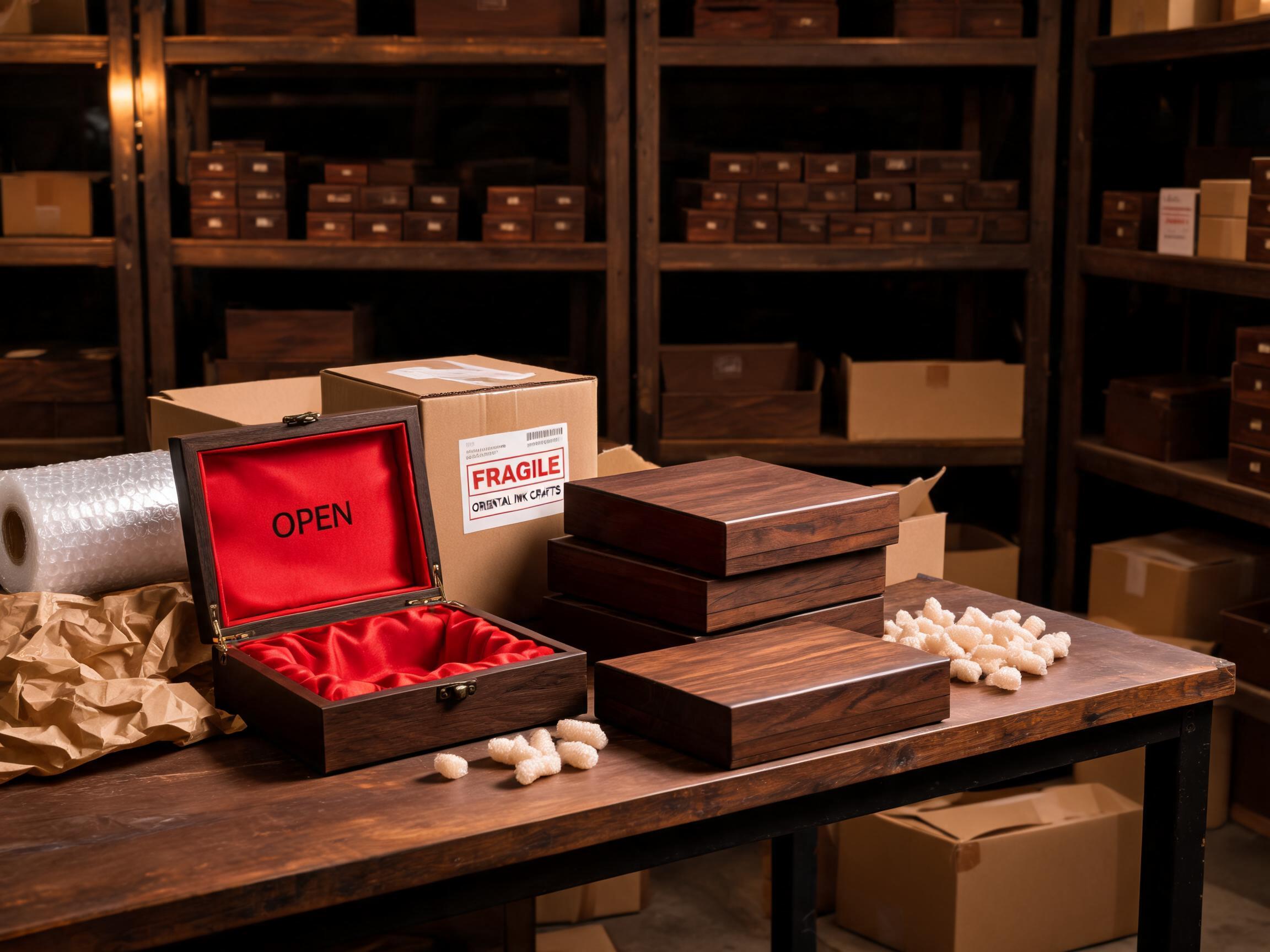
A B2B guide for importers and wholesalers explaining what Chinese calligraphy paper is made of, why the terms xuan paper and rice paper cause confusion, and how to specify raw versus sized grades, weight, sheet or roll formats, packaging, and order details before placing a bulk order.
Overseas importers and stationery distributors who search for "Chinese calligraphy paper" usually hit the same wall: the term describes a family of products, not one item. Two suppliers can quote "calligraphy paper" and ship materials with different fibre content, different surface treatment, and different behaviour under a brush. This article answers the two questions buyers ask first — what the paper is made of, and what it is properly called — then sets out the specification decisions you need to settle before a bulk order.
- Chinese calligraphy paper is a handmade or machine-made sheet built from bark and plant fibres, most often sandalwood bark and rice straw, formed on a screen and dried flat.
- "Xuan paper" is the material name; "rice paper" is a loose trade label that also covers unrelated products; "Chinese calligraphy paper" is the umbrella term.
- Raw (unsized) and sized grades behave differently with ink — this is the single most important specification for your end customers.
- Weight, sheet versus roll format, edge finish, and export packing are the four variables that decide whether a container arrives sellable.
What Chinese Calligraphy Paper Is Made Of
Traditional Chinese calligraphy paper is a fibre sheet, not a coated or filled paper. The classic recipe combines two plant sources:
- Bark fibre — most commonly from the sandalwood tree (Pteroceltis tatarinowii), which gives the sheet its strength, its slight natural tone, and its resistance to tearing when wet.
- Straw fibre — usually rice straw, which contributes softness and ink absorption.
The two pulps are cooked, washed, and beaten separately, then combined in proportions that the maker adjusts according to the intended grade. The mixed pulp is lifted from a vat on a bamboo screen, so the fibres interlock in a random, multi-directional web rather than the aligned grain of machine-made wood-pulp paper. Sheets are pressed, dried on heated panels or boards, and sorted.
Why the fibre source matters to a buyer
Fibre composition drives three things your customers will notice immediately: how much water the sheet holds before it tears, how the ink spreads once the brush touches down, and how the sheet ages. A bark-rich sheet resists repeated wetting and is the safer choice for practice paper sold in volume. A straw-rich sheet feels softer and suits lighter, more controlled brushwork.
Sizing: the invisible variable
Sizing is a treatment applied to the sheet to control how quickly ink is absorbed. Unsized or lightly sized paper lets ink penetrate and spread, which is what calligraphers want for expressive, flowing script. Heavily sized paper holds ink closer to the surface, giving sharper edges and less bleed — useful for detailed work and for printing applications. Because sizing is not visible in a photograph, it must be confirmed on the specification sheet, not inferred from appearance.
Xuan Paper, Rice Paper, or Calligraphy Paper?
The naming confusion is real, and it causes order errors. Here is how the three terms relate.
| Term | What it actually refers to | Buyer caution |
|---|---|---|
| Xuan paper (xuan zhi) | The material family named after Xuanzhou, historically the production centre. Made from bark and straw fibre in the traditional manner. | The most precise term for sourcing. Ask suppliers to confirm fibre content and sizing under this name. |
| Rice paper | A loose Western trade label. In some markets it means genuine xuan paper; in others it means a machine-made sheet, a pith product, or even a coated paper. | Do not order on this word alone. Ask what the sheet is made of and how it is sized. |
| Chinese calligraphy paper | The umbrella category covering xuan paper and related practice and decorative sheets. | Useful as a category label for your catalogue, but too broad to use as a purchase specification. |
For catalogue copy aimed at end users, "rice paper" may match local search habits. For the purchase order itself, specify xuan paper and state the grade, weight, and sizing. That separation keeps your marketing language and your technical requirements from colliding.
Raw Versus Sized: The Grade Decision
Before you compare suppliers, decide which of these two broad categories your market needs. This is a positioning decision, not a quality ranking.
Raw (unsized or lightly sized)
- Ink spreads readily; suited to expressive calligraphy and ink-wash painting.
- Commonly sold as practice paper in larger sheet counts and lower unit cost.
- Requires more skill from the user; beginners may find the spread hard to control.
Sized
- Ink stays closer to the surface; suited to fine script, seal-script work, and printed or mounted applications.
- Often preferred for gift sets and for markets where customers expect crisp edges.
- Sizing level varies by maker — confirm the intended use rather than assuming a single standard.
Many wholesalers stock both and split them by price tier. If you are unsure which your market favours, request samples of each and test them with the ink and brushes you already sell.
Specification Table for Bulk Orders
The table below lists the fields to fix in writing before a bulk order is confirmed. Where a value depends on the maker, the right move is to request it from the supplier rather than accept a generic figure.
| Specification | Options to choose between | Why it matters |
|---|---|---|
| Fibre composition | Bark-dominant, balanced, straw-dominant | Sets wet strength, absorbency, and price tier |
| Sizing | Raw / lightly sized / sized | Determines ink spread and the end use the sheet suits |
| Weight | Light to heavy sheet weights | Affects hand feel, shipping cost, and perceived value |
| Format | Cut sheets, folded sheets, rolls | Rolls suit mounting and cutting operations; sheets suit retail packs |
| Sheet dimensions | Standard sizes or custom cuts | Must match your retail packaging and customer framing habits |
| Edge finish | Deckle edge or clean cut | Deckle signals handmade character; clean cut suits machine-fed printing |
| Colour and surface | Natural tone, bleached white, coloured, gold-flecked | Drives the product tier and the retail channel |
| Packaging | Loose, poly-wrapped, retail pack, gift box | Determines shelf readiness and damage rate in transit |
Exact weights, sheet counts, and tolerances vary by maker and by product line. Confirm them against the supplier's own specification sheet and a physical sample before committing to a bulk order.
Packaging and Export Handling
Calligraphy paper is vulnerable to moisture, compression, and edge damage. For overseas shipments, the packing specification deserves the same attention as the paper itself.
- Moisture barrier. Inner poly wrapping or a moisture-barrier liner protects against humidity during sea freight and container condensation.
- Rigid support. Sheets should be packed flat and supported so that the stack cannot bend or slump under its own weight.
- Corner protection. Reinforced corners reduce the crushing that shows up as unsellable edge damage on arrival.
- Carton marks. Confirm that shipping marks, item codes, and quantity per carton match your warehouse or your customer's receiving requirements.
- Documentation. Export packing lists and shipment documents should be prepared to match the order specification, so that what clears customs is what you ordered.
If you sell gift sets, ask whether retail-ready gift packaging can be produced alongside the paper. A supplier with in-house design and packing capability can often combine the paper, a brush, an inkstone, and ink into a single shelf-ready unit, which reduces your own assembly and repacking work.
Buyer Checklist Before Placing a Bulk Order
- Confirm the material name in writing: xuan paper, with fibre composition stated — not simply "rice paper."
- Confirm the sizing level and the intended end use it supports.
- Confirm weight, sheet dimensions, and whether the format is sheet or roll.
- Request physical samples of each grade you intend to stock, and test them with your own ink and brushes.
- Agree the packaging format: loose, poly-wrapped, retail pack, or gift box.
- Agree carton marks, quantity per carton, and the documentation set required for your destination.
- Ask whether OEM customization — your brand on the packaging or the sheet header — is available for your order.
- Confirm the supplier's quality-control process and at which production stages inspection takes place.
- Confirm order quantities, lead times, and payment terms directly with the supplier, as these depend on the specific product line.
FAQ
Is Chinese calligraphy paper the same as rice paper?
Not exactly. "Rice paper" is a loose trade term used differently across markets. Genuine Chinese calligraphy paper is typically xuan paper, made from bark and straw fibre. Ask what the sheet is made of rather than relying on the label.
What is Chinese calligraphy paper called in the trade?
The precise material name is xuan paper (xuan zhi). "Chinese calligraphy paper" works as a category term for catalogues, but purchase orders should specify xuan paper plus grade, weight, and sizing.
Does the paper come sized or unsized?
Both are produced. Raw or lightly sized paper lets ink spread and suits expressive work; sized paper holds ink closer to the surface for sharper edges. The right choice depends on your end customers, so confirm the sizing level on the specification sheet.
Can I order custom sizes and my own branding?
Custom cuts and OEM packaging are commonly available from integrated manufacturers. Confirm the specific dimensions, packaging format, and branding requirements with your supplier, since feasibility depends on the product line and order volume.
How should the paper be packed for sea freight?
Flat, rigidly supported stacks with moisture-barrier wrapping and reinforced corners are the standard approach. Confirm carton marks and shipping documentation against your order specification before shipment.
Next Step
If you are sourcing Chinese calligraphy paper for wholesale or distribution, the fastest way to a reliable quotation is to send your specification in the terms used above: material name, fibre composition, sizing, weight, format, dimensions, packaging, and target market. A supplier that manufactures its own paper, controls quality at each production stage, and prepares export packing and documentation can quote against that list directly and flag any field that needs adjusting. Request samples of the grades you plan to stock, test them with the ink and brushes you already carry, and confirm order quantities and lead times with the supplier before finalising.