A practical B2B sourcing guide for buyers of custom carved name seals (chinese name stamp, chop seal, hanko). Covers stone selection, carving craft, MOQ, and the custom ordering process for gift channels and Japan/Korea markets.
BUYER GUIDE · CUSTOM CARVED NAME SEALS
China Custom Carved Name Seal Wholesale: Sourcing for Gift, Hanko & Diaspora Markets
A carved name seal — whether sold as a chinese name stamp, a chop seal, or a japanese name seal (hanko) — is one of the few products that carries genuine cultural weight across East Asia. For B2B buyers supplying gift shops, stationery retailers, or corporate gift programs in Japan, Korea, and Chinese diaspora communities, the sourcing challenge is not finding a factory. It is finding a supplier who can handle the specifics: correct stone, correct carving depth, correct character sets, and packaging that matches each market's expectations.
This guide covers what to check before you place your first wholesale order for custom carved name seals.
• Stone choice drives both cost and perceived value — shoushan stone, jade, and wood occupy very different price tiers.
• Carving method (hand vs. machine) affects price, lead time, and minimum order quantity (MOQ) — confirm which one you are quoted for.
• Japan/Korea hanko buyers expect strict character accuracy and specific sizes; diaspora gift channels favor decorative stones and display packaging.
• Always order a physical sample before committing to a production run — carving quality cannot be judged from photos alone.
1. Understand the Three Markets First
The same product sells differently depending on the channel. Your sourcing requirements should be set by your target market, not the other way around.
Japan (hanko market). The hanko japanese name stamps market is the most demanding. Buyers expect precise rendering of kanji characters, correct seal script (tensho) or standard script (kaisho) styles, and strict size compliance — common diameters are 13.5mm, 15mm, 16.5mm, and 18mm for personal seals. The stone must take a clean, sharp impression. Errors in character strokes are rejected outright. If you supply to Japan, you need a supplier who can proof characters before carving.
Korea (dojang market). Similar to Japan in formality, but with a preference for specific stone types and often red ink paste. Sizing and character accuracy matter equally.
Chinese diaspora & gift channels. This market is more forgiving on size but more demanding on presentation. Buyers look for attractive stones (shoushan stone, jade, balin stone), decorative carving on the seal top (lion, dragon, kylin motifs), and gift-ready packaging — often a brocade box with a tassel. The seal is frequently purchased as a personalized gift or souvenir, so aesthetics and perceived value drive the sale more than strict character precision.
| Market | Primary Use | Key Requirement | Typical Stone Preference |
|---|---|---|---|
| Japan (hanko) | Legal documents, banking, personal identity | Character accuracy, exact size, clean impression | Horn, boxwood, high-grade shoushan |
| Korea (dojang) | Official and personal use | Durable stone, standard sizes | Shoushan, jade, agate |
| Chinese diaspora / gifts | Personalized gifts, souvenirs, decorative use | Aesthetics, packaging, ornamental carving | Shoushan, jade, balin stone, synthetic |
2. Stone Selection: What to Specify
The stone is the single biggest cost driver and the main quality differentiator. Do not let a supplier substitute materials without your written approval.
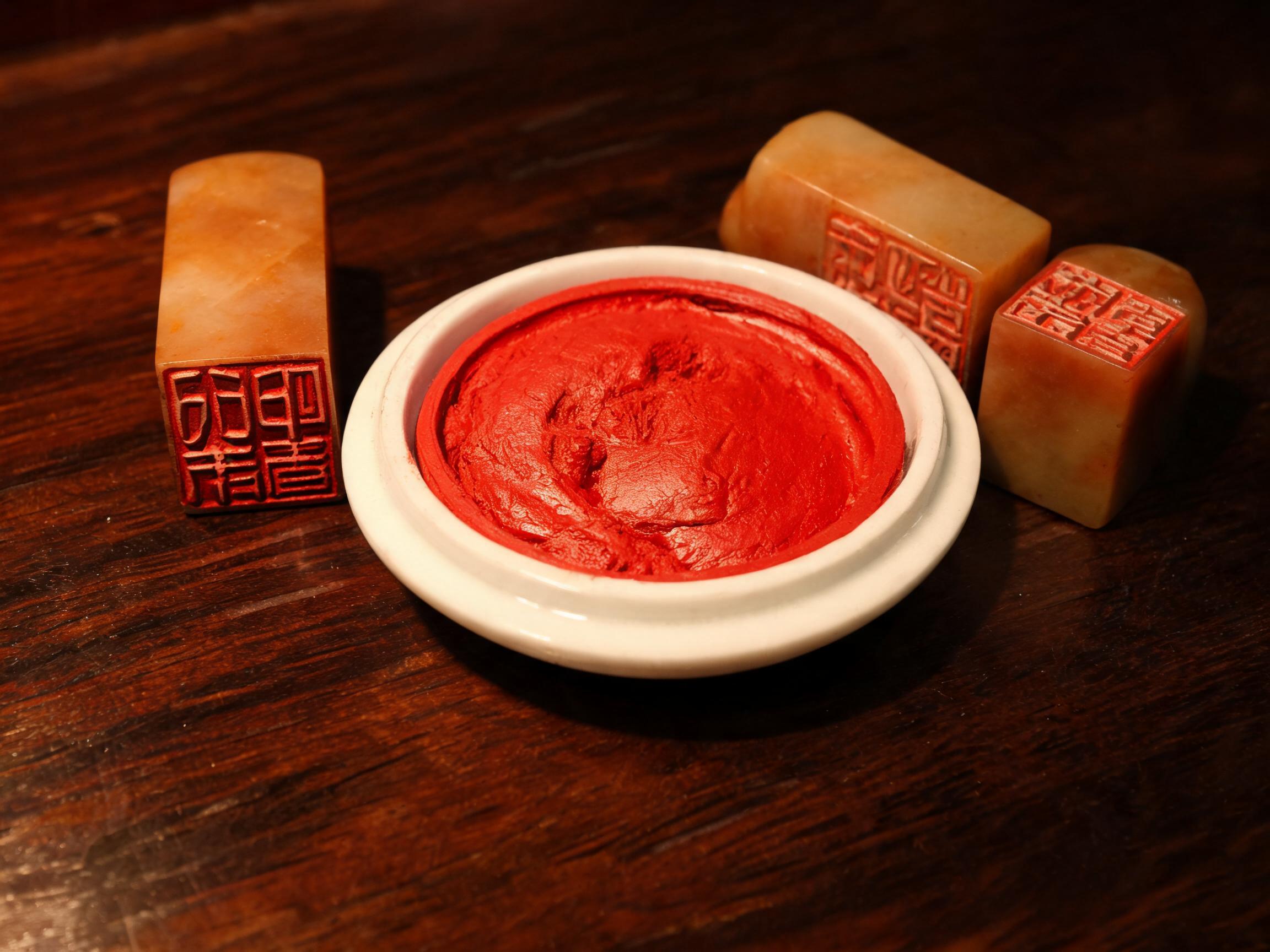
Shoushan stone (寿山石). The classic choice. Mined in Fujian province, it ranges from soft (suitable for hand carving) to harder grades. Colors include the famous "mutton fat" white, yellow, red, and mixed tones. For wholesale, mid-grade shoushan is the workhorse — affordable, carves cleanly, and takes a sharp impression.
Jade (玉). Higher perceived value, higher price. Jade is hard and requires machine carving or very skilled hand work. It is brittle — corners can chip if dropped. Best for gift channels where presentation outweighs daily use.
Balin stone (巴林石). From Inner Mongolia. Similar to shoushan in workability, often with striking color patterns. A good mid-to-high tier option.
Wood and horn. Common for Japanese hanko. Boxwood (黄杨木) is the standard for personal seals in Japan — light, durable, and carves well. Black buffalo horn is traditional for higher-end hanko. These are lower cost than stone but require different carving techniques.
Synthetic / resin. The budget tier. Uniform color, low cost, suitable for promotional items or tourist souvenirs. Not appropriate for legal hanko use in Japan.
What to ask your supplier:
- What is the hardness of the stone (Mohs scale)?
- Is the stone natural or synthetic?
- Will the stone survive a drop from desk height without chipping?
- What is the color consistency across a production batch?
3. Carving Craft: Hand vs. Machine
This is where pricing and MOQ diverge significantly.
Hand carving. Each seal is cut by an artisan. Quality varies with skill, but a good hand-carved seal has deeper, more expressive strokes. Hand carving is slower — a typical artisan produces a limited number per day — which pushes MOQ down and unit price up. Hand-carved seals are the right choice for high-end gift channels and for Japan's premium hanko market.
Machine carving (CNC / laser). Faster, more consistent, and cheaper per unit. Machine carving handles standard fonts and sizes well. It is the only viable option for large wholesale volumes. The trade-off: machine-carved strokes are shallower and less characterful. For most gift channels, machine carving is acceptable if the stone and packaging are good.
Hybrid approach. Some suppliers machine-carve the body and hand-finish the details. This balances cost and quality. Ask your supplier if this is available.
| Criterion | Hand Carved | Machine Carved |
|---|---|---|
| Unit cost | High | Low to medium |
| MOQ | Low (often 10–50 pcs) | High (often 100–500 pcs) |
| Lead time | 7–15 days for small batches | 3–7 days after sample approval |
| Stroke depth | Deep, expressive | Shallow, uniform |
| Best for | Premium gifts, Japan hanko | Volume orders, souvenirs |
4. MOQ and Pricing Realities
MOQ depends on three factors: stone type, carving method, and packaging complexity.
- Wood / synthetic, machine carved: MOQ typically starts at 100–200 pieces. Unit price can be in the low single digits (USD) for synthetic, rising for boxwood.
- Mid-grade shoushan, machine carved: MOQ around 50–100 pieces. Unit price is moderate.
- High-grade shoushan / jade, hand carved: MOQ can be as low as 10–20 pieces. Unit price is significantly higher — often 3–5x the machine-carved equivalent.
Packaging is a hidden cost. A brocade box with a tassel, a velvet pouch, or a wooden presentation case can add 20–50% to the unit cost. For gift channels, this is where you differentiate. Do not assume the supplier's standard packaging fits your market — ask for packaging samples separately.
What to confirm in writing:
- MOQ per stone type and carving method
- Whether the MOQ applies per design or across a mixed batch
- Packaging cost per unit, itemized
- Lead time from sample approval to shipment
5. The Custom Ordering Process: Step by Step
A typical wholesale order for custom carved name seals follows this sequence:
Step 1 — Character confirmation. You send the names (in Chinese characters, or the romanized names to be converted). For Japanese hanko, specify the script style (tensho, kaisho, gyosho). The supplier should provide a digital proof of the characters before carving. Never skip this step.
Step 2 — Sample approval. Order 1–3 physical samples. Check: character accuracy, stroke depth, stone quality, size (use calipers), and the impression quality on ink paste. Approve in writing.
Step 3 — Production. Confirm the order with final quantities, packaging, and shipping terms. Ask for mid-production photos if the batch is large.
Step 4 — QC and packing. Agree on a defect tolerance (typically 2–3% for machine-carved, lower for hand-carved). Specify how defects are handled — replacement or credit.
Step 5 — Shipment. Confirm Incoterms, port, and documentation requirements (commercial invoice, packing list, and any certificates of origin your market requires).
6. Common Sourcing Mistakes
Mistake 1: Assuming all "shoushan stone" is equal. There are dozens of grades. A low-grade shoushan is brittle and carves poorly. Ask for the specific mine or grade, and verify with a sample.
Mistake 2: Skipping the character proof. For Japanese hanko, a single wrong stroke makes the seal unusable. Always get a digital proof and have a native speaker verify the characters.
Mistake 3: Ignoring ink compatibility. Some stones work better with oil-based ink, others with water-based. Confirm which ink paste your supplier recommends, and test the impression with the ink you plan to sell.
Mistake 4: Underestimating packaging lead time. Custom boxes, especially brocade or wood, often take longer than the seals themselves. Factor this into your total lead time.
7. Supplier Evaluation Checklist
Before placing a production order, ask your supplier for:
- Factory profile — production capacity, years in the seal business, and export experience to your target market
- Material certifications — if you need to verify natural stone sources or wood types (e.g., CITES compliance for certain woods)
- Sample track record — references from other buyers in your market segment
- QC process — how they inspect carvings before packing
- Defect policy — what happens if a batch exceeds the agreed defect rate
FAQ
Q: What is the difference between a Chinese name seal and a Japanese hanko? A: Functionally similar, but Japanese hanko are subject to stricter size and character standards, and are often used for legal identity. Chinese name seals are more commonly used for art, signatures, and gifts. Confirm your target market before specifying.
Q: Can I order a custom carved name seal wholesale with my own logo on the box? A: Yes, most suppliers offer custom packaging. This usually incurs a separate mold or printing fee, and a higher MOQ for the packaging itself. Request packaging samples separately from the seal samples.
Q: What is a realistic lead time for a first order? A: For machine-carved seals with standard packaging, 10–15 days from sample approval to shipment is realistic. Hand-carved or custom-packaged orders can take 20–30 days. Always add buffer time for your first order.
Q: Do you provide samples before bulk production? A: Yes, samples are available upon request. We recommend ordering at least one sample per design to verify character accuracy, stone quality, and packaging before committing to a production run.
Q: What information do you need to provide a quote? A: Please specify: target market (Japan, Korea, diaspora/gift), stone type, carving method (hand or machine), seal size (diameter), quantity, and packaging requirements. With these details, we can provide an accurate quotation and MOQ.
If you are sourcing custom carved name seals for your market, we can help you navigate stone selection, carving methods, and packaging. Contact us with your target market, estimated quantity, and any specific requirements — we will respond with product options and pricing tailored to your channel.