
Deciding whether to stock chinese calligraphy pens alongside traditional brushes? This guide helps stationery retailers compare customer segments, category roles, and build a balanced wholesale assortment strategy.
Retail Category Strategy
For stationery retailers across Southeast Asia, Japan, and Korea, the calligraphy category is evolving. Customers who once walked past a traditional brush display now pause at pen-style tools that promise the look of brush strokes with the convenience of a pen. The question is no longer whether chinese calligraphy pens belong on your shelves, but how to position them alongside the traditional brushes you already stock.
This article walks through the customer segments behind each format, a practical pen-vs-brush comparison, and a balanced wholesale assortment strategy that lets you serve both groups without cannibalizing sales.
In this article
Two distinct customer segments, two buying triggers
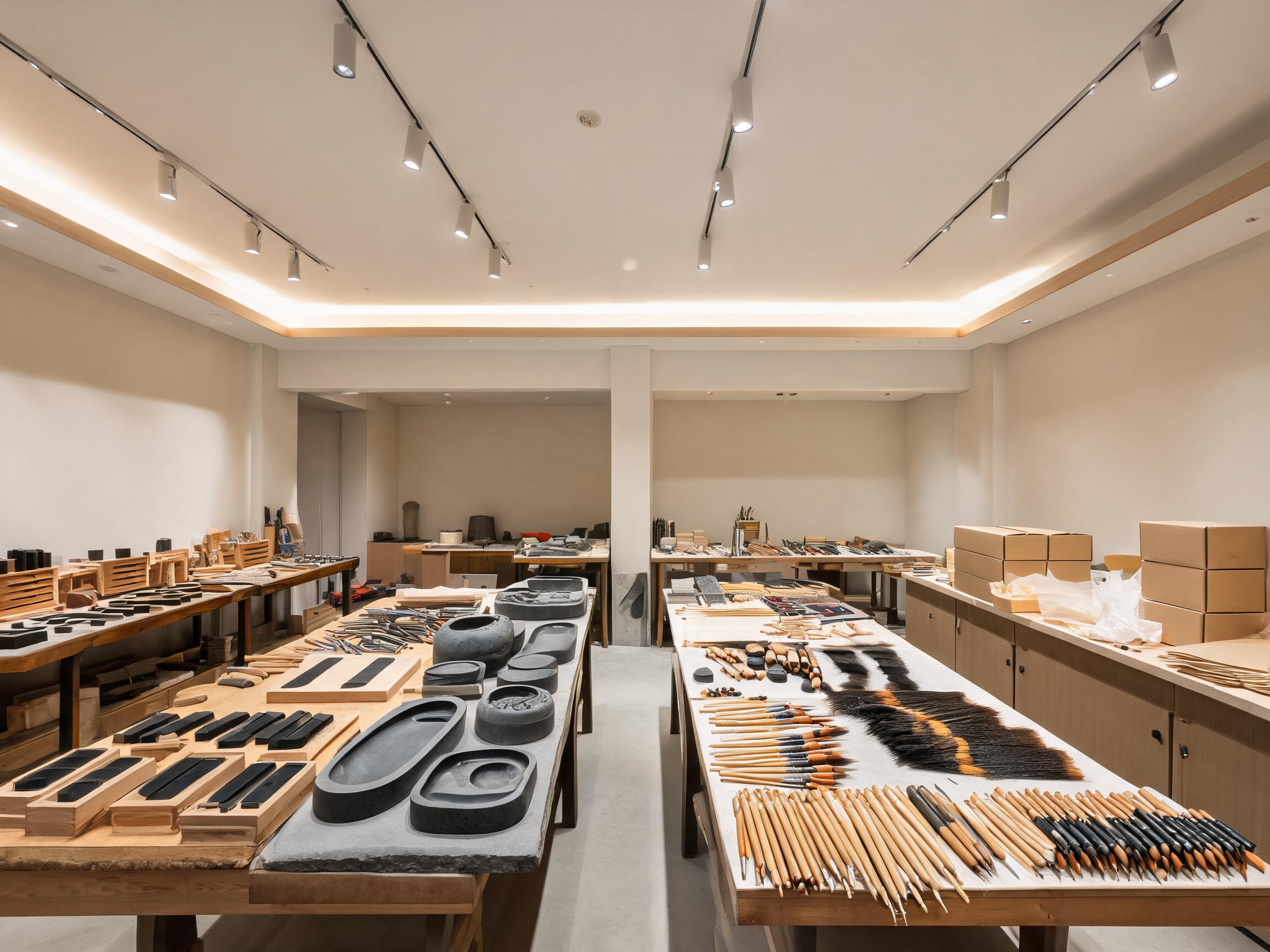
Treating all calligraphy buyers as one audience is the fastest way to misjudge your stock. In practice, the category splits into two groups with different needs, budgets, and repeat-purchase behavior.
The convenience-driven beginner and hobbyist
This customer is drawn to chinese calligraphy pens because the learning curve is shorter. There is no ink preparation, no brush care, no risk of a stray bristle ruining a stroke. The pen delivers a consistent line from the first use. These buyers are often younger, practice intermittently, and value portability—they may write at a desk, in a cafe, or during a commute.
For this segment, the pen is not a compromise. It is an entry point. A customer who builds confidence with a pen may later graduate to a brush, but only if the brush feels approachable. Your job is to make that transition easy.
The tradition-focused practitioner and student
The second segment is anchored in practice and discipline. These customers—often students of calligraphy, serious hobbyists, or practitioners following a specific instructional tradition—expect the full sensory experience of a brush: the flex of the hair, the absorption of the paper, the variable thickness that only a loaded brush can produce.
For them, the brush is not nostalgic. It is functionally necessary. A pen cannot replicate the expressive range of a well-made wolf hair or goat hair brush. This customer also buys supporting goods: ink sticks, liquid ink, inkstones, and xuan paper. They are higher-value per transaction and more likely to return when supplies run low.
Category insight: The pen brings in new customers; the brush builds basket value. A retailer who stocks only one format is leaving either acquisition or margin on the table.
Pen vs. brush: what each format does best
When deciding shelf space, compare the two formats across the dimensions that matter at the point of sale.
| Consideration | Chinese Calligraphy Pens | Traditional Brushes |
|---|---|---|
| Learning curve | Low; consistent line from the start | Steeper; requires stroke control and ink management |
| Setup and cleanup | Minimal; no ink or brush washing | Requires ink, palette, and washing after use |
| Expressive range | Limited; line width is relatively uniform | High; varies with pressure, angle, and ink load |
| Portability | Excellent; can be used anywhere | Limited; needs a flat surface and ink setup |
| Typical buyer | Beginners, hobbyists, casual practitioners | Students, serious practitioners, traditionalists |
| Repeat purchase drivers | Refills, new nib sizes, ink cartridges | New brush sizes, ink sticks, paper, inkstones |
The table above is a simplification, but it clarifies the category logic. The pen is a lower-friction product that expands your addressable market. The brush is a higher-engagement product that builds a loyal, higher-spending customer base. Both have a place, and neither replaces the other.
A balanced wholesale assortment strategy
A balanced assortment does not mean equal quantities of each. It means structuring your order so each format plays a distinct role, with cross-selling opportunities built in.
Anchor with entry-level pens, but do not over-commit
Because chinese calligraphy pens attract new customers, you want a visible, well-priced entry selection. This is your traffic driver. However, the unit price is typically lower than a quality brush, so your margin per item is thinner. Use the pen range to build foot traffic and online discovery, then steer those customers toward higher-value items.
Build depth in traditional brushes for the committed buyer
For the tradition-focused segment, variety matters. A customer looking for a specific brush feel will not substitute a different hair type. Your wholesale assortment should cover the core range: wolf hair for firm, resilient strokes; goat hair for soft, absorbent tips; and mixed hair for a balanced middle ground. A selection like this lets you serve both technique-driven shoppers and those exploring different brush personalities.
For retailers serving students or beginners, a practice brush set is a practical upsell. For those targeting gift buyers or desk-accessory shoppers, a calligraphy starter kit set packages the essentials into one decision, raising average order value.
Stock the supporting goods that drive repeat visits
Brushes and pens are the front of the category, but the consumables are the loyalty engine. Ink sticks, liquid ink, inkstones, and xuan paper turn a one-time tool purchase into a recurring supply relationship. A customer who buys a brush needs ink and paper. A customer who buys a pen needs refills or cartridges. If you stock the tools but not the consumables, you are sending that recurring revenue to a competitor.
Use cross-selling at the shelf and online
Cross-selling is where a balanced assortment pays off. Pair the pen display with a starter kit for beginners. Pair the brush display with ink and paper recommendations for practitioners. In online listings, use product links to guide the next purchase: a wolf hair brush page can point to ink options, and a student practice set can point to a starter kit.
Retailer FAQ
Will stocking pens reduce my brush sales?
Not necessarily. Pens and brushes serve different customer segments. A pen buyer is often a first-time calligraphy customer who may not have purchased a brush at all. The risk of cannibalization is low when you market each format to its natural audience.
Which format has higher repeat-purchase potential?
Brushes themselves last a long time, but the ecosystem around them—ink, paper, inkstones—creates steady repeat demand. Pens generate repeat sales through refills and cartridge replacements. Both can be recurring, but the brush ecosystem typically supports a higher basket value.
How much space should I allocate to each format?
Start with the customer mix in your store or market. If you serve many tourists or casual gift buyers, weight toward pens and starter kits. If you serve a local practice community or students, weight toward brushes and supporting goods. Review sell-through data quarterly and adjust.
Can I offer both formats in one gift set?
Yes. A combined set that includes a pen for convenience and a brush for tradition can appeal to gift buyers who want to offer both an easy start and an authentic experience. This is a strong option for seasonal promotions.
Building your calligraphy category
A thoughtful calligraphy assortment reflects the reality of your customers: some want the immediacy of a pen, and others want the discipline of a brush. By stocking both, you cover the full journey—from first stroke to dedicated practice—and capture the consumable sales that follow.
For retailers building this category, working with a supplier that integrates manufacturing, quality control, and export under one roof simplifies the process. Gu Mo Craft Technology, founded in 2011, operates with inline quality checks at each production stage. Their brush lines include wolf hair, goat hair, mixed hair, student practice sets, and large format brushes, alongside a full range of ink sticks, liquid ink, inkstones, xuan paper, and scholar desk sets. They also offer OEM and gift set design support for retailers who want a distinctive shelf presence.
Start with a core selection: a few pen models for entry-level buyers, plus a curated brush range covering wolf, goat, and mixed hair. Add a student practice set and a starter kit to cover the education and gift segments. Then layer in the consumables that keep customers coming back.
To review specific product options, explore the premium wolf hair calligraphy brush, the goat hair soft tip brush, and the mixed hair combination brush for your core brush range. For entry-level and gift demand, consider the student practice brush set and the calligraphy starter kit set. Discuss your target customer mix and volume with the supplier to build an assortment that balances traffic, margin, and loyalty.