
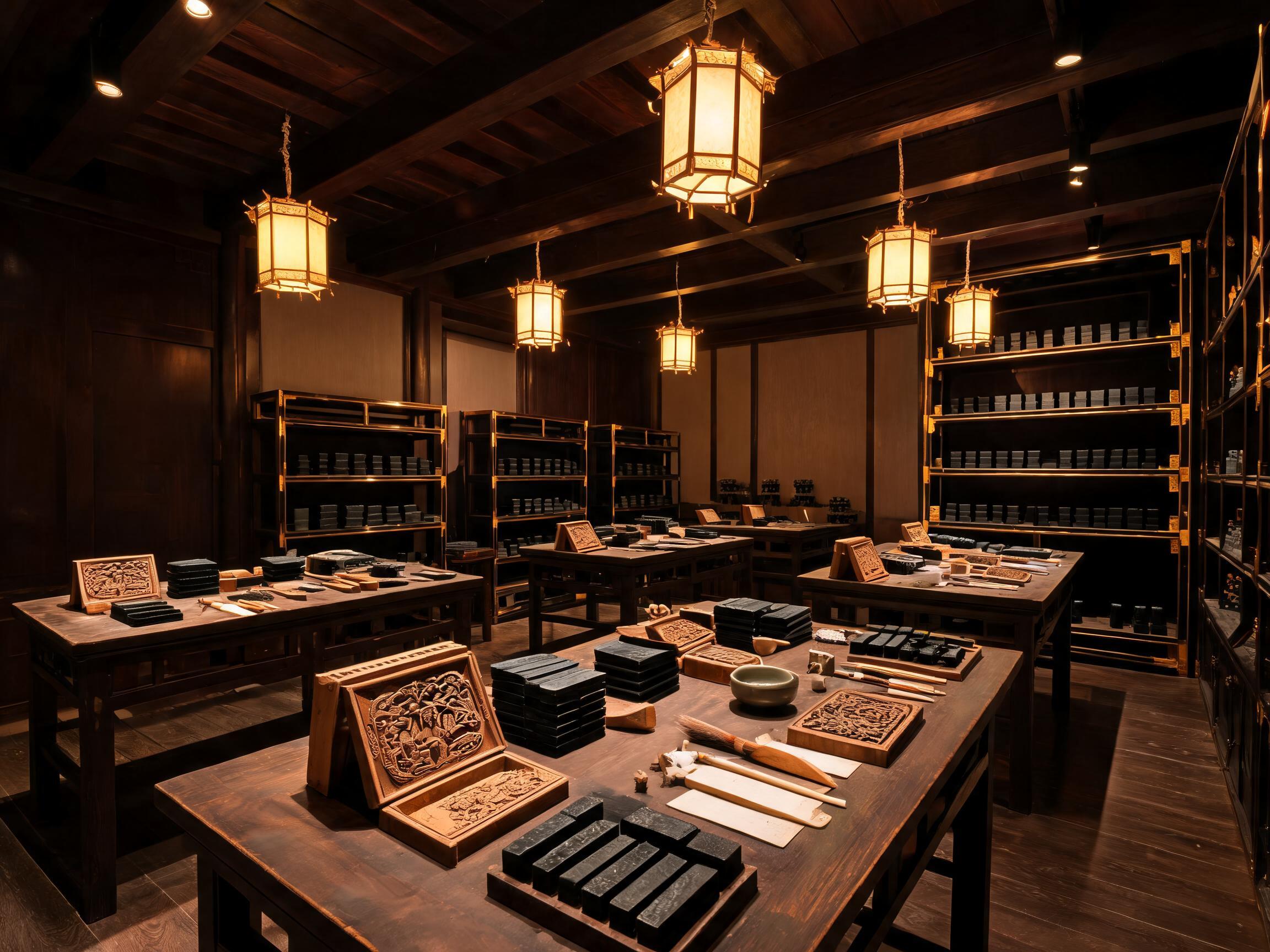
Antique-style Chinese calligraphy sets are a design and finish claim, not an age claim. This guide explains what buyers in collector and gift channels should assess—design language, aged finishes, traditional materials, and set-level quality control—and how to move from an entry-level kit to a true scholar desk set for bulk gifting. Includes sourcing checkpoints for Chinese diaspora retailers and gift buyers across Southeast Asia, Japan and Korea, the Middle East, Central and Eastern Europe, Africa, and the Americas.
Buyers searching for an antique chinese calligraphy set are usually doing one of two things: adding a piece with old-world presence to a collector catalogue, or sourcing a gift that looks considered rather than disposable. Both groups need the same clarification first—"antique-style" describes a design and finish direction, not the age of the objects. Without that distinction, purchase orders get built on the wrong assumption, and returns or complaints follow.
- "Antique-style" is a deliberate aesthetic claim: aged patina on ink sticks, weathered-look inkstones, period-shaped seals and restrained presentation. It is not a claim of historical age.
- Judge a set by design language, material authenticity and finish consistency—not by how dark or how "old" it looks in a photo.
- Collector and gift channels need components that match each other; matched sets, not assembled bundles, are what hold value on a shelf.
- Bulk gifting requires fixed presentation, repeatable finishing, private label and a clear sample-to-production path.
- What "antique-style" means in a calligraphy set
- What is in a Chinese calligraphy set—and how antique-style sets differ
- How collectors assess a set before buying
- How gift-channel buyers evaluate presentation and repeatability
- Entry-level kits vs. antique-style scholar desk sets
- Bulk ordering points: MOQ, sampling, lead time and private label
- Where to buy Chinese calligraphy sets for these channels
- FAQ
What "Antique-Style" Actually Means
The word "antique" in this product category is a styling direction. It signals that the maker has chosen finishes, proportions and surface treatments that reference an earlier period: ink sticks with a muted, slightly worn surface rather than a glossy new sheen; inkstones with a deep, unpolished face; brushes with plain, unadorned shafts; paper with a warm, off-white tone; seals and boxes that carry traditional motifs without modern printing.
None of this states that the set is old. A set produced this month can legitimately be described as antique-style if the design and finish are intentionally aged. For a collector retailer, that distinction should be stated plainly in the product listing—buyers who expect a genuine antique and receive a newly made set will return it, and the cost lands on the retailer, not the factory.
The pieces that most strongly carry the antique look are the ink stick and the inkstone. A pine soot Hui ink stick finished in a commemorative gold-edge style reads as "old" through its surface treatment, form and stamped character, not through any claim of age. A Duan inkstone contributes weight and a stone texture that no entry-level resin set can imitate.
What Is in a Chinese Calligraphy Set—and How Antique-Style Sets Differ
The core of a calligraphy set is the Four Treasures of the Study: brush, ink, paper and inkstone. A traditional scholar desk set goes further and adds the seal and the presentation box, so the whole arrangement can sit on a desk as a complete object rather than a pile of separate supplies.
A Complete Scholar Desk Set contains an ink stick, an inkstone, a brush and Xuan paper in a magnetic closure presentation box. That is the floor of what a collector or gift buyer should expect from an antique-style set: the components are chosen to sit together, and the box is part of the product rather than packaging added afterwards.
The difference between antique-style and entry-level is mostly in the material and the finishing labor dedicated to each component. Antique-style sets use real Hui ink sticks, stone inkstones, natural-hair brushes and raw Xuan paper—each with its own finish profile—while entry-level kits typically substitute lighter materials and simpler finishes to hit a lower price. The comparison below in this guide lays out where the budget goes.
How Collectors Assess a Set Before Buying
Collectors tend to ask about the individual components rather than the set as a whole. A sourcing conversation that starts with the brush, the ink stick and the inkstone separately will move faster than one that only discusses the box.
Design language and period reference
Look for a coherent design language across components. Traditional motifs, restrained color, and shapes that reference a period—rather than modern graphics layered onto traditional objects—are the markers of an antique-style direction. A set that mixes a period-styled ink stick with a brightly printed box reads as a bundle, not a set.
Aged finishes
Aged finish is a craft claim. On ink sticks, expect a matte or lightly polished surface with subtle color variation, not uniform plastic shine. On inkstones, expect an honest stone face with visible natural grain. Examine samples under two lighting conditions, since many aged finishes flatten under shop lighting and look artificial only in daylight.
Traditional materials
Material choice separates collector-grade from gift-grade sets. Hui ink sticks, a named inkstone such as a Classic Duan type, natural-hair brushes and raw Xuan paper are the reference materials for this category. A Premium Pine Soot Hui Ink Stick and a Premium Wolf Hair Calligraphy Brush are examples of component-level choices a collector will recognize by name.
Component matching
In a matched set, the ink stick, inkstone, brush, paper and seal are selected so their proportions and colors support each other. This is the part buyers most often leave to the supplier and later regret, because an unmatched component stands out immediately on a retail shelf.
How Gift-Channel Buyers Evaluate the Same Set
Gift channels—corporate gifting, museum shops, cultural retail, and Chinese diaspora gift stores in the Americas—weigh the same components differently. Presentation and repeatability matter more than individual component rarity.
- Presentation: the box must open cleanly, hold components in fixed positions through shipping, and look appropriate when the recipient opens it without explanation.
- Repeatability: a gift programme reorders the same set for months. Finishing must be consistent from batch to batch, or the second shipment will not match the first on the shelf.
- Recipient readability: the set should communicate "Chinese calligraphy" to someone who has never practiced it. The Four Treasures arrangement does this better than a loose collection of tools.
- Private label: for corporate and retail gifting, branding on the box is often required, and it should be planned before sampling rather than retrofitted.
A Premium Scholar Desk Gift Set sits in this gift-channel territory: the components still hold up to collector scrutiny, but the arrangement and the box are designed to be given as a complete object.
Entry-Level Kits vs. Antique-Style Scholar Desk Sets
Buyers moving up from entry-level kits often ask where the additional cost goes. In an antique-style set, it goes into named materials, finish labor and the presentation box, not into more pieces.
| Decision point | Entry-level kit | Antique-style scholar desk set |
|---|---|---|
| Ink | Liquid ink or a simple ink stick | Hui ink stick with aged or commemorative finish |
| Inkstone | Light composite or small stone | Real stone, such as a Duan inkstone |
| Brush | Mixed or synthetic hair | Natural hair, matched to use |
| Paper | General practice paper | Raw Xuan paper |
| Seal | Often omitted | Included where the set is a complete desk arrangement |
| Presentation | Bag or simple box | Magnetic closure presentation box |
| Best suited to | First-time practice, classroom use | Collector shelves, cultural gifting, diaspora retail |
For a fuller component breakdown of the traditional desk arrangement, see the Four Treasures of the Study. It is a useful reference when briefing a supplier on which components must be present and which can be optional.
Bulk Ordering Points for Gift Channels
Once the design direction is settled, the procurement questions are standard, and the answers should be in writing before a purchase order is issued.
- MOQ: the Complete Scholar Desk Set carries an MOQ of 30 sets, which suits boutique gifting and smaller retail programmes rather than container-scale distribution.
- Sampling: request a sample that matches the production finishing, not a hand-finished display piece. The sample is the reference the production run will be compared against.
- Lead time: 35 to 50 days after sample approval. Plan gifting calendars around that window, since approval timing sits before the clock starts.
- QC approach: set-level QC with component matching is the relevant check for this category. It verifies that the boxed set contains the intended components and that they match each other, rather than only inspecting components in isolation.
- Private label: available, and best specified at the sampling stage—box branding, insert layout and any seal customization should be frozen before production begins.
Where to Buy Chinese Calligraphy Sets for These Channels
Gift and collector channels are better served by an integrated manufacturer than by a trading intermediary, because the set draws on several stationery lines at once. Gu Mo Craft Technology, founded in 2011, manufactures across eight stationery lines including Hui ink sticks, inkstones, brushes, Xuan paper, seals and scholar desk sets, and offers OEM, gift set design and export service. That integration matters when one set needs an ink stick, an inkstone, a brush, Xuan paper and a seal held to a common finish standard.
For buyers comparing options, ask three questions of any supplier: which components are made in-house, how a matched set is checked before packing, and what the sample-to-production finishing path looks like. The answers separate a supplier that can repeat an antique-style finish from one that can only produce it once.
FAQ
Is an antique-style set an actual antique?
No. Antique-style refers to a design and finish direction inspired by earlier periods. It is a styling claim, and should be described that way in retail listings.
What is in a Chinese calligraphy set?
The core is the Four Treasures of the Study: brush, ink, paper and inkstone. A fuller scholar desk set adds a seal and a presentation box, so the components can be given or displayed as one object.
How does an antique-style set differ from an entry-level kit?
Mainly in materials and finishing labor: named stone, Hui ink, natural-hair brushes and raw Xuan paper, plus a presentation box. Entry-level kits substitute lighter materials and simpler finishes.
What is the minimum order for a scholar desk set?
The Complete Scholar Desk Set has an MOQ of 30 sets, with a lead time of 35 to 50 days after sample approval.
Can the box be branded for corporate gifting?
Private label is available. Box branding and insert layout should be specified during sampling so production runs match the approved sample.
Where to buy Chinese calligraphy sets for gift channels?
Source from a manufacturer that produces the components across its own stationery lines and offers OEM and gift set design. That combination supports repeat orders and consistent finishing better than an assembled bundle.
Selecting for collector or gift channels? Review the Complete Scholar Desk Set, the Premium Scholar Desk Gift Set, or contact the factory directly with your component list, box requirements and target quantity so sampling can be planned against your gifting calendar.