
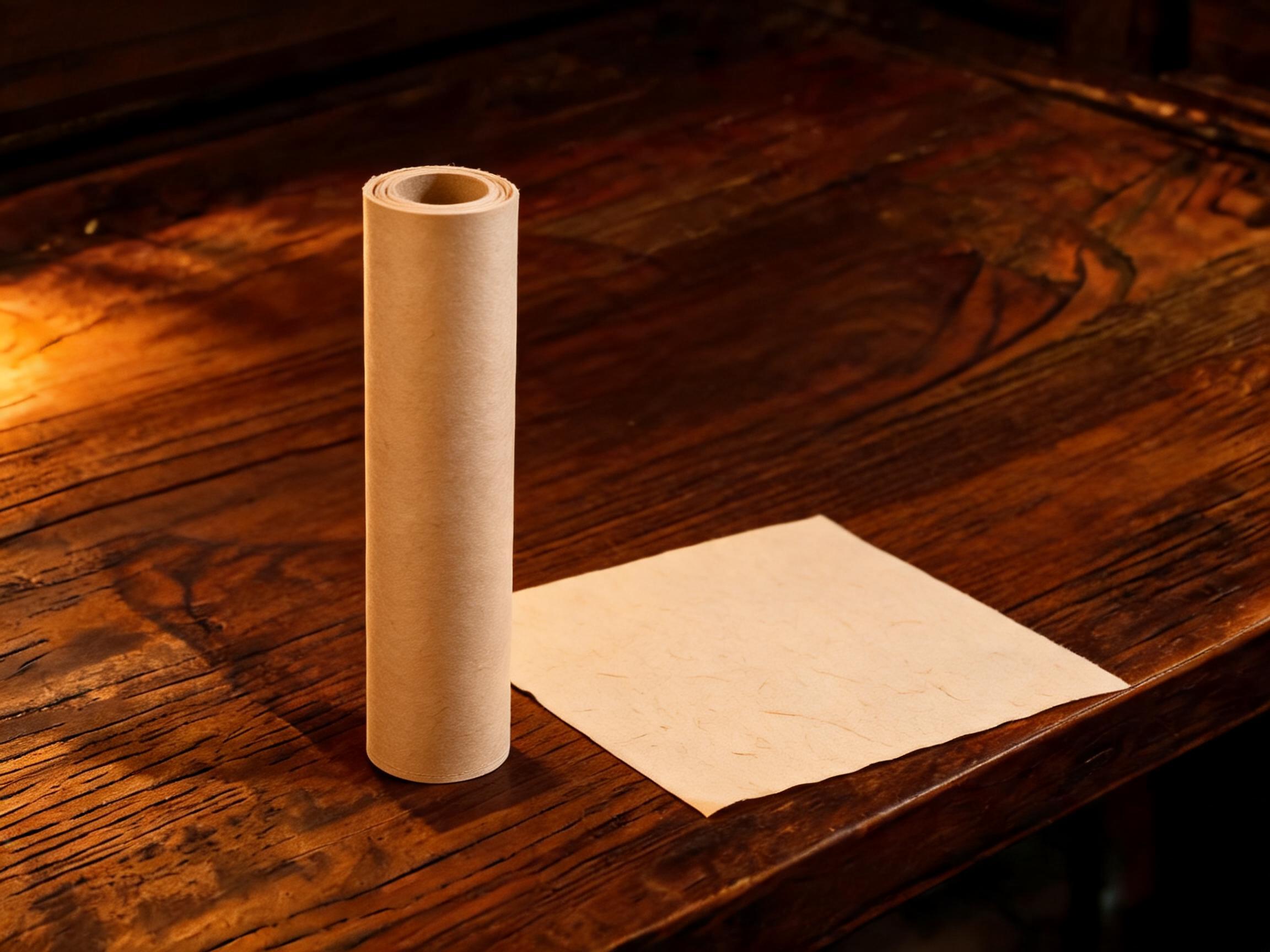
A practical sourcing guide for importers, distributors, and wholesalers on buying xuan paper in bulk from China. Learn how to distinguish xuan paper from Western craft rice paper, choose the right grade for calligraphy, brush painting, mounting, or gift wrapping, and evaluate suppliers using clear specs and order terms.
If you import stationery, art supplies, or gift packaging, you have probably searched for where to buy rice paper in bulk and found a confusing mix of listings. Some sellers offer thin, machine-made sheets for craft use; others quote traditional Chinese xuan paper by the roll. The two are not interchangeable, and the wrong choice leads to returns, complaints, and unsellable stock. This guide explains what "rice paper" actually means in B2B sourcing, how to match grades to end uses, and what to check before placing a bulk order from a China supplier.
- "Rice paper" in B2B trade usually refers to xuan paper, a bark-fiber paper — not paper made from rice.
- Grades differ by processing: raw (sheng), treated (cooked), and student practice.
- Rolls are specified by width (50cm, 70cm, 97cm) and length (10m, 20m, 50m), with MOQ 50 rolls.
- Width consistency, clean edge cutting, and quality winding are the physical checks that matter most.
What "rice paper" means in B2B sourcing
In Western retail, "rice paper" often describes a thin, translucent craft paper used for wrapping, lamp shades, or decorative purposes. It may contain rice straw or other plant fibers, and it is usually machine-made in sheets. That product is not what Chinese calligraphers and painters use.
In Chinese art supply sourcing, the term refers to xuan paper (also spelled hsuan paper), a traditional bark-fiber paper produced in China. Xuan paper is valued for its ink absorption, strength, and aging characteristics. It is sold in sheets and in rolls, and it comes in several grades depending on how the paper is processed after forming.
For a B2B buyer, the first step is to decide which category your market needs. Art-supply distributors and calligraphy wholesalers typically want xuan paper. Gift and stationery wholesalers may need either xuan paper for premium wrapping or a lower-cost craft paper for volume packaging. Mixing the two in a single purchase order without clear labeling is a common source of disputes.
Choosing by end use: calligraphy, brush painting, mounting, and gift wrapping
Xuan paper grades are not simply quality tiers; they behave differently with ink and water. The right grade depends on what the end user will do with the paper.
Calligraphy and freehand brush painting
Raw xuan paper, known as sheng xuan, is unprocessed and highly absorbent. It is the standard choice for Chinese calligraphy and freehand (xieyi) brush painting, where the artist wants ink to spread and produce soft edges. Raw Xuan Paper Professional is a raw (sheng) xuan paper suitable for this category of work.
Fine-line painting (gongbi)
Treated xuan paper, also called cooked or shu xuan, has been processed to reduce absorbency. This allows controlled, precise brushwork without excessive ink bleed. It is the appropriate grade for gongbi (fine-line) painting. Treated Xuan Paper for Gongbi is a treated (cooked) xuan paper for this use.
Student practice and volume markets
Student practice xuan paper is a lower-cost grade intended for daily practice and classroom use. It offers a practical price point for markets where buyers need large volumes rather than archival quality. Student Practice Xuan Paper is a practice grade for this segment.
Mounting and gift wrapping
Xuan paper is also used in scroll mounting, where its fiber strength and dimensional stability matter. For gift and stationery applications, buyers may source xuan paper rolls for wrapping or presentation purposes, or choose a craft rice paper if the requirement is purely decorative and cost-driven. Clarify with your supplier which product you are quoting, because the terms are often used loosely in listings.
Specs and bulk ordering essentials
When you move from sample sheets to bulk rolls, the specification conversation changes. Roll dimensions, winding quality, and edge condition affect how the paper performs on cutting and printing equipment downstream.
| Specification | Options / details |
|---|---|
| Product | Xuan Paper Roll |
| Material | Bark-fiber xuan paper |
| Widths | 50cm / 70cm / 97cm |
| Lengths | 10m / 20m / 50m |
| MOQ | 50 rolls |
| Quality points | Controlled width consistency, clean edge cutting, quality winding |
The Xuan Paper Roll is supplied in the widths and lengths above, with a minimum order quantity of 50 rolls. For buyers, the three quality points to confirm are width consistency (so rolls feed evenly through cutting or mounting equipment), clean edge cutting (to avoid frayed edges that waste material), and quality winding (to prevent creases and telescoping during transport and storage).
Before ordering, confirm with your supplier how the rolls are packed, whether widths are measured at the core or the outer edge, and how the paper is protected during shipping. These details are not always listed online, and they affect yield per roll.
How to evaluate a China supplier
Price alone is a poor selection criterion for xuan paper, because grade and processing vary widely. Use these checks to compare suppliers on a like-for-like basis:
- Grade clarity: Ask the supplier to state whether the paper is raw (sheng), treated (cooked), or practice grade. A supplier who cannot answer this clearly is a risk.
- Specification sheet: Request width, length, material, and MOQ in writing. Compare against your own market requirements.
- Sample rolls: Order a sample roll and test width consistency, edge quality, and winding. Cut a section and check for creases or thin spots.
- Consistency across batches: Ask how the supplier controls width and winding from one production run to the next. Batch-to-batch variation is a common problem in paper sourcing.
- Communication: A supplier who responds with specific answers to technical questions is more reliable than one who replies only with price lists.
Do not assume that a supplier who sells one grade can supply all grades at the same quality level. Raw, treated, and practice papers involve different processing steps. If you need multiple grades, ask for samples of each.
Common mistakes in bulk xuan paper sourcing
- Confusing craft rice paper with xuan paper. The two have different fiber content, absorbency, and price. Label them correctly in your catalog.
- Ordering by price without a grade specification. A lower price often reflects a lower grade, not a better deal.
- Ignoring roll width tolerance. If your downstream process requires a fixed width, confirm how the supplier measures and controls it.
- Skipping the sample stage. A full container of unsuitable paper is expensive to return or discount.
- Assuming MOQ is negotiable. The listed MOQ for Xuan Paper Roll is 50 rolls. Plan your order quantity accordingly.
FAQ
In Chinese art supply sourcing, "rice paper" commonly refers to xuan paper, which is made from bark fiber, not rice. Western craft rice paper is a different product. Confirm the material and grade with your supplier before ordering.
Raw (sheng) xuan paper is unprocessed and highly absorbent, suitable for calligraphy and freehand painting. Treated (cooked) xuan paper is processed to reduce absorbency, making it suitable for fine-line (gongbi) painting.
The Xuan Paper Roll has an MOQ of 50 rolls. Widths available are 50cm, 70cm, and 97cm; lengths are 10m, 20m, and 50m.
Request a sample roll and inspect width consistency, edge cutting, and winding quality. These three points affect how the paper performs in cutting, printing, and mounting.
Next step for buyers
If you are sourcing xuan paper for art supply, stationery, or gift markets, start by defining the grade and roll specification your market needs. Then request samples and a written quotation that states width, length, material, and MOQ. For raw, treated, and practice grades, review the product pages linked above and contact the supplier with your target specifications. Clear grade definitions and consistent roll quality are what separate a reliable bulk supply from a one-off purchase.