
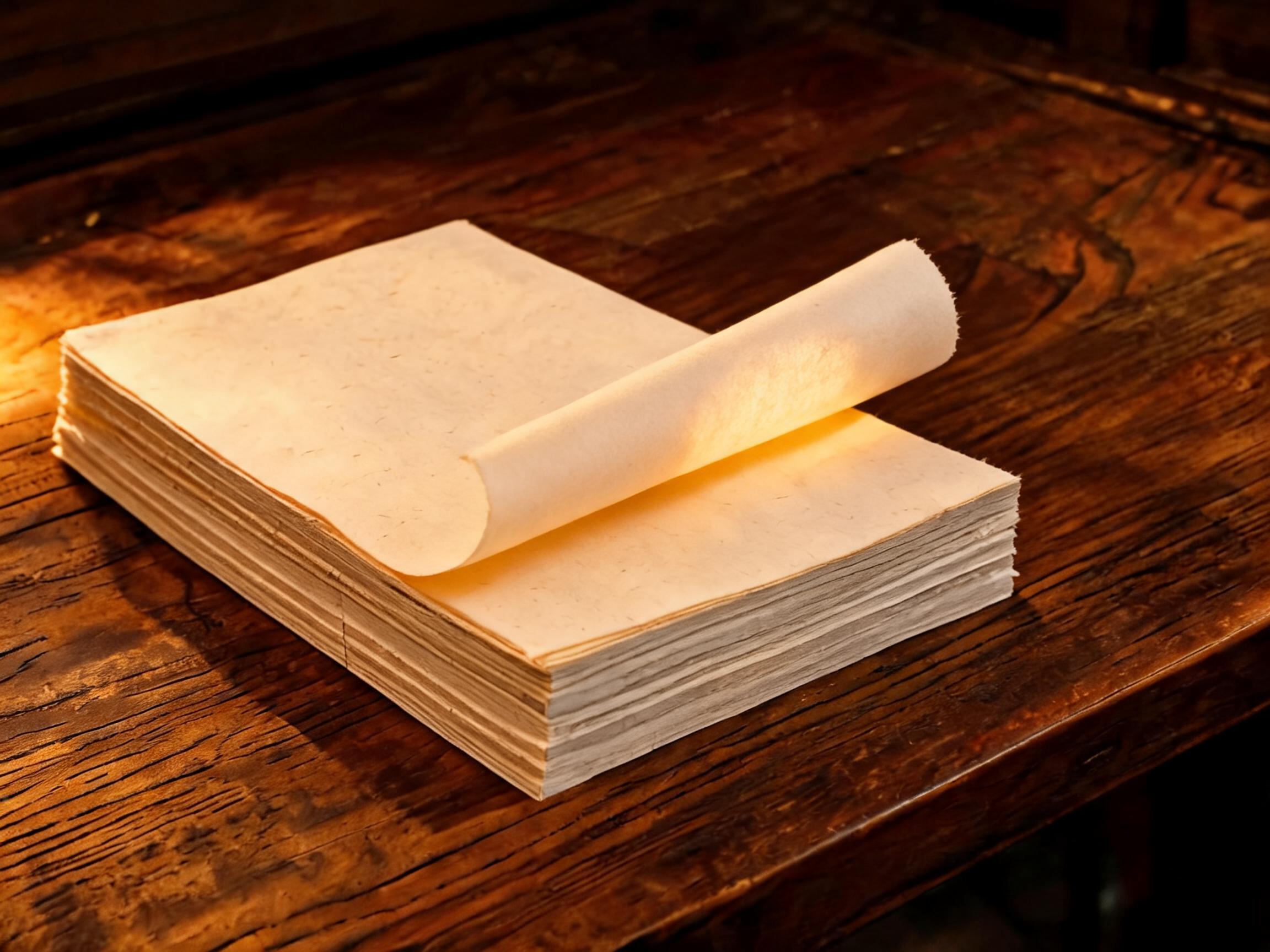
This article explains what mulberry paper actually is, how it overlaps with and differs from xuan paper, and how fiber type, processing and format map to calligraphy, gongbi painting, printmaking and gift applications. It closes with a practical specification checklist for wholesale buyers.
What Is Mulberry Paper, Exactly?
Mulberry paper is a broad, loosely used term. In its most precise sense it refers to papers made from the inner bark fibers of the paper mulberry tree and closely related species. In Japanese papermaking contexts, the same fiber family appears as kozo and gampi, and papers made from them are often sold internationally under the "mulberry paper" label. The defining characteristic is the fiber itself: long, strong inner-bark fibers that give the finished sheet a soft, slightly fibrous surface with high tear strength and good folding endurance.
Because the term is used loosely, buyers should treat it as a starting question rather than a finished specification. Two products both described as mulberry paper can differ widely in fiber blend, processing and behavior with ink. The reliable way to compare them is to ask what fiber the paper is actually made from, and whether it is raw (absorbent) or treated (resistant to absorption).
How Mulberry Paper Relates to Xuan Paper
Xuan paper is a distinct Chinese papermaking tradition, and it is not simply another name for mulberry paper. Traditional xuan paper combines wingceltis bark fiber (known as qingtan) with rice-straw pulp. The bark fiber contributes strength and ink interaction; the straw content affects absorbency, texture and how the sheet responds to expressive brushwork. So while both papers may feature bark fiber, the fiber source and the blend are different.
This distinction matters commercially. If you are sourcing for calligraphy, Chinese painting, seal-stamp work or cultural gift sets, the material you need is usually xuan paper, and describing it as "mulberry paper" in an inquiry can create confusion with suppliers who make the same distinction. Conversely, if your application is printmaking, collage, bookbinding or gift packaging, a bark-rich mulberry-style sheet may be exactly right. Knowing which term describes which material helps you ask better questions and receive accurate quotes.
It is also worth noting that many export listings for "mulberry paper" actually refer to bark-fiber Chinese papers. When evaluating any listing, ask the supplier to describe the fiber composition in plain terms: bark fiber alone, bark with straw pulp, or another blend. A supplier who can answer that clearly can usually also explain how the paper behaves with ink, which is the property that matters most in end use.
Raw Versus Treated: The Processing Choice That Matters Most
Whatever the fiber, the biggest practical difference between sheets is whether the paper is raw (unprocessed, sized lightly or not at all) or treated (sized). Raw xuan paper absorbs ink readily, letting strokes bloom and bleed softly. This is what calligraphers and freehand (xieyi) painters want: the paper becomes part of the expression. Treated xuan paper resists absorption, holding ink on the surface so lines stay crisp and controlled. This is essential for gongbi, the fine-brush meticulous painting style, where a single stray bleed can ruin detailed work.
For buyers assembling product ranges, this means the same "xuan paper" category really contains two different tools. A practice-grade sheet behaves differently from a professional raw sheet, and a gongbi sheet behaves differently from both. Match the processing to the user, not just to the price point.
Matching the Material to the End Use
Expressive calligraphy and freehand painting
For these uses, raw, bark-rich xuan paper is the conventional choice because controlled ink bleed is precisely the effect artists seek. Predictability matters as much as softness: a professional raw sheet should bleed in a controlled, repeatable way so artists can work with confidence. When sourcing at wholesale volume, ask whether thickness consistency is verified per batch — variation between batches is one of the most common complaints in this category. Our Raw Xuan Paper Professional is a natural bark fiber (qingpi) sheet in the standard 69cm × 138cm size, designed for controlled ink bleed with batch-verified thickness consistency and archival quality supported by aging documentation; custom sheet sizes are available, with a minimum order of 200 sheets.
Fine-line gongbi painting
Gongbi painters need the opposite behavior: even ink resistance and a smooth surface that lets a fine brush draw a clean, unbroken line. This is a treated (sized) paper, and the quality of the sizing — how evenly it is applied across the sheet and across the batch — determines whether the paper is usable for detailed work. Ask specifically about sizing evenness rather than simply requesting "sized paper." The Treated Xuan Paper for Gongbi in our range is specified for controlled sizing, even ink resistance and a smooth surface suited to fine-brush work, with a minimum order of 200 sheets.
Printmaking, lining and gift packaging
Here the fiber story matters most. Bark fiber raises tear strength and folding endurance, which is why bark-rich papers suit printmaking, bookbinding, cover work and box lining better than straw-rich sheets — a general point about fiber that applies to both mulberry-style and xuan papers. For these applications, format matters as much as fiber: rolls rather than sheets, with consistent width and clean-cut edges that do not fray, wound so the paper does not crease in storage or transit. Our Xuan Paper Roll is a bark-fiber xuan paper offered in widths of 50cm, 70cm and 97cm and lengths of 10m, 20m and 50m, with controlled width consistency, clean edge cutting and quality winding, plus roll quality documentation included; minimum order is 50 rolls. Rolls are also the economical format for studios and workshops that cut their own sheets.
Practice, education and gift presentation
Not every sheet needs professional-grade performance. For schools, community programs and beginner ranges, a dedicated practice grade keeps costs appropriate for high-volume use. For gift sets and cultural presentation, the format itself becomes the feature: a bound album presents finished work or serves as an elegant gift item in its own right. Both a student practice grade and a bound album format exist within our xuan paper range — ask for current specifications when inquiring, since practice-grade parameters are typically matched to the intended volume and budget.
What to Specify When Buying Wholesale
Whether your inquiry is ultimately about mulberry paper or xuan paper, a clear specification shortens the quoting process and reduces the risk of receiving material that does not fit your end use. Cover these points in your first inquiry:
- Fiber description. Ask what the paper is made from — bark fiber alone, bark with straw pulp, or another blend — rather than relying on a marketing name.
- Processing. State raw or treated. If treated, ask how sizing evenness is controlled across the sheet and the batch.
- Behavior with ink. For calligraphy grades, ask whether ink bleed is controlled and predictable; for gongbi grades, ask about even ink resistance.
- Consistency and documentation. Ask whether thickness or quality is verified per batch, whether archival quality is supported by aging documentation, and what paperwork accompanies the shipment.
- Format. Sheets, rolls or bound albums, with the dimensions you need — including whether custom sheet sizes are possible.
- Volume terms. Confirm minimum order quantities and whether they differ by format; in our range, professional raw xuan and gongbi treated paper both start at 200 sheets, while xuan paper rolls start at 50 rolls.
A supplier's answers to these questions tell you more than any product photo. Vague answers on fiber or processing are a signal to probe further; specific answers about batch verification, edge cutting and documentation indicate a production process that is actually managed rather than merely described.
From Material Question to Sourcing Decision
Mulberry paper and xuan paper share a reliance on strong bark fiber, but they are different materials with different traditions and different best uses. Identify the fiber, decide whether raw absorbency or treated resistance fits your application, and choose the format — sheet, roll or album — that your customers will actually use. With that specification in hand, comparing quotes becomes straightforward.
If you are evaluating xuan paper for calligraphy, painting, printmaking or gift programs, share your end use, preferred format and target volumes with us. We can outline which grades in our range fit the application and confirm current specifications, dimensions and order terms for your market.