

A procurement-focused guide to sumi ink for temple and shrine supply buyers and art-supply distributors: how grades differ, what packaging formats suit which sales channel, how to judge batch consistency before you commit, and a supplier evaluation checklist you can run against any factory.
Wholesale Sourcing Guide
If you buy sumi ink for a temple or shrine supply counter, a calligraphy school, or an art-supply distribution catalogue, the question is rarely "what is sumi ink." It is whether a factory can deliver the same black, the same flow and the same bottle, order after order, at a volume that keeps your shelf stocked. This guide covers the grades you will actually be offered, how packaging format changes your sales channel, and how to test a supplier before you place a bulk order.
Key takeaways
- Sumi ink is refined soot bound with a natural binder. The soot source and binder ratio drive the difference between student, standard and premium grades.
- For temple and shrine use, batch-to-batch tone consistency matters more than peak quality on any single bottle.
- Bottle format (100ml to 500ml) should follow your channel: small sealed bottles for retail and donation counters, bulk containers for refill and studio use.
- Ask for the same documentation on every shipment: batch tone record, seal integrity check, and export QC paperwork.
What actually differs between sumi ink grades
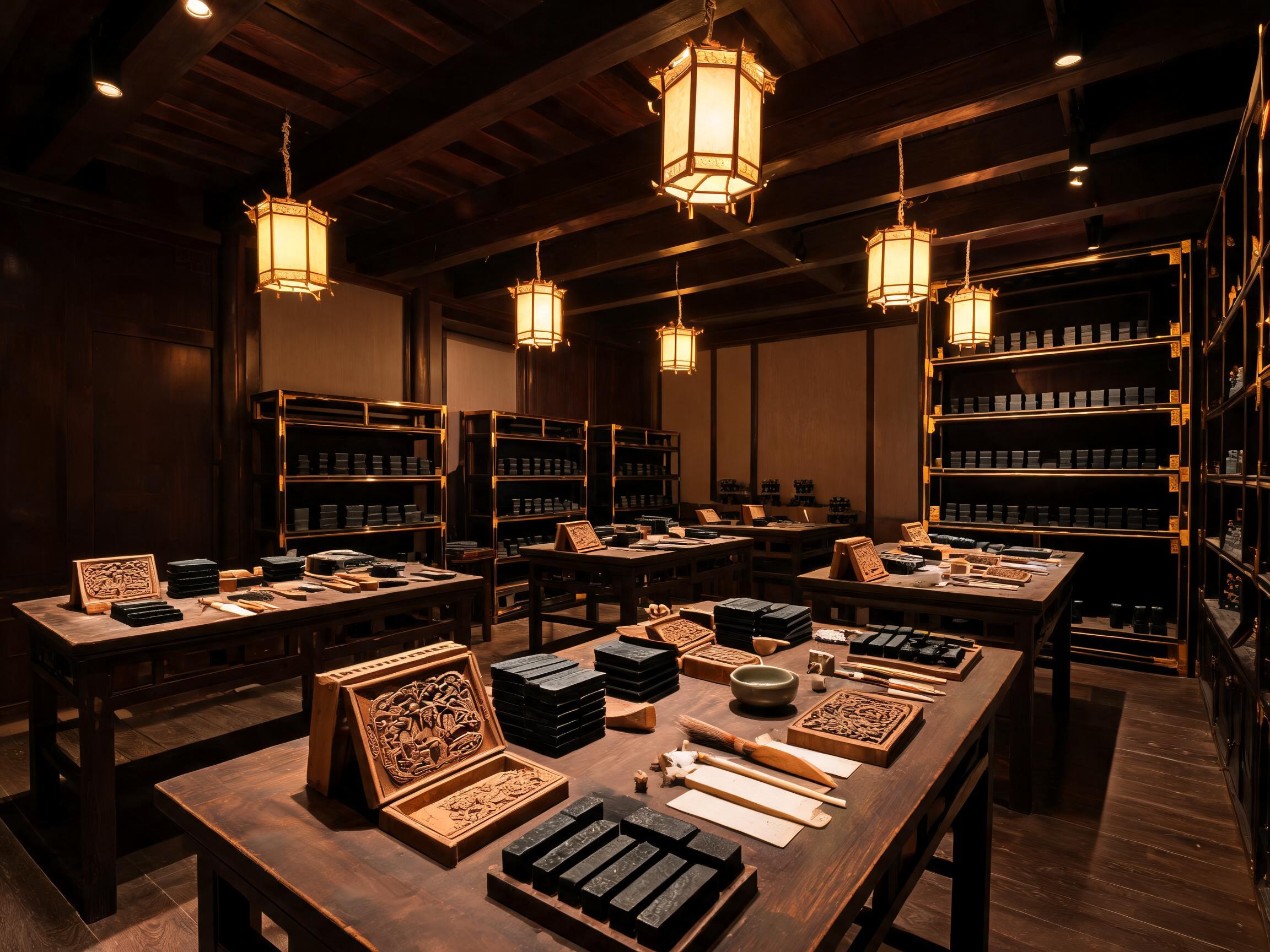
Sumi ink is made by refining soot, mixing it with a binder, pounding the mixture, then forming and drying it. Liquid ink follows the same logic but stops at the dispersion stage, which is why liquid grades are described by soot refinement level and binder system rather than by stick hardness.
When a factory quotes you three tiers, the practical differences are:
- Student grade — formulated for high-volume practice where cost per litre drives the decision. Flow is forgiving and the tone is a working black rather than a display black. Suitable for classrooms, practice paper and introductory kits.
- Standard bottled grade — refined soot with a natural binder, sold in sealed bottles with consistent density across the batch. This is the workhorse for retail calligraphy sets and general art-supply shelves.
- Concentrated matte black — a deeper, tone-matched matte black intended for work where the finished surface is judged: display calligraphy, scroll work, packaging artwork and reproduction. Acid-free and lightfast grade 5, with a tone consistency certificate included.
Two grades can look identical in a photograph and behave completely differently on paper. Judge them by flow under a loaded brush, drying behaviour on the paper you actually sell, and whether the tone holds at the edges of a stroke.
Matching packaging to your sales channel
Packaging is where most sourcing mistakes happen. A 500ml container is cheaper per millilitre but unsellable at a temple donation counter; a 100ml bottle is convenient at retail but expensive to use as a refill source. Decide the channel first, then the format.
| Format | Typical use | What to verify before ordering |
|---|---|---|
| 100ml sealed bottle | Retail calligraphy sets, temple and shrine counters, gift and souvenir packs | Tamper-evident seal, label space for your own branding, carton count per export box |
| 250ml bottle | Art-supply retail, school and studio supply, mid-size kits | Density consistency across the batch, cap fit after transport, shelf life stated on the label |
| 500ml bottle | Studios, refill stations, high-usage institutional buyers | Flow stability at the bottom of the bottle, seal performance under stacking |
| Bulk liquid ink | Distributors who decant, refill operations, own-brand lines | Concentrate ratio, decanting guidance, batch documentation per drum or container |
| Gift-set configuration | Seasonal and ceremonial retail, corporate gifting | Set composition, box structure, whether the inkstone and brush components are included |
Gu Mo Craft Technology manufactures across these formats: premium bottled calligraphy liquid ink in 100ml, 250ml and 500ml with tamper-evident sealed bottles and custom label options; concentrated matte black liquid ink in 250ml and 500ml for buyers who need a tone-matched deep black; bulk calligraphy liquid ink for volume and decanting operations; and student-grade liquid ink for practice and education channels.
How to judge batch consistency before you commit
Tone drift is the complaint that ends supply relationships. A buyer accepts one shipment, sells it, then receives a second shipment that reads slightly warmer or greyer, and the returns start. Consistency is a production discipline, not a marketing claim, so test for it directly.
- Ask for a tone record, not a photo. A photograph taken under unknown lighting tells you nothing. Ask how the factory documents tone per batch and whether that record travels with the shipment.
- Request samples from two different production batches. Paint the same stroke on the same paper with both and compare after full drying, not while wet. Wet ink darkens; dried ink is what your customer sees.
- Check density behaviour over time in the bottle. Leave a sample upright and undisturbed, then test flow again. Separation or heavy settling tells you how the dispersion holds.
- Confirm the stated shelf life and the label wording. Unopened shelf life should be printed, not implied. Gu Mo states 24 months unopened on its liquid ink lines.
- Verify the seal survives your shipping route. Tamper-evident sealing is only useful if it still reads as intact after container transport and inland handling.
Supplier evaluation checklist
Run this against every candidate factory before you negotiate volume. It is written so that a "no" is informative rather than disqualifying — some items you can accept as a project-specific arrangement, others you should not.
| Area | Question to ask | What a good answer looks like |
|---|---|---|
| Grade range | Do you produce student, standard and concentrated grades, or only one? | A range you can sell across channels, with a clear explanation of what changes between tiers |
| Batch control | How is tone checked per batch, and what document follows the goods? | A named internal check and a document that ships with the order |
| Packaging | Which volumes and seal types are standard, and which are custom? | Standard formats plus a defined custom label and volume process |
| MOQ | What is the minimum order quantity per SKU and per mixed order? | A stated MOQ you can plan around — Gu Mo works from 100 bottles on its liquid ink lines |
| OEM and private label | Can you produce under our brand, and what do you need from us? | A clear list of inputs: artwork files, label dimensions, target volume |
| Export documentation | What QC paperwork accompanies an export shipment? | Export QC documentation as a routine part of the order, not a special request |
| Custom sets | Can you assemble gift sets combining ink, inkstone, brush and paper? | Gift-set design capability, since ceremonial and seasonal buyers often want a single SKU |
| Market experience | Which regions do you currently ship to? | Gu Mo ships to Southeast Asia, Japan and Korea, the Middle East, Central-Eastern Europe, Africa and Chinese-diaspora markets in the Americas |
Where sumi ink demand actually comes from
Knowing your end buyer shapes what you should stock, and the three main demand pools buy differently.
Temples, shrines and religious supply
This channel values ritual continuity. Buyers want a black that matches what they have used before, in a bottle format that suits a counter or a donation area, and they reorder on a predictable cycle. Consistency and packaging discipline outrank novelty. Small sealed bottles and gift-set configurations tend to fit here.
Art-supply dealers and distributors
Dealers need a range that spans price points, plus private-label options so the product carries their own brand. They care about shelf life because inventory turns slowly, and about label compliance because the product sits on a retail shelf. A mixed order across student, standard and concentrated grades is normal.
Schools, studios and institutional buyers
Volume users consume ink quickly and are sensitive to cost per millilitre and to flow consistency at the bottom of a large container. Bulk and 500ml formats serve this group, and student grade covers practice work where display quality is not the requirement.
FAQ
Is liquid sumi ink the same as an ink stick?
Both use refined soot and a binder. A stick is formed and dried, then ground with water at the point of use; liquid ink is supplied already dispersed, which removes the grinding step and gives you a repeatable density straight from the bottle. For wholesale supply, liquid ink is easier to package, label and ship in consistent units.
What is the minimum order quantity for wholesale sumi ink?
Gu Mo Craft Technology works from an MOQ of 100 bottles on its liquid ink lines, including the premium bottled, concentrated matte black and student-grade products. Confirm the MOQ for mixed orders and for custom gift sets when you request a quotation.
How long can I store liquid ink before selling it?
The stated shelf life is 24 months unopened. Once opened, storage conditions matter more than the printed date, so keep stock out of direct heat and sunlight and rotate by batch.
Can I order under my own brand?
Yes. OEM customization, custom labels and custom volume options are available, along with gift-set design. You will need to supply artwork and label specifications so the factory can confirm fit against the bottle format you choose.
How do I check tone consistency between shipments?
Compare dried strokes from two production batches on the same paper, and ask for the tone documentation that accompanies each batch. For the concentrated matte black line, a tone consistency certificate is included.
Next step: if you are sourcing for a temple or shrine counter, an art-supply catalogue or a distribution territory, send your target volumes, bottle formats and label requirements. Gu Mo Craft Technology, founded in 2011, handles design, manufacturing, QC and export in-house, and can quote against your grade mix and packaging specification. Ask for samples from two production batches so you can compare dried tone before committing to a bulk order.