Learn how liquid sumi ink supports high-volume religious and ceremonial calligraphy in temples, shrines, and cultural venues. Understand formats, sourcing considerations, and bulk purchasing for international buyers.
Sumi ink for religious and ceremonial use: what buyers need to know
For temples, shrines, and cultural venues across Japan, Korea, Southeast Asia, the Middle East, and Africa, calligraphy is more than an art form — it is part of daily ritual. From writing sutras and votive plaques to preparing ceremonial scrolls, these institutions need a reliable supply of sumi ink that performs consistently in high-volume use. The term sumi ink refers to the Japanese name for the same East Asian ink tradition that originated in China, where it is known as mo or ink stick. This article explains how liquid formats meet the demands of religious and ceremonial settings, and what to look for when sourcing in bulk.
If you are an art supply dealer, cultural gift importer, or procurement officer for a temple or shrine, this guide is written for you. We focus on the practical questions: what sumi ink is, how liquid ink differs from stick ink for ceremonial workloads, and how to evaluate a supplier for consistent bulk supply.
In this guide
What is sumi ink?
Sumi ink is a traditional East Asian ink made from soot (usually pine soot or oil soot) bound with a natural adhesive, then pressed and dried. In Japan it is called sumi, in China mo, and in Korea meok. The tradition dates back centuries and is central to calligraphy, painting, and religious practice across the region.
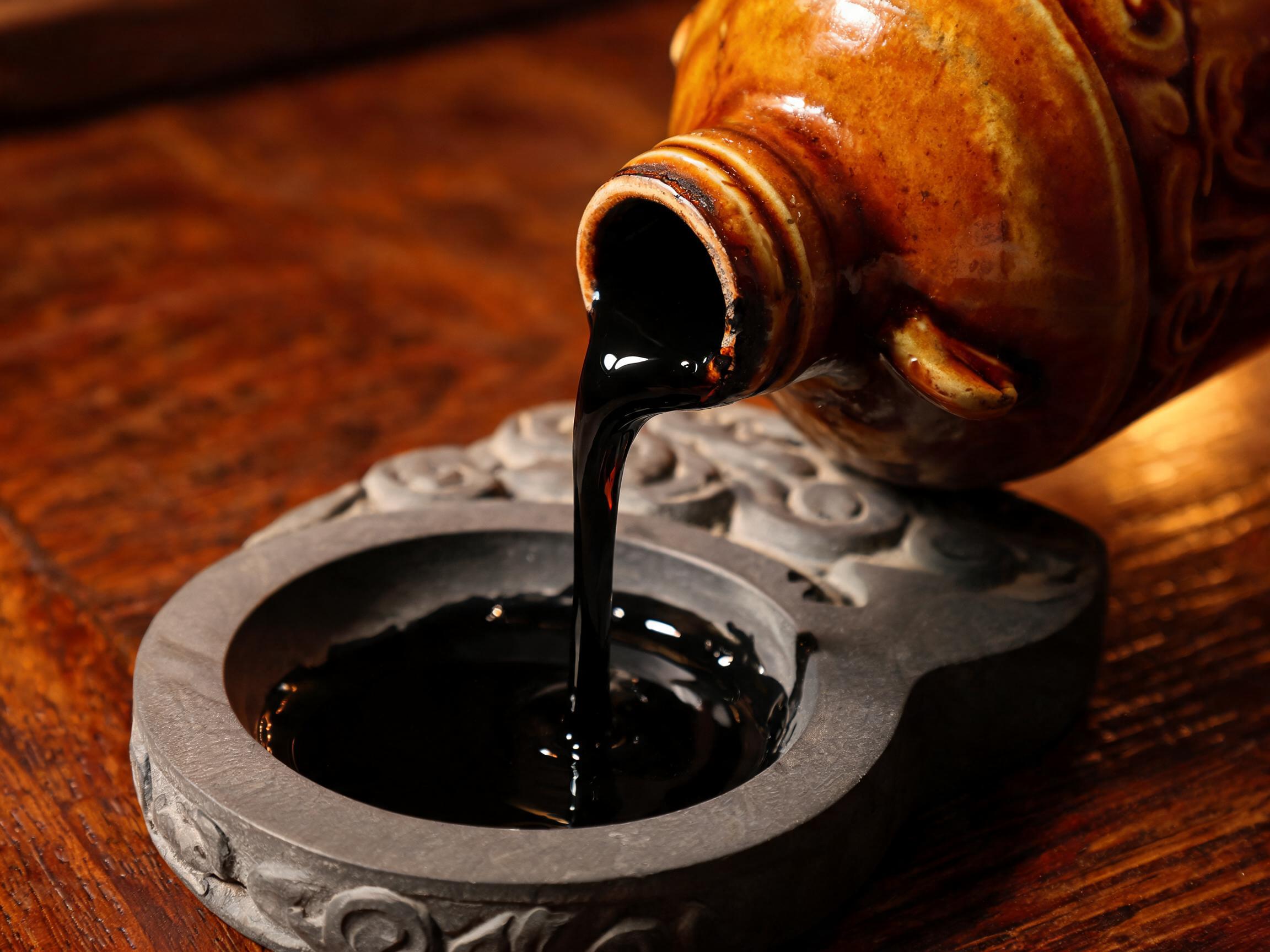
The traditional form is a solid ink stick that must be ground on an inkstone with water before use. This process is time-consuming and requires skill. For daily ceremonial use — where monks or priests may write hundreds of characters — the grinding step becomes impractical. That is why many institutions now turn to liquid ink, which offers the same deep black tone without the preparation time.
Liquid vs. stick ink for ceremonial use
Both formats have their place. The table below compares them for religious and ceremonial applications.
| Feature | Liquid ink | Ink stick |
|---|---|---|
| Preparation time | Ready to use immediately | Requires grinding on inkstone |
| Consistency | Uniform from batch to batch | Varies with grinding technique |
| Ideal for | High-volume writing, workshops, ceremonies | Traditional practice, formal displays |
| Storage | Sealed bottles, easy to stock | Must be kept dry |
| Cost per volume | Generally lower for bulk use | Higher per unit, but traditional |
For a temple that conducts daily sutra copying or an event venue that hosts calligraphy demonstrations, liquid ink saves significant time and ensures every stroke is consistent. It is also easier to control dilution — adding water can adjust the shade, but most liquid inks are formulated for direct use.
Our liquid ink product line
At Gu Mo Craft Technology (古墨工艺品), we manufacture liquid ink in several formats to suit different needs. Our Bulk Calligraphy Liquid Ink is designed for high-volume users who need a dependable everyday ink. For applications that demand a deep, matte finish, our Concentrated Matte Black Liquid Ink offers a rich black tone. And for institutions that prefer a premium presentation, our Premium Bottled Calligraphy Liquid Ink combines quality with convenient bottling.
Sourcing liquid sumi ink in bulk
When you source liquid ink for temples, shrines, or cultural venues, you are not just buying a product — you are securing a supply for ongoing rituals and events. Here are the factors that matter most.
Consistency of quality
Religious calligraphy often requires a specific shade of black and a certain flow on the brush. A supplier that uses traditional methods — like pine-soot or oil-soot soot, natural binders, and controlled hammering, pressing, and drying — is more likely to produce a consistent product. Our factory has followed these methods since 2011, integrating design, production, quality control, and export under one roof.
Volume and packaging
For high-volume use, liquid ink in bulk containers reduces waste and cost per unit. Ask your supplier about available container sizes and whether they can supply large volumes on a regular schedule. If you need smaller bottles for distribution to individual artists or workshops, a supplier that offers both bulk and bottled formats gives you flexibility.
Storage and shelf life
Liquid ink should be stored in sealed containers away from direct sunlight. Most quality liquid inks have a long shelf life if kept closed. Confirm the recommended storage conditions with your supplier and check the production date on each batch.
Key considerations when choosing a supplier
Not all ink suppliers are equal, especially for ceremonial use where quality and reliability are non-negotiable. Use this checklist when evaluating a supplier.
- Manufacturing heritage: Does the supplier have a track record in traditional ink making? Gu Mo Craft Technology was founded in 2011 and is dedicated to the cultural heritage of Chinese ink craft.
- Production control: Is design, production, and quality control handled in-house? This reduces the risk of inconsistency.
- Product range: Can the supplier provide both liquid and stick formats, and different bottle sizes?
- Export experience: Does the supplier regularly export to your region? Our target markets include Southeast Asia, Japan/Korea, the Middle East, Central-Eastern Europe, Africa, and the Chinese diaspora in the Americas.
- Samples: Always request samples before committing to a large order. Test the ink for shade, flow, and drying time.
Why ceremonial venues choose liquid ink
In many temples, the daily writing of sutras or the preparation of talismans requires a steady hand and a consistent ink. Liquid ink eliminates the variable of grinding, allowing the writer to focus on the calligraphy itself. For cultural venues that host workshops or demonstrations, liquid ink is also easier to manage for large groups.
Frequently asked questions
Is sumi ink the same as Chinese ink?
Yes, sumi ink is the Japanese term for the same ink tradition that originated in China. The core ingredients — soot and animal glue — are similar, though regional variations exist in production methods.
Can liquid ink be used for all types of calligraphy?
Liquid ink is suitable for most calligraphy and brush painting. Some artists prefer stick ink for very fine line work, but for everyday practice and ceremonial use, liquid ink performs well.
How should I store bulk liquid ink?
Keep containers tightly sealed and store in a cool, dry place away from direct sunlight. Avoid extreme temperatures, which can affect viscosity.
Do you provide samples before bulk orders?
We recommend requesting samples to verify quality and suitability for your application. Contact us to discuss your requirements and arrange a sample.
Next steps for sourcing sumi ink
Whether you are stocking a temple supply shop or procuring for a national cultural institution, choosing the right liquid sumi ink supplier is a decision that affects your daily operations. Look for a manufacturer that combines traditional craft with modern quality control — like Gu Mo Craft Technology, which has been producing ink since 2011.
If you are ready to discuss your volume needs, or if you have specific questions about the ink's performance in your application, reach out to us. We are happy to provide samples and discuss how our liquid ink can support your ceremonial and cultural programs.