
A sourcing guide for gift wholesalers, education buyers and cultural product distributors purchasing soft carving-stone seals in bulk. Covers four material grading checks, the sample-and-knife carving test, and the paperwork to require before confirming a bulk order.
Soft, fine-grained carving stones are the default choice for beginner engraving programs, corporate gift seals and cultural product lines. But "soapstone" is a market name, not a specification: stones sold under that label vary widely in hardness, grain and color treatment depending on the source. This guide explains how to grade material, how to verify carving behavior with a sample, and which order checks protect a bulk engraving program.
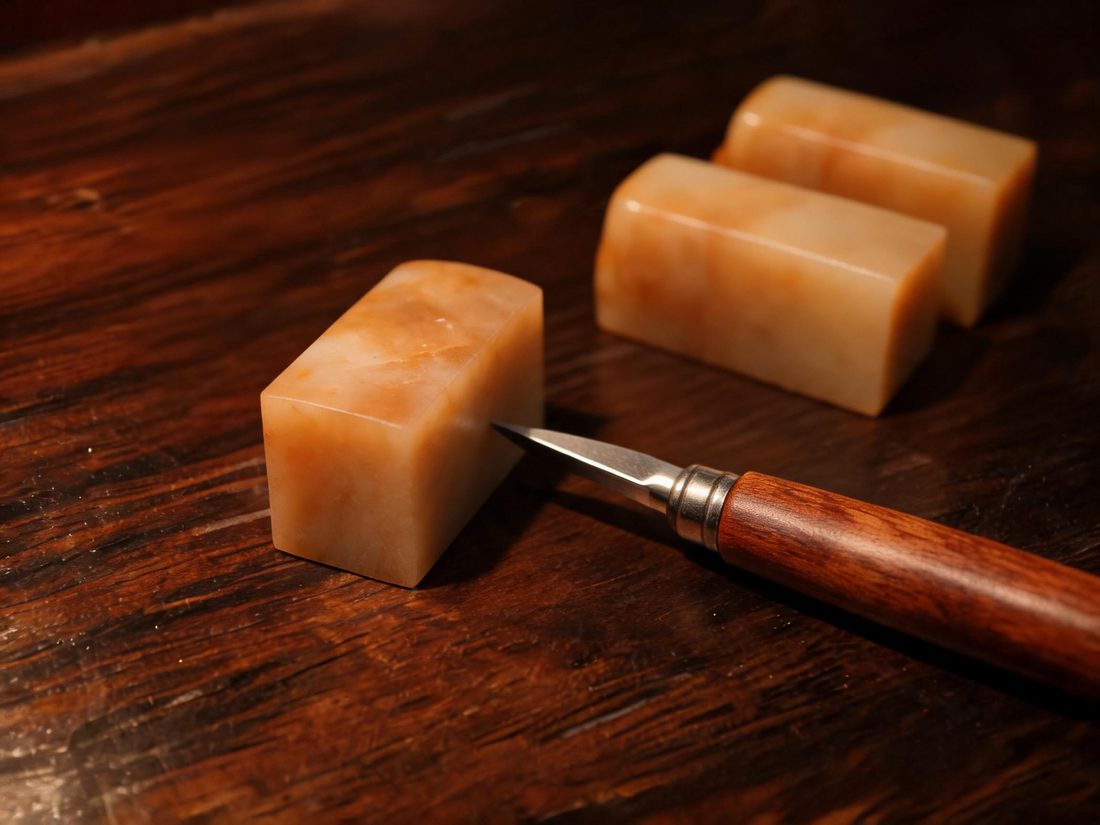
Why "soapstone" is a grading question, not just a name
Soapstone-type materials — soft, talc-rich stones often marketed under local trade names — cut cleanly with basic tools, which is why they dominate beginner and gift seal programs. The problem for bulk buyers is that hardness can differ significantly between quarries, and even between layers of the same deposit. A batch that carves beautifully on day one can behave differently on the next shipment.
This means you should grade by measurable behavior, not by label: how consistently the batch resists the knife, how clean the cut edges are, and whether hidden flaws show up when the stone is worked. If your specification literally calls for soapstone (talc/steatite), ask any supplier — including us — to confirm mineral identity in writing: material name, hardness range, and whether the color is natural or dyed, documented in the shipment paperwork. Our published stone list covers practice-grade natural stone and Shoushan/Qingtian seal stones; if your tender requires a specific soapstone specification, request written material confirmation before committing to volume.
Material grades: four checks that matter
For engraving programs, define your grades by four criteria:
1. Hardness consistency across the batch. In education settings, students carve with the same tools and technique; if one stone in ten is noticeably harder, the failure rate spikes and teachers lose class time. Grade a batch by how tightly cutting resistance clusters, not just by average softness.
2. Visible flaws. Cracks, pits and mineral stringers (thin lines of harder material) ruin a carving mid-stroke. Stringers are the worst for beginners because the knife skids unpredictably. Every stone should be screened individually — batch sampling misses the outliers.
3. Grain fineness. Fine, even grain holds crisp characters and detail work. Coarse grain produces ragged edges and limits how much detail an engraving program can promise in its curriculum or product copy.
4. Color naturalness. Dyed stones are common in the low end of the market. Dye is not automatically a problem, but it can mask surface flaws and it changes buyer expectations — a "natural color" claim that turns out to be dyed is a return trigger. Ask directly whether color is natural or dyed, and get the answer documented.
At the top of the ladder, natural Shoushan stone is graded per stone for grain and comes with documented natural color variations — a different order of rigor than commodity practice stone.
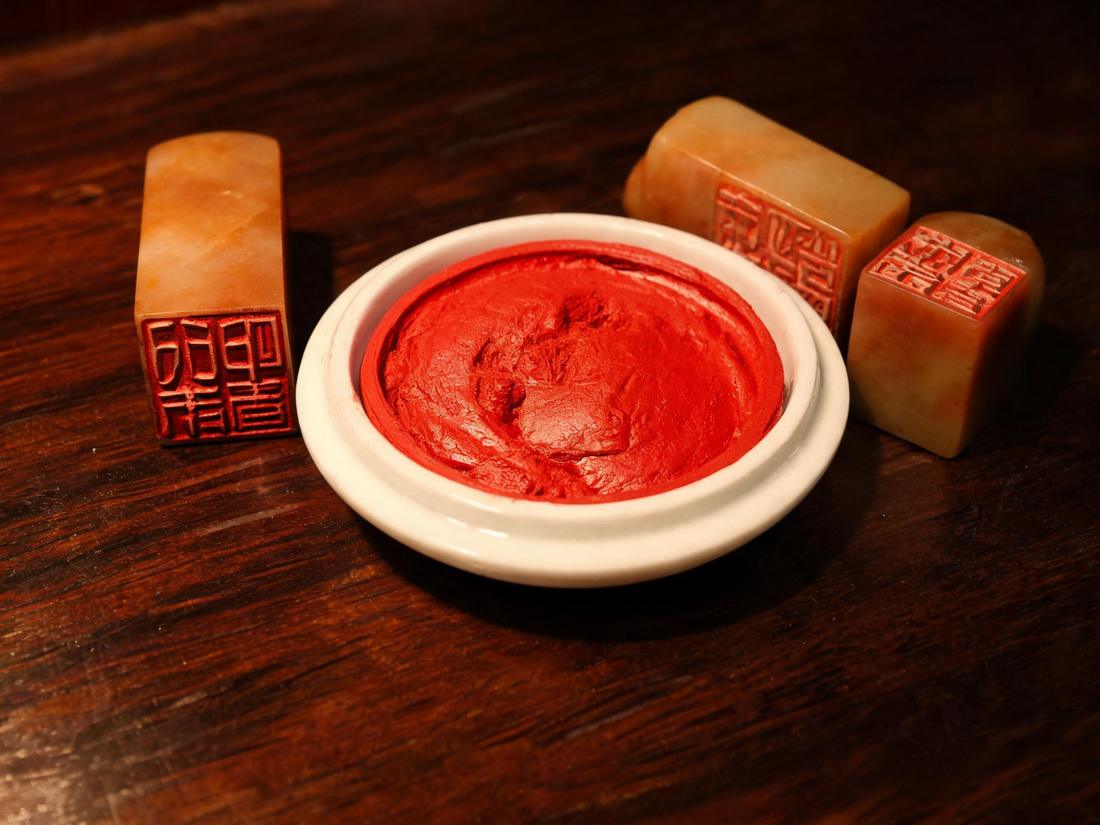
Carving behavior: the sample-and-knife test
Lab numbers help, but the fastest grading method is a physical test. Request a sample stone from the actual production batch, then:
Make a test cut with a standard carving knife. A well-graded soft stone cuts cleanly with crisp edges. If the cut face crumbles, or the knife meets gritty resistance, the stone will frustrate students and gift engravers alike.
Inspect the cut face. Freshly cut surfaces expose what the polished exterior hides: internal cracks, stringers and grain irregularities. Check several stones, not one.
Repeat across the sample set. Consistency is the grade. Three stones that carve identically tell you more about batch quality than one perfect stone.
Run this test before approving samples — and make the approved sample the reference standard for the production run, so any dispute has a physical benchmark.
Order checks and paperwork for bulk engraving programs
Sample approval is only the first gate. For a bulk order, require the following in your contract:
- Hardness test reports shipped with the goods, so incoming inspection can verify the batch against the approved sample.
- Surface quality checks per batch, covering pitting and finish defects.
- Structural integrity screening stone by stone, to catch hidden cracks before they reach your warehouse.
- Defined inspection criteria (e.g., AQL levels) agreed in advance, so acceptance is not a negotiation after arrival.
- Sample-first workflow with written sample approval as the production trigger.
- For premium lines: origin certificates and per-stone grading documentation with every shipment.
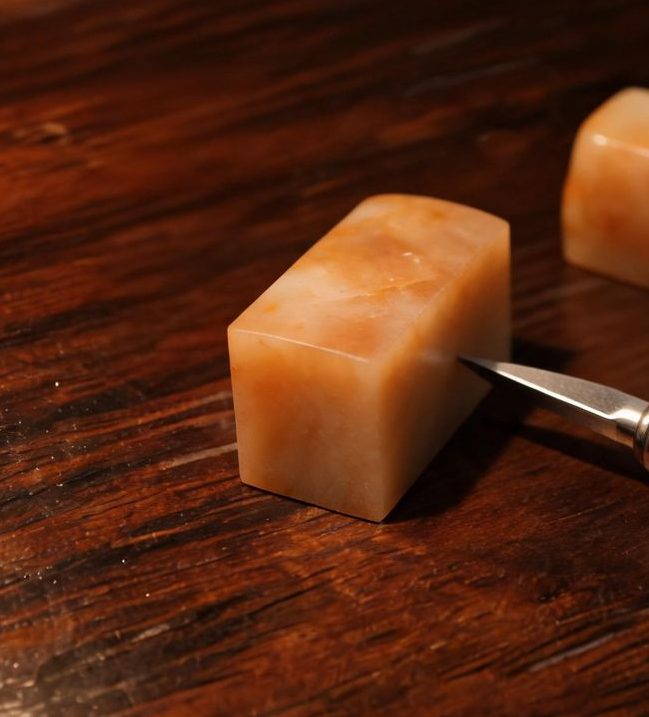
Matching material grade to your program
Gu Mo Craft Technology has sourced and graded seal carving stones since 2011, with structural testing equipment and a dedicated grain grading station, serving professional carvers, collectors, schools and cultural institutions across Japan, Korea, Southeast Asia and other markets. Our two product lines map onto the two ends of a typical program:
| Criterion | Practice Seal Stone (GMO-SC-004) | Premium Shoushan Seal Stone (GMO-SC-001) |
|---|---|---|
| Material | Selected natural stone, practice grade | Natural Shoushan stone from verified quarry sources, documented origin |
| Size | Standard 2 x 2 x 6 cm | 3x3x8 cm to 5x5x12 cm; custom sizes beyond standard range (35–50 days custom production) |
| Grading | Consistent hardness grading for beginners; surface quality tested per batch; structural integrity checked stone by stone (hidden cracks screened out) | Fine grain for detailed carving; grain grading per stone; natural color variations with color grading documentation; structural integrity testing per stone |
| Documentation | Hardness test reports available with shipment | Origin certificates with every shipment |
| MOQ | 200 pieces | 50 pieces |
| Lead time | 25–35 days after sample approval | 30–45 days after sample approval |
| Program extras | Bulk packaging designed for school distribution; custom school labeling; illustrated carving guides in multiple languages by request | Custom presentation box available |
| Reference case | Malaysia calligraphy school network: 1,000 practice stones, samples in 8 days, production in 28 days, hardness test reports shipped | Japan professional carving studio: 200 stones with origin certificates, graded samples in 15 days, production in 38 days |
For a school or beginner program, the practice stone's consistent hardness grading, standardized 2 x 2 x 6 cm format and school-oriented packaging are what matter. For collector, corporate gift or professional studio lines, the Shoushan line's per-stone grain grading, color documentation and origin certificates justify the higher grade.
FAQ
Can I get a single shipment that mixes practice-grade and premium stones? Both lines can be quoted together, but minimums, lead times and documentation differ per line, so the practical route is to confirm each line's quantities and timeline separately in one order discussion. Ask us to structure the shipment schedule when you request a quote.
What if my tender specifies soapstone by mineral name? Our published list covers practice-grade natural stone and Shoushan/Qingtian stones. If your specification requires soapstone (talc/steatite) specifically, request written confirmation of mineral identity — material name, hardness range and whether the stone is dyed — from any supplier before awarding the contract.
How quickly can I see samples before committing to production? It varies by line. In our reference cases, practice-stone samples for a Malaysian school network arrived in 8 days and graded Shoushan samples for a Japanese studio in 15 days; your timeline depends on grade and quantity, so confirm it when requesting samples.
Can practice stones carry our school's branding? Yes — custom school labeling is available, and illustrated carving guides in multiple languages can be provided by request, which is useful for education programs distributing to first-time carvers.
What should incoming inspection at our warehouse check? Compare the received batch against the approved sample, review the hardness test reports against your agreed criteria, and spot-check cut faces for hidden cracks. If an AQL level was agreed in the contract, inspection against that level gives you a clear accept/reject basis.
Next steps
If you are building an education or beginner engraving program, start with the Practice Seal Stone (GMO-SC-004). For collector, gift or professional studio lines requiring origin documentation and per-stone grading, see the Premium Shoushan Seal Stone (GMO-SC-001). Review our practice stone specifications and MOQ details, then contact us with your target quantity, program type and any material specification requirements so we can quote samples and confirm lead times in writing.