
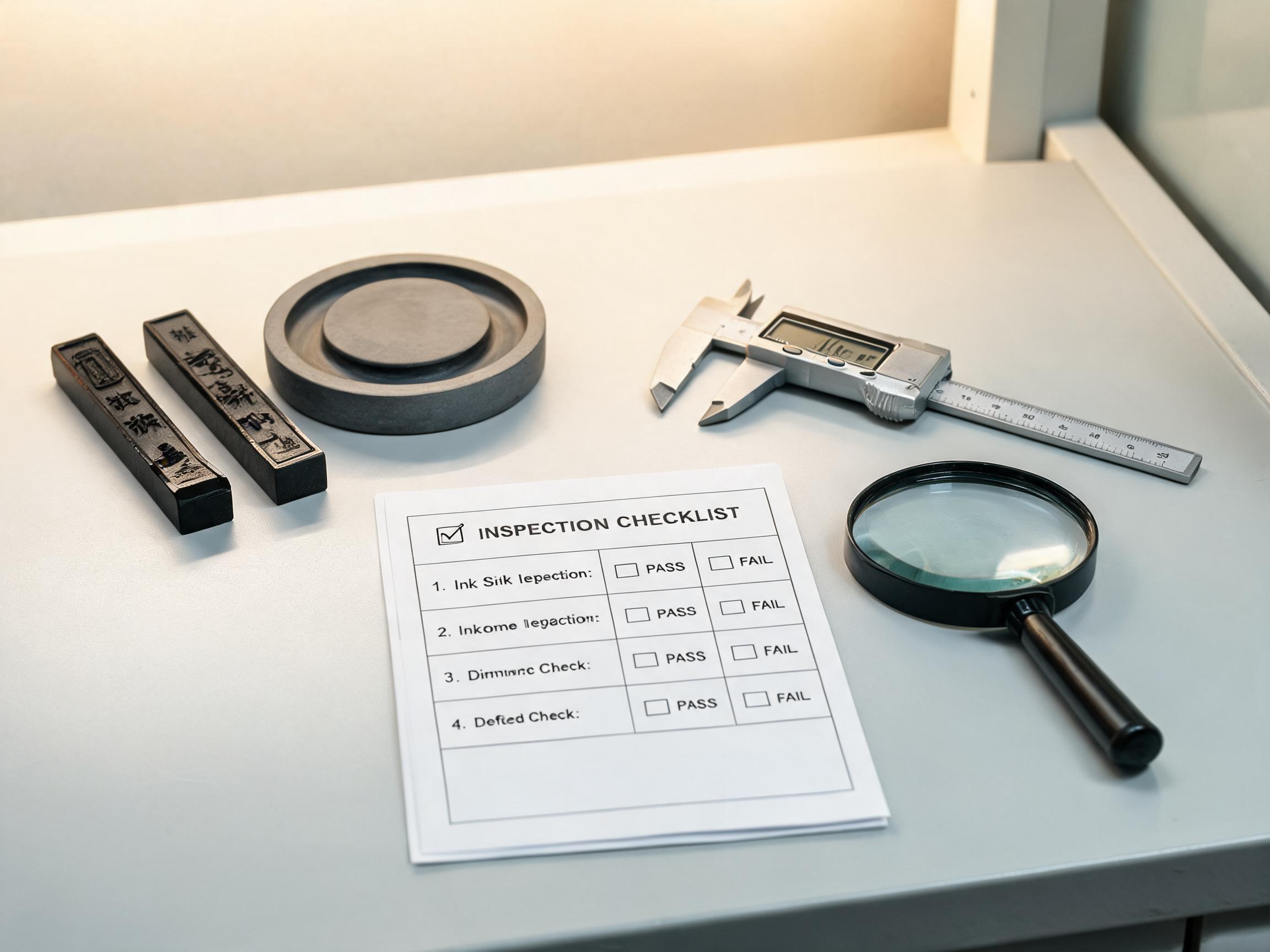
A practical, hands-on inspection checklist for importers and wholesale buyers to verify Chinese calligraphy brush quality before and during bulk orders. Covers shedding tests, tip snap-back, ferrule tightness, handle finish, and batch consistency, with decision criteria and supplier questions.
Key Takeaways
- Use a five-point physical inspection checklist: shedding test, tip snap-back, ferrule tightness, handle finish, and batch consistency.
- Always test a pre-production sample and then re-test against the same criteria during production and at final quality control.
- Ask for batch-level performance test reports and confirm the supplier's inline QC checkpoints.
- A reputable manufacturer like Gu Mo Craft Technology (est. 2011) offers hand-bound brush heads and resilience-graded wolf hair to prevent shedding and ensure snap-back.
Why Physical Inspection Matters for Bulk Orders
When you import Chinese calligraphy brushes in bulk, the quality of a single brush isn't the issue—it's the consistency across hundreds or thousands of units. A brush that performs beautifully in a sample can fail in production if the manufacturer doesn't control hair grading, binding, or ferrule crimping. That's why a hands-on inspection checklist is essential, not just for the initial sample but for every stage of your order.
Unlike machine-made consumer goods, calligraphy brushes are partly handcrafted. The hair must be selected, aligned, and bound correctly to hold its shape and release ink evenly. A poorly made brush sheds hairs into the ink, loses its tip after a few strokes, or has a ferrule that loosens over time. For an importer, these defects mean returns, refunds, and damaged relationships with your own customers.
This guide gives you a practical, repeatable inspection method. Use it to evaluate samples, monitor production, and confirm quality before shipment. It's designed for wholesale buyers who already have a shortlist of suppliers and need to verify quality with their own hands—not just rely on photos or promises.
The Hands-On Inspection Checklist
Print this checklist and take it with you to the factory or use it when reviewing samples at your desk. The five checks cover the most common failure points in calligraphy brush manufacturing.
Shedding Test
Shedding is the most frequent complaint from end users. A brush that loses even a few hairs per use ruins the writing experience and clogs the ink. Here's how to test:
- Dip the brush in clean water or ink, then gently stroke it on a smooth surface (a ceramic dish or glass works well).
- Do this 10–20 times, as you would during normal writing.
- After each stroke, check the paper or dish for loose hairs.
- Also, gently pull on a few hairs near the ferrule with your fingers. They should not come out easily.
What to look for: A quality brush should lose zero or only a couple of loose hairs during the first few uses (some loose hairs from the outer layer are normal in hand-bound brushes, but they should stop quickly). If hairs continue to shed after 20 strokes, the binding is likely inadequate. Manufacturers that use hand-bound brush heads—like Gu Mo Craft Technology—specifically design them to prevent shedding. Ask your supplier if they hand-bind the heads and how they control the binding density.
Tip Snap-Back (Resilience)
The tip of a calligraphy brush must return to a sharp point after being pressed and released. This is called snap-back or resilience. It determines how well the brush can produce fine lines and controlled strokes.
- Dip the brush in water or ink, then press the tip flat against a surface, as if writing a heavy stroke.
- Lift the brush and observe the tip.
- It should spring back to a sharp point within a second or two, without leaving the hairs splayed or bent.
What to look for: If the tip stays splayed or takes several seconds to recover, the hair quality or the hair blend is not right. For wolf hair brushes, resilience is a key characteristic. Gu Mo Craft Technology produces brushes with resilience-graded wolf hair, meaning the hair is sorted by its springiness to ensure consistent snap-back. Ask your supplier whether they grade the hair for resilience and how they test it.
Ferrule Tightness
The ferrule is the metal or bamboo collar that connects the brush head to the handle. A loose ferrule will eventually detach, making the brush unusable. Here's how to check:
- Hold the handle in one hand and the brush head in the other.
- Try to twist the brush head relative to the handle.
- Try to pull the head away from the handle.
- Listen for any creaking or movement.
What to look for: The ferrule should be firmly attached with no play or rotation. A small amount of glue visible at the joint is normal, but the ferrule itself should not move. Manufacturers that use secure ferrules, often crimped or glued with precision, will pass this test easily. Ask your supplier how they attach ferrules and whether they have a torque test or similar QC check.
Handle Finish
The handle might seem purely cosmetic, but it affects the user's grip and the overall perceived quality of your product. A rough or splintered handle can also be a safety issue.
- Run your fingers along the entire length of the handle.
- Look for any cracks, splinters, or rough patches.
- Check that the finish is even, whether it's lacquered, painted, or natural bamboo.
- For carved handles, verify the carving is clean and free of burrs.
What to look for: The handle should be smooth and comfortable to hold. For bamboo handles, the grain should be even, and there should be no visible cracks. Gu Mo Craft Technology produces carved bamboo handles, which require extra attention to finishing to avoid splinters. If you're ordering custom engraving, ask for a sample of the engraving to check the depth and clarity.
Batch Consistency
This is the most important check for bulk orders. You need to ensure that the brushes you receive match the approved sample in every way: hair type, size, shape, handle color, and ferrule style.
- When you receive your bulk order, randomly select at least 5–10 brushes from different cartons.
- Compare each one against your approved sample.
- Measure the overall length, brush head length, and handle length with a caliper.
- Check the hair color and texture—wolf hair should be consistent in color and feel.
- Weigh a few brushes to ensure they are within a reasonable tolerance.
What to look for: Brushes from the same production batch should be nearly identical. If you see significant variation in size, color, or weight, the manufacturer may not have proper quality control. A reliable supplier like Gu Mo Craft Technology, which has inline QC checkpoints at each production stage, will be able to provide batch-level performance test reports. Ask for these reports with your order.
Sample vs. Bulk: Consistency Checks
Your pre-production sample is your baseline. But a sample can be hand-picked or specially crafted. To protect yourself, you need to verify that the bulk production matches the sample. Here's a practical approach:
- Request a pre-production sample from the actual production line, not a separate sample-making department. This is closer to what you'll receive in bulk.
- Ask for batch-level test reports from the manufacturer. These should include shedding tests, resilience tests, and ferrule strength tests. Gu Mo Craft Technology offers these reports, so they are a good benchmark to ask for.
- During production, request photos or video of the inline QC checkpoints. You want to see the brushes being inspected, not just the final packaging.
- If possible, visit the factory or hire a third-party inspection agency to conduct a random sampling of your order before shipment.
Remember, the cost of a defective batch is much higher than the cost of a thorough inspection. Use the checklist at every stage: sample approval, production monitoring, and final quality control.
Questions to Ask Your Supplier
Use these questions to gauge a supplier's quality control capabilities. They are designed to reveal how much control the manufacturer has over the process.
- Do you hand-bind the brush heads? How do you prevent shedding?
- How do you grade the hair (e.g., wolf hair) for resilience? Do you have a grading system?
- What type of ferrule do you use, and how do you ensure it stays tight?
- Can you provide batch-level performance test reports for my order?
- What are your inline QC checkpoints during production?
- Do you offer custom handle engraving? What is the MOQ?
- What is your process for handling defects found during inspection?
For example, Gu Mo Craft Technology (est. 2011) is an integrated manufacturer that covers raw material selection, craft processing, finishing, packaging, and export. They have inline QC checkpoints at each stage and can provide batch-level performance test reports. They also offer custom handle engraving with a MOQ of 100 pieces for their premium wolf hair brushes. These are concrete capabilities that indicate a serious manufacturer.
Frequently Asked Questions
How many brushes should I test from a bulk order?
For a batch of 1,000 brushes, testing 10–20 randomly selected brushes from different cartons is a reasonable starting point. If you find defects, increase the sample size to determine if it's a systemic issue or an isolated case.
What is the most common quality defect in calligraphy brushes?
Shedding is the most common complaint. It is usually caused by poor hair selection or inadequate binding. The shedding test in this checklist is your first line of defense.
Are hand-bound brush heads always better?
Hand-bound heads are generally more durable and shed less because the binding is done with precision and care. However, the quality of the hair and the skill of the binder matter just as much. Always test the brush yourself.
Can I request custom engraving on the handles?
Yes, many manufacturers offer this. Gu Mo Craft Technology, for example, offers custom handle engraving with a MOQ of 100 pieces for their premium wolf hair brushes. Always request a sample of the engraving to check quality before committing to a large order.
By following this checklist, you can confidently verify the quality of Chinese calligraphy brushes in bulk and build a reliable supply chain that delivers consistent, high-quality products to your customers.