
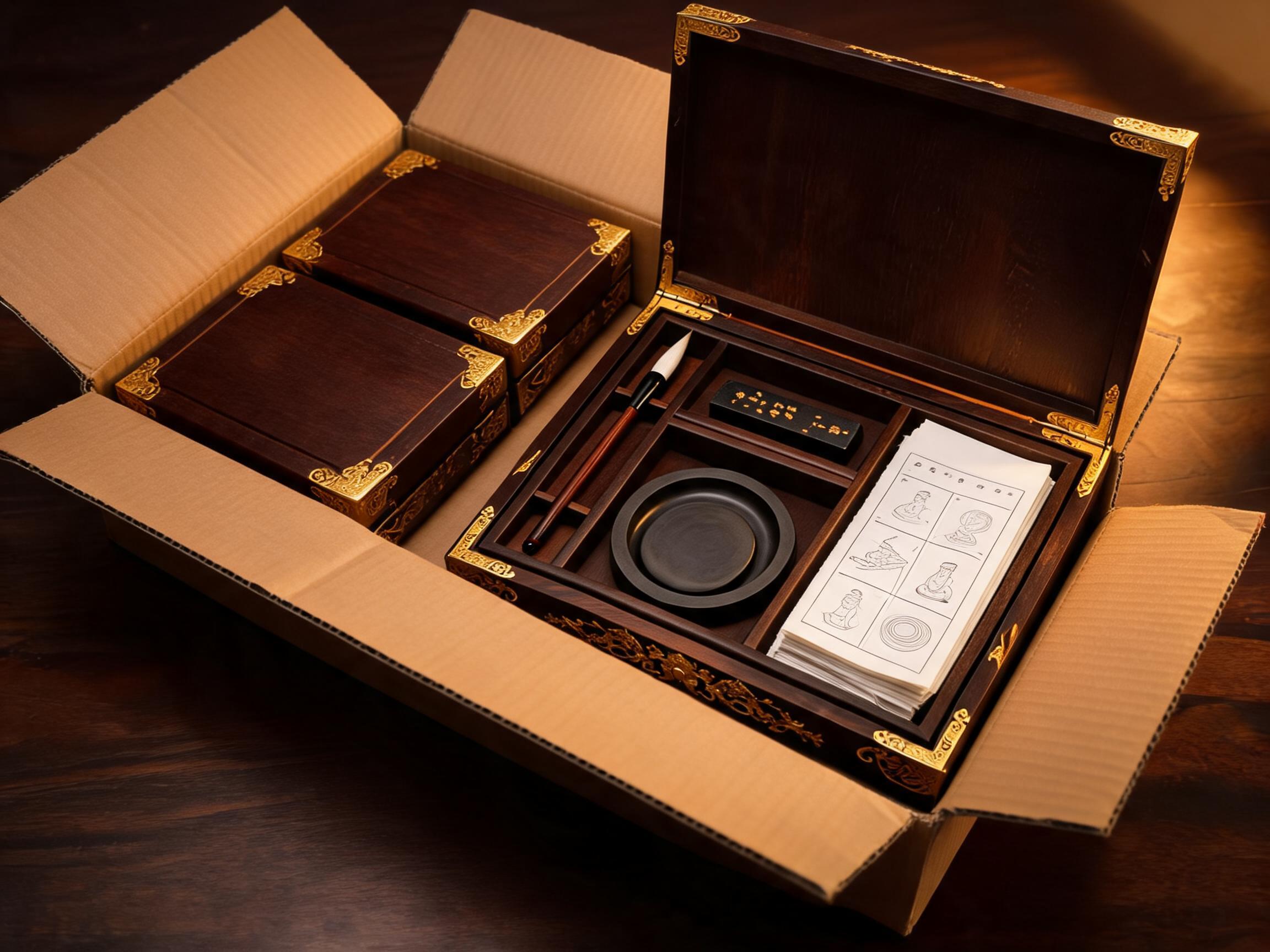
A practical first-lesson walkthrough for B2B buyers and educators: how the four components of a Chinese calligraphy set work together, what beginners actually do in the first session, and how component quality decisions affect classroom and gift-channel programs.
Product Usage Guide for Buyers
Most buyers who search for a Chinese calligraphy set are not looking for art history. They are trying to understand what a beginner actually does with the components in the box, because that sequence determines whether a classroom kit works, whether a gift set feels complete, and what to check before placing a bulk order.
This article walks through the first lesson as a student would experience it: grinding ink, holding the brush, making the first strokes, and handling the paper. For distributors, schools, and cultural venues, each step also maps to a sourcing decision.
Key Takeaways
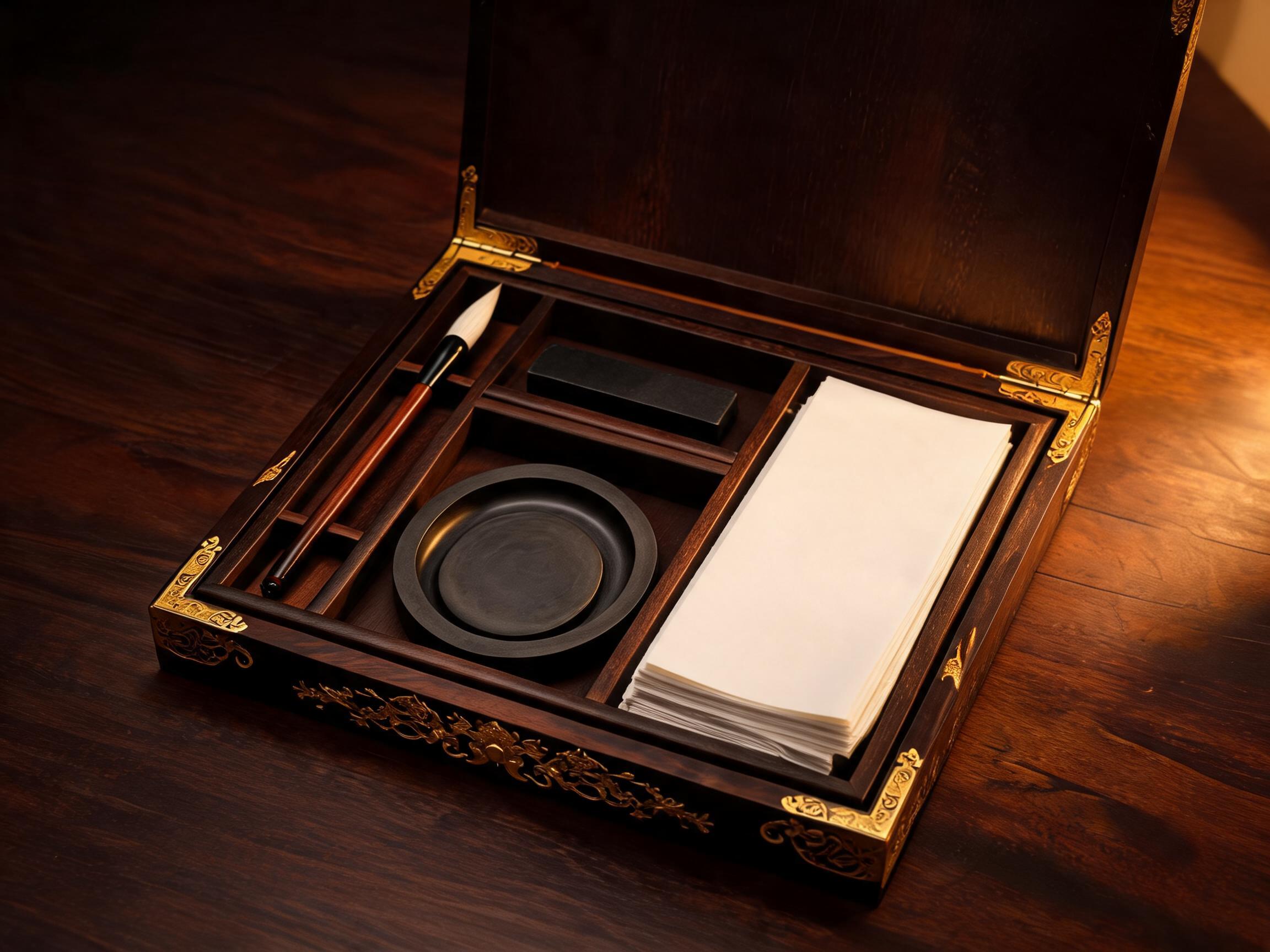
- A starter set works as a sequence: grind, hold, stroke, place.
- Component matching matters more than any single premium item.
- MOQ and lead time differ by kit level: 100 sets for the starter kit, 30 for the scholar set.
- Component-level QC and AQL sampling are available on the starter kit; set-level component matching QC on the scholar set.
- Illustrated guides are available in English, Chinese, Malay, and Arabic; others on request.
What Is Actually in a Beginner Set
A Chinese calligraphy set is not a single tool. It is a small system of four parts that only work together: an ink stick, an inkstone, a brush, and paper. The Calligraphy Starter Kit Set packages these as a student ink stick, a practice inkstone, a beginner brush, 30 sheets of practice xuan paper, and an illustrated usage guide.
For a buyer, the important point is that none of these four parts is optional in a first lesson. If the inkstone surface is too rough or too polished, the student cannot grind ink evenly. If the brush is too large or too stiff, the first strokes feel unmanageable. If the paper absorbs too quickly, every stroke looks like a mistake. The set succeeds or fails as a matched unit.
Step 1: Grinding Ink on the Inkstone
The first lesson begins before the brush is picked up. The student places a small amount of water on the inkstone and holds the ink stick vertically, moving it in slow circles on the stone surface. The goal is not speed. The goal is to dissolve ink into the water until the liquid reaches a usable consistency.
This is where the quality of the ink stick and the inkstone surface matter most to a classroom program. A student ink stick is formulated to grind down predictably, while a practice inkstone provides enough surface texture to generate ink without requiring long grinding. When these two components are mismatched, beginners either produce watery ink or spend the entire first session grinding.
For buyers sourcing for schools, the practical check is whether the supplier treats the ink stick and inkstone as a matched pair. Component-level QC and AQL sampling on the starter kit let you verify that both arrive consistent across a bulk order.
Step 2: Holding the Brush
Once ink is ready, the brush is held vertically between thumb, index finger, and middle finger, with the wrist lifted off the table. This upright grip is different from how most beginners hold a pen, and it is the part of the first lesson that instructors repeat most often.
A beginner brush has to support that grip. If the handle is too thin or too heavy, students compensate by tilting the brush, which undermines the whole exercise. For a gift channel or a cultural venue running a short workshop, the brush is the component that determines whether the experience feels encouraging or frustrating.
This is also why set-level component matching QC matters. The Complete Scholar Desk Set pairs a pine soot ink stick, Duan inkstone, and wolf hair brush as a coordinated set, which suits buyers positioning calligraphy as a premium gift or a display piece rather than a disposable classroom supply.
Step 3: The First Strokes
The first marks are not characters. They are basic movements: a horizontal stroke, a vertical stroke, and a simple downward sweep. The purpose is to teach how pressure builds and releases through the brush tip. A student learns that the brush does not draw a uniform line; the line changes with speed, angle, and pressure.
For a curriculum buyer, this step explains why paper quantity in a starter set is specified. Thirty sheets of practice xuan paper allow repetition without fear, which is exactly what first lessons need. A kit with too few sheets pushes students to hesitate, and hesitation is the opposite of what calligraphy practice is trying to build.
When sourcing class sets, confirm that the paper is intended for practice rather than display. Practice paper is designed for repetition, while display paper serves finished work. Mixing the two in a classroom kit usually leads to complaints about the paper, not the brush.
Step 4: Paper Handling and Layout
Before any stroke is made, the student learns to place the paper flat, leave margins, and work from top to bottom, right to left. This is a handling habit, not a design choice. It keeps the hand off wet ink and keeps the finished page readable.
For buyers, paper handling is where kit completeness becomes visible. A felt pad under the paper prevents ink from soaking through to the desk, which is a common request in school and workshop settings. Ink paste and a seal are also common add-ons for gift programs, since they turn a practice set into a presentation-ready package.
Optional add-ons for the starter kit include ink paste, a seal, and a felt pad. These are useful for venue-based programs and gift channels where the set is used on a table rather than at home.
How the First Lesson Maps to Sourcing Decisions
The four steps above are not just teaching points. They are the reasons a buyer chooses one kit over another. The table below summarizes what each component does in the first lesson and what to check when comparing suppliers.
| Component | Role in the First Lesson | What to Check When Sourcing |
|---|---|---|
| Ink stick | Ground on the stone to produce usable ink | Grinds consistently; matched to the inkstone surface |
| Inkstone | Provides the grinding surface | Surface texture suits beginners; not too rough or too polished |
| Brush | Held upright for the first strokes | Handle weight and tip stiffness suit a beginner grip |
| Practice xuan paper | Absorbs ink for repeated practice | Intended for practice; enough sheets per set for a class |
| Illustrated guide | Walks the student through the sequence | Language coverage matches your market |
Starter Kit vs. Scholar Desk Set: Which Fits Your Channel
The two set levels serve different buyers. The starter kit is built for classroom and beginner programs, with a student ink stick, practice inkstone, beginner brush, 30 sheets of practice xuan paper, and an illustrated usage guide. Its MOQ is 100 sets, with a lead time of 25-35 days after sample approval, and trade terms FOB, CIF, or DDP.
The Complete Scholar Desk Set is positioned differently. It uses a pine soot ink stick, a Duan inkstone, a wolf hair brush, 20 sheets of xuan paper, and a magnetic-closure presentation box. Its MOQ is 30 sets, which suits gift channels, corporate programs, and cultural venues that need a smaller quantity of a more presentational item.
Both set levels are supported by component matching QC. The starter kit adds component-level QC and AQL sampling, which is relevant when a school district or chain needs consistency across many identical sets.
Guide Languages and Classroom Reach
Instruction language is often the deciding factor for international classroom programs. The illustrated usage guide for the starter kit is available in English, Chinese, Malay, and Arabic, with other languages available on request. For buyers serving Southeast Asia, the Middle East, or multilingual school systems, this removes a common barrier: a set that a teacher cannot explain.
If your market requires language coverage beyond what is listed, confirm availability during sampling. Language content is part of the sample approval process, not an afterthought.
FAQ for Buyers
Can one set serve both a classroom and a gift program?
The starter kit is designed for beginner practice and fits classroom use. The scholar desk set is assembled as a presentation set with a magnetic-closure box, which suits gift and display purposes. Choose based on how the set will be used, not just on component count.
What is the minimum order for a trial program?
The starter kit has an MOQ of 100 sets. The scholar desk set has an MOQ of 30 sets. A trial program typically starts with a sample approval step before full production.
How long does production take?
Lead time for the starter kit is 25-35 days after sample approval. Confirm lead time for the scholar set and any custom requirements with the supplier before committing to a delivery date.
Are add-ons available for classroom sets?
Optional add-ons for the starter kit include ink paste, a seal, and a felt pad. These are relevant for venues where students work on tables and for gift packaging.
What to Confirm Before Ordering
First, define the end use: classroom practice, workshop, gift, or retail. That decision points to the starter kit or the scholar desk set. Second, confirm guide language coverage for your market. Third, confirm whether add-ons such as a felt pad or seal should be included. Fourth, review QC scope: component-level QC and AQL sampling on the starter kit, or set-level component matching QC on the scholar set.
Manufacturing Chinese calligraphy and stationery products since 2011, the supplier behind these sets offers both kit levels with sample approval before production. For buyers comparing options, requesting a sample is the most direct way to verify that the four components work together the way a first lesson requires.