
A pre-order evaluation checklist for B2B buyers: oil soot vs pine soot, stick vs liquid formats, lightfastness evidence, physical sample checks, and supplier QC verification before bulk orders.
Most buyers searching for the best calligraphy ink are past the curiosity stage: they are comparing options for a real order and trying to avoid two expensive mistakes — ink that disappoints end customers, and reorder batches that do not match the first shipment. This checklist covers how to evaluate calligraphy ink before a bulk order: the practical difference between oil soot and pine soot, stick versus liquid formats, lightfastness evidence, physical quality markers, and the supplier checks that actually predict reorder quality.
Start With the Soot: Oil Soot vs Pine Soot
Every traditional Chinese ink is built on soot, and the soot type shapes tone, handling and price:
- Oil soot (yōuyān) — produced by burning oils, typically tung oil. It yields a rich, glossy black with fine particle structure, and is the classic choice for professional calligraphy studios and artwork that will be displayed. Buyers who ask for depth and sheen in finished strokes are usually describing oil soot behavior.
- Pine soot (sōngyān) — produced by burning pine wood. It gives a matte, grey-toned black preferred for certain script styles and for traditional Chinese painting, where layered washes matter more than gloss. Pine soot ink sticks are also typically the more affordable tier, which makes them the volume driver for schools and entry retail.
Neither is universally "best." Match the soot to the end use: glossy expressive calligraphy favors oil soot; student practice, painting programs and price-sensitive retail ranges usually start with pine soot. When comparing supplier catalogs, ask which soot each SKU uses — not every product page makes this explicit, and "black ink" is not a soot specification.
Choose the Format: Sticks or Liquid
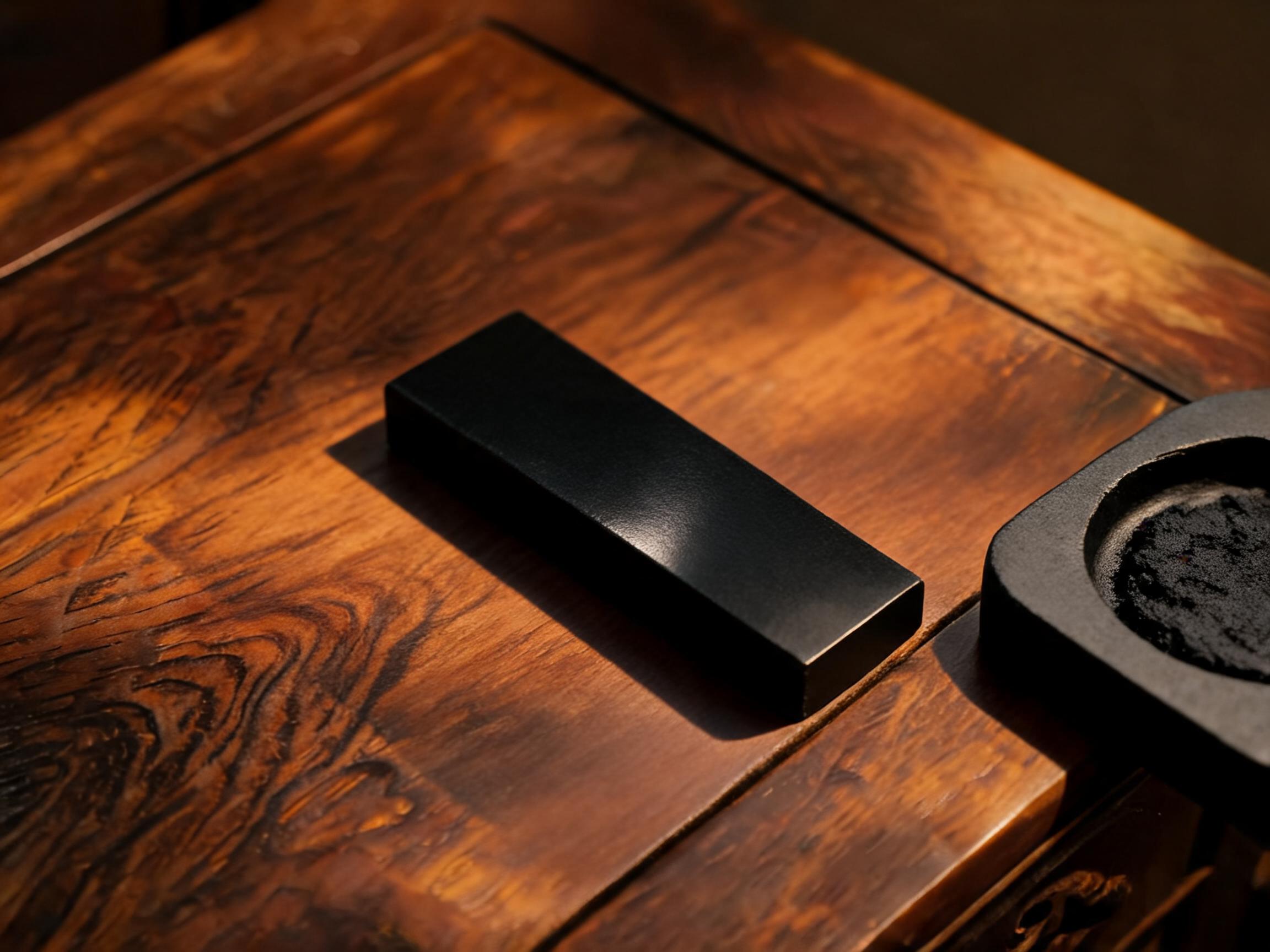
Ink sticks are ground on an inkstone with water. They offer the traditional experience, control over ink density, and the craftsmanship appeal — soot refining, glue blending and pounding, mold pressing, shade drying, gold outlining — that gift and collector channels pay for. They require an inkstone and a few minutes of grinding, which makes them less suitable for young students or casual use.
Liquid ink is ready to use straight from the bottle. It is the practical choice for schools, classrooms and beginners, and it scales into institutional formats: bulk containers in 1L and 5L sizes for program refills. For liquid ink, the evaluation points shift to flow consistency, sediment behavior after storage, and bottle sealing — an ink that separates or dries out in a warehouse is a return risk.
Many distributors stock both: sticks for the gift and studio tiers, liquid ink for education and refill volume. The formats complement rather than compete with each other.
Lightfastness: What to Ask For
Lightfastness — resistance to fading under light exposure — matters most for artwork, colored inks and anything sold into museum, gallery or premium gift contexts. Black ink from traditional soot is inherently stable, but colored products such as vermilion and colored ink sets are where fading claims deserve evidence.
When a catalog claims tested lightfastness, ask what that means operationally: which grade system was used, on which batch, and whether test records can be shared with the order file. Colored Hui ink stick sets, for example, may specify mineral-based pigments with tested lightfastness grades — the responsible buyer question is not "is it lightfast?" but "what was tested, and can I see it?" Suppliers who document batch testing can usually answer; suppliers who cannot, leave you carrying the risk.
Physical Checks on an Ink Stick Sample
Before committing to volume, evaluate the physical sample itself:
- Density and sound: a well-pounded stick feels dense for its size and rings cleanly when tapped. Porosity or a dull knock suggests insufficient pounding — a classic cause of later cracking.
- Surface and detailing: smooth, polished finish with crisp molded patterns and clean gold outlining. Fuzzy edges or flaked gilding indicate mold or finishing shortcuts.
- Grinding behavior: on an inkstone, quality ink grinds to a smooth, even liquid without grit. Test on a real stone, not paper descriptions.
- Dry-climate behavior: if your market is dry or seasonally heated, ask how sticks are conditioned and packed. Cracking in transit or on the shelf is the most common wholesale complaint in arid markets.
Supplier Checks That Predict Reorder Quality
The first shipment is easy; the third is where supplier differences show. Checks that actually predict consistency:
- Raw material documentation. Suppliers who document pine soot, oil soot and natural binder sources before production, and test each batch for consistency, can reproduce a formula years later. Ask to see the process, not just a statement.
- Inline QC and batch photo reports. Material verification, pattern checks and finish grading at each production stage — with batch-level photo reports — are the mechanism that keeps reorder batches aligned with the approved sample.
- Pre-production approval files. Sample photos, spec sheets and approval records signed off before mass production. If your supplier cannot produce these for past orders, your reorder is unprotected.
- Export packing competence. Ink sticks crack, inkstones chip, liquid ink leaks. An organized export packing plan with carton marks and shipment documentation is not paperwork theater — it is how orders arrive intact.
Practical Buying Sequence
- Define end use by channel — studio/gift (oil soot), education/volume (pine soot, liquid ink), painting (soot type per technique).
- Request samples covering each tier you plan to stock, with spec sheets including soot type, weight per stick and pigment basis.
- Evaluate samples physically — density, finish, grinding behavior — and record results so reorders have a baseline.
- Confirm documentation: batch QC reports, lightfastness test records for colored SKUs, approval workflow.
- Start with a pilot order before scaling, and compare the pilot batch against your sample notes.
Frequently Asked Questions
Which is better for beginners — ink stick or liquid ink? Liquid ink removes the grinding step entirely, which is why schools and starter programs standardize on it. Sticks suit learners who want the full traditional practice, and gift recipients who value the object itself.
Does oil soot always cost more than pine soot? Typically yes at comparable quality levels, because oil soot production is more exacting and the finish commands a premium. Treat price gaps between soot types as normal, not suspicious — but ask what drives the price within the same soot type, such as stick weight, gold outlining or age of the formula.
How do I verify lightfastness claims before ordering? Ask which batches were tested, under which grade system, and request the test records for your order file. For colored or vermilion SKUs aimed at artwork and gifting, this is a standard question a documented supplier can answer without friction.
What weight range should a retail range cover? Ink sticks are commonly produced in weights from around 30g to 150g per stick. Smaller weights suit practice and entry retail; heavier, detailed sticks serve gift and collector tiers. Build the ladder around your channels rather than buying one weight in volume.
What MOQ should I expect when sampling multiple SKUs? MOQs are set per product configuration — as a reference, classic oil soot Hui ink sticks are offered at a 50-piece MOQ, but each SKU and packaging option is quoted on its own volume. Send your SKU list for exact figures.
Request Sample-Based Evaluation Support
If you are evaluating calligraphy ink for a bulk order, send us your target channels, climates and price points. Guangdong Gumo Crafts Technology Co., Ltd. produces both oil soot and pine soot Hui ink sticks and a full liquid ink line — bottled retail formats through 1L/5L bulk containers — with documented raw material sources, inline QC checkpoints and batch-level photo reports. We will support a sample-based evaluation with spec sheets and the QC documentation your order file needs.