
A practical terminology and format guide for gift and religious-venue buyers sourcing Chinese ink. Clarifies the difference between ink block, ink stick, and liquid ink, and maps each format to specific use cases, with ordering recommendations for diaspora gift channels in Central-Eastern Europe and the Americas.
BUYER GUIDE · GIFT & RELIGIOUS-VENUE CHANNELS
If you source Chinese ink for gift shops, calligraphy studios, or religious venues serving the Chinese diaspora in Central-Eastern Europe and the Americas, you have likely seen three terms used interchangeably: ink block, ink stick, and liquid ink. They are not the same product. Ordering the wrong format can mean a gift set that cannot be used as intended, a religious venue with the wrong ceremonial item, or a stock that moves slowly because it does not match local buyer expectations.
This guide clarifies the terminology, explains the physical differences, and gives you a practical format-selection framework for the gift and religious-venue channels. We also map each format to our current product line so you know exactly what to request.
- Ink block and ink stick refer to the same solid ink format — the difference is regional terminology, not product type. In China, "mo kuai" (ink block) and "mo ding" (ink stick) both describe solid ink molded from refined soot and binder.
- Solid ink (block/stick) requires grinding on an inkstone with water — it is the traditional format for calligraphy, brush painting, and ceremonial use.
- Liquid ink is ready to use — it suits classrooms, bulk practice, and any setting where grinding is impractical.
- Gift and religious channels generally favor solid ink for its ritual value and shelf presence; liquid ink is better for functional bulk orders.
- Custom shapes, patterns, and packaging are available for OEM gift programs — confirm specifications with the supplier before ordering.
Terminology: Ink Block vs Ink Stick — Same Solid, Different Words
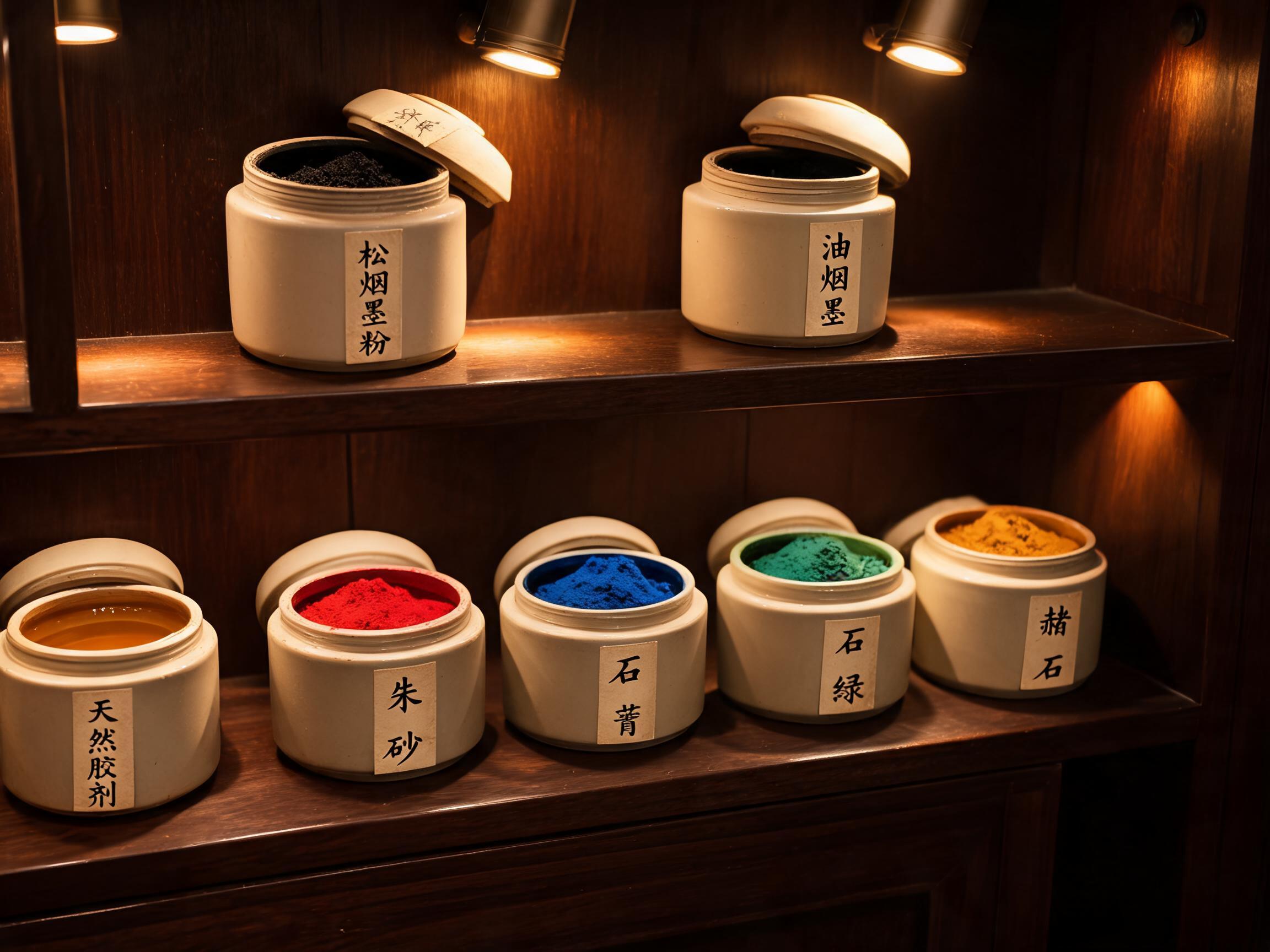
In international trade listings, you will see both "Chinese ink block" and "Chinese ink stick" used for the same category of product. The Chinese terms are mo kuai (墨块, ink block) and mo ding (墨锭, ink stick). Both describe solid ink formed by kneading refined soot with a binder, then molding and shade-drying the mixture. The result is a solid cake or bar that must be ground on an inkstone with a small amount of water to produce liquid ink for writing.
The distinction is largely regional and commercial. In mainland China, "ink block" is more common in everyday speech and retail packaging. "Ink stick" appears more often in English-language art-supply catalogs and in descriptions of high-end collectors' items. For your purchasing documents and customs declarations, treat them as synonyms. What matters is the specification: the soot type (oil soot or pine soot), the binder formulation, the weight, and the decorative finish.
If a supplier lists "ink block" and "ink stick" as separate SKUs with different prices, ask what physically differs. In our product line, the classic oil-soot ink stick and the premium pine-soot ink stick are both solid formats; the difference is in raw materials and grade, not in the basic format.
Liquid Ink: A Different Format, Not a Different Grade
Liquid ink (墨汁, mo zhi) is a ready-to-use suspension of soot in water with a preservative and a wetting agent. It is bottled and used directly from the container or poured into an ink dish. No grinding is required.
Liquid ink is not a diluted version of a solid ink stick. It is a separate product with its own formulation, shelf life, and performance characteristics. For buyers, the key differences are:
- Convenience: Liquid ink is immediately usable; solid ink requires an inkstone, water, and grinding time.
- Shelf life: Liquid ink has a finite shelf life and can dry out or spoil if improperly stored; solid ink, kept dry, lasts for decades and is often considered a collectible.
- Tone and layering: Traditionally, solid ink is preferred for fine brushwork because the artist controls the concentration by grinding. Liquid ink offers consistency but less control over shade variation.
- Packaging and shipping: Liquid ink is heavier and requires leak-proof packaging; solid ink is lighter, more compact, and easier to ship in mixed gift sets.
| Feature | Solid Ink (Block / Stick) | Liquid Ink |
|---|---|---|
| Form | Molded solid bar or cake | Bottled liquid |
| Preparation | Grind on inkstone with water | Use directly |
| Typical use | Calligraphy, brush painting, ceremonial, collector gifts | Practice, classroom, bulk writing |
| Shipping weight | Light, compact | Heavier, needs leak-proof packaging |
| Storage life | Very long if kept dry | Finite; avoid drying or freezing |
| Gift suitability | High — decorative, traditional, collectible | Lower — functional, practical |
Format Selection for Gift and Religious-Venue Channels
Your channel determines the format mix. Here is how we see the demand split across the two channels this article addresses.
Gift Channel (Diaspora Retail and Corporate Gifts)
Gift buyers in Central-Eastern Europe and the Americas are typically purchasing for Chinese New Year, cultural events, calligraphy enthusiasts, or corporate gifts with a cultural theme. For this channel, solid ink is the primary format. Reasons:
- Presentation: An ink stick with a carved pattern or gold edge looks like a gift. A bottle of liquid ink does not.
- Collectibility: Solid ink is a traditional collectible. A set of colored ink sticks in mineral pigments — vermillion, ochre, azure, white, yellow — is a visual and cultural statement.
- Cultural authenticity: For diaspora customers, the ritual of grinding ink is part of the cultural experience. A gift set that includes an inkstone and a solid ink stick is a complete cultural package.
- Shipping economics: Solid ink is light and unbreakable, which simplifies international logistics for small gift orders.
For gift programs, we recommend our colored hui ink stick set — five sticks of 20 g each in mineral pigments (vermillion, ochre, azure, white, yellow) — as a strong gift SKU. The set is compact, visually striking, and clearly traditional. Minimum order is 30 sets, which suits a trial run for a diaspora retail shelf or a corporate gift pilot.
For higher-value single gifts, the commemorative gold-edge hui ink stick is a better match. It reads as a premium, ceremonial object rather than a functional supply.
Religious and Ceremonial Venues
Temples, cultural associations, and ceremonial spaces that host calligraphy events or traditional rituals have different needs. They require a reliable, consistent product for regular use, but the format still matters.
- Ceremonial writing: For copying sutras or writing ceremonial couplets, solid ink is the traditional choice. The act of grinding is itself part of the ritual. We recommend the classic oil-soot hui ink stick for this purpose — it grinds smoothly and produces a deep black tone.
- Practice and classes: For teaching calligraphy to children or beginners, liquid ink is practical. Grinding is a distraction when the goal is stroke practice. Our bulk calligraphy liquid ink is the appropriate format for this volume-driven use.
- Advanced students and artists: For serious practitioners, the premium pine-soot hui ink stick offers a different tone and layering quality than oil soot. Some artists prefer pine soot for its matte, nuanced blacks.
If a venue runs both classes and ceremonies, you will likely need both formats: liquid ink for the classroom, solid ink for the ritual. Do not assume one format covers both.
Production and Customization: What You Can Specify
Our production follows the traditional hui-ink process: soot is refined by ancient methods, kneaded with binder, molded, and shade-dried. This is a slow, low-temperature drying process that preserves the binder's integrity. For buyers, the practical implications are:
- Custom patterns and shapes: Molds can be made to your design. This is common for corporate gifts, commemorative items, and temple-specific editions.
- Custom specifications: Weight per stick, soot type, and hardness can be adjusted to your target price point and use case.
- Custom packaging: Gift boxes, brocade wraps, and multilingual inserts are all available as OEM options.
When you request a quote, be specific about the format and grade you need. A buyer who asks for "Chinese ink" without specifying solid or liquid will get a recommendation, but a buyer who states "solid ink stick, oil soot, 50 g, custom mold, 200 pieces for a corporate gift program" will get a much faster and more accurate quotation.
Common Ordering Mistakes and How to Avoid Them
Buyers new to this category make a few predictable errors. Here is what to watch for.
Mistake 1: Treating Ink Block and Ink Stick as Different Products
As discussed, they are the same format. If you order a "block" from one supplier and a "stick" from another, you may receive the same product under different names — or you may receive different grades if the supplier interprets the terms differently. Always confirm the physical specification (soot type, weight, dimensions) rather than relying on the term alone.
Mistake 2: Ordering Liquid Ink for a Gift Program
Unless the gift is explicitly a practical calligraphy set for a student, liquid ink undercuts the gift value. A bottle of ink does not photograph well, does not carry a pattern, and does not feel traditional. Reserve liquid ink for functional bulk orders.
Mistake 3: Ignoring the Inkstone Requirement
Solid ink is useless without an inkstone. If you sell solid ink to a gift channel, your customer will need an inkstone or a grinding dish. Some buyers include a small stone or dish in the gift set. Confirm with your supplier whether an inkstone is part of the offering or must be sourced separately.
Mistake 4: Assuming All Solid Ink Is the Same Grade
Oil soot and pine soot produce different blacks. Oil soot (from vegetable oils) tends to be richer and glossier; pine soot (from pine wood) is matte and layered. For ceremonial writing, both are acceptable, but serious artists have strong preferences. Do not substitute one for the other without checking with the end customer.
Format Decision Matrix
Use this quick matrix when planning your next order.
| Your Scenario | Recommended Format | Product Reference |
|---|---|---|
| Corporate gift with cultural theme | Solid, premium grade | Commemorative gold-edge hui ink stick |
| Diaspora retail gift shelf | Solid, set presentation | Colored hui ink stick set (5 × 20 g) |
| Ceremonial writing (sutras, couplets) | Solid, oil soot | Classic oil-soot hui ink stick |
| Advanced artist practice | Solid, pine soot | Premium pine-soot hui ink stick |
| Classroom / bulk practice | Liquid | Bulk calligraphy liquid ink |
| Premium bottled ink for studio use | Liquid, higher grade | Premium bottled calligraphy liquid ink |
FAQ
Is "Chinese ink block" the same as "ink stick"?
Yes. Both terms describe solid ink molded from refined soot and binder. "Ink block" is more common in mainland Chinese retail usage; "ink stick" is more common in English-language art-supply catalogs. For ordering purposes, specify the physical specification (soot type, weight, dimensions) rather than relying on the term.
Can liquid ink be used for ceremonial writing?
Technically yes, but traditionally no. The act of grinding solid ink is part of the ritual in many ceremonial contexts. If the venue prioritizes tradition, order solid ink. If the venue runs high-volume practice sessions, liquid ink is more practical.
What is the minimum order for the colored ink stick set?
The colored hui ink stick set (5 sticks of 20 g each in vermillion, ochre, azure, white, and yellow) has a minimum order of 30 sets. This makes it suitable for a pilot retail program or a small corporate gift run.
Can we customize the pattern on an ink stick?
Yes. Custom molds, patterns, and packaging are available under our OEM program. Provide your design and target quantity, and we will confirm feasibility and tooling requirements.
Do I need to buy inkstones separately?
Solid ink requires an inkstone or grinding dish. Our current product line does not include inkstones. If your gift set needs one, confirm with us whether we can source it as a complementary item or whether you should procure it separately.
Next Step: Specify Your Format and Grade
To get an accurate quotation, send us your format (solid vs liquid), soot type (oil or pine), weight per stick, quantity, and target use case. If you are unsure which grade fits your channel, describe your end customer and the occasion — we can recommend a format mix based on our production experience.
For gift programs, request the colored set or the commemorative gold-edge stick. For ceremonial venues, request the classic oil-soot stick. For classroom or bulk practice, request the bulk liquid ink. Be specific, and you will receive a quotation that matches your channel's needs.