
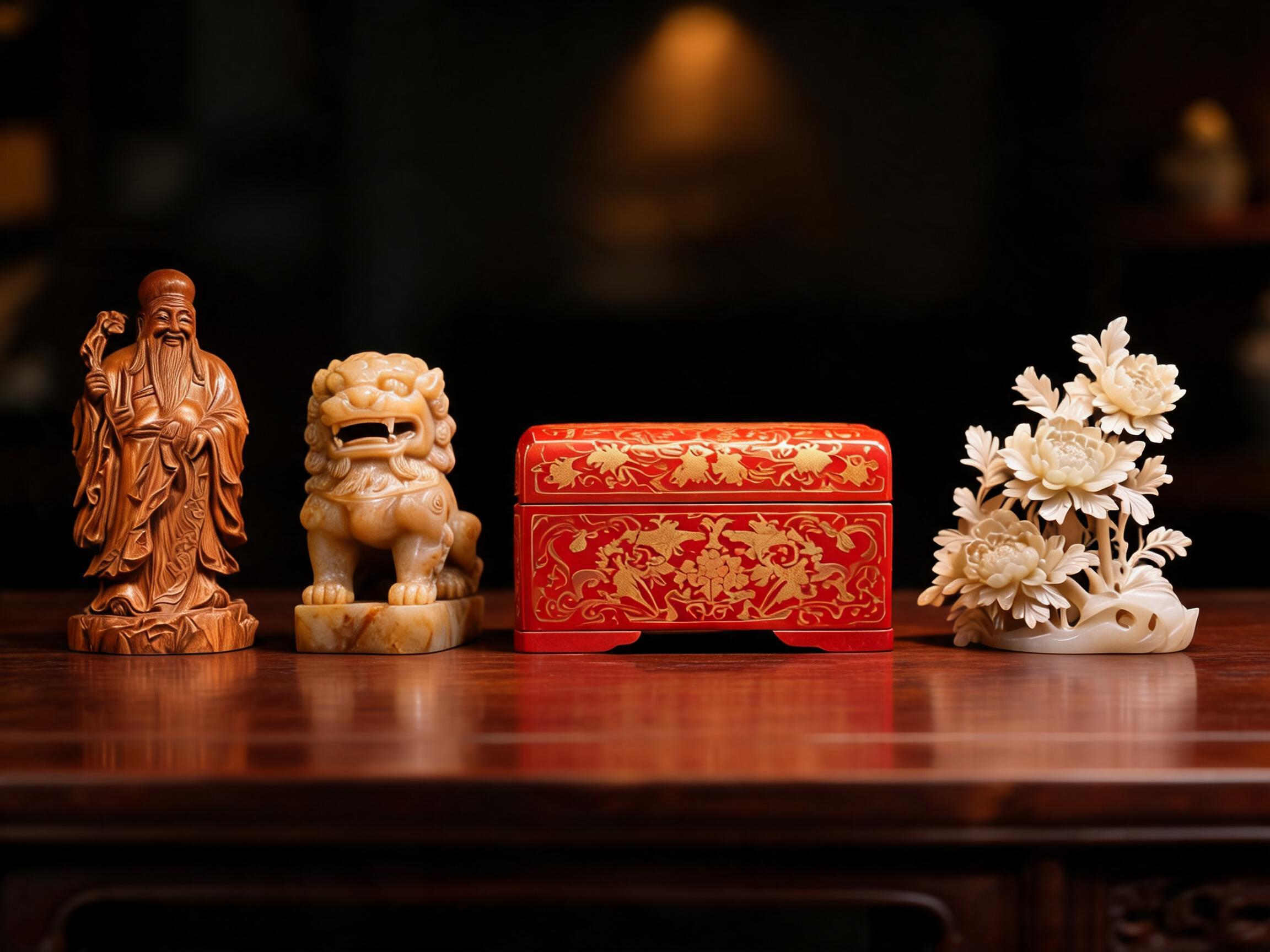
A practical guide for importers and retailers sourcing Chinese craft ornaments wholesale. Covers materials, customization options, MOQ considerations, and quality standards for gift, collector, and religious venue channels.
BUYER GUIDE
Chinese decorative ornaments are a staple in gift shops, collector showcases, and religious venues around the world. But sourcing them wholesale is not the same as buying a few pieces for display. You are dealing with material variations, cultural accuracy, customization lead times, minimum order quantities, and quality control that can make or break your margin.
This guide walks through the key decisions you need to make before placing your first order for craft ornaments wholesale — from choosing materials to setting realistic MOQs and inspecting quality. It is written for importers, boutique retailers, and venue buyers who need practical answers, not marketing fluff.
- Material choice drives cost, durability, and shipping weight — match it to your channel, not just to aesthetics.
- Customization (color, size, logo, packaging) is common, but each change affects MOQ and lead time. Plan ahead.
- Quality standards vary by category: religious ornaments often require more detailed finishing and safe materials.
- Always request pre-production samples and a quality control checklist before mass production.
- MOQ is negotiable — but only when you understand what drives it (molds, printing, packaging).
Why Chinese craft ornaments dominate the wholesale market
China has been the go-to source for decorative ornaments for decades. The reasons are concrete: access to a wide range of raw materials (resin, wood, glass, ceramic, metal), mature mold-making and casting industries, and a dense network of specialized workshops. Whether you need a small batch of hand-painted ceramic figurines or thousands of resin angels for a Christmas promotion, you can find a supplier that fits.
But “Chinese supplier” is not a single category. There are factories that mass-produce generic designs, and there are workshops that take custom orders seriously. Your job is to identify which type matches your business model.
Understanding the main materials for decorative ornaments
Each material has different cost, weight, durability, and finish characteristics. The table below compares the most common options you will encounter when sourcing craft ornaments wholesale.
| Material | Typical Use | Weight | Durability | Cost Range | Notes |
|---|---|---|---|---|---|
| Resin | Figurines, angels, animals | Medium | Good for indoor use | Low to medium | Easy to mold; good detail; can be painted |
| Ceramic / Porcelain | Vases, plates, delicate figurines | Heavy | Brittle, breakable | Medium to high | High-end look; requires careful packaging |
| Wood | Carved ornaments, rustic decor | Light to medium | Durable if sealed | Medium | Natural finish; may need anti-crack treatment |
| Glass | Baubles, Christmas ornaments | Light | Fragile | Medium | Beautiful but shipping risk is high |
| Metal (brass, iron) | Bells, crosses, wall art | Heavy | Very durable | Medium to high | Can be plated or painted |
| Polyresin / Stone mix | Garden ornaments, statues | Heavy | Weather-resistant | Medium | Good for outdoor use |
For gift and collector channels, resin and ceramic are popular because they allow fine detail and a premium feel. For religious venues, you might prefer wood or metal for a more solemn aesthetic, or ceramic for delicate figurines. Always ask about the exact composition — some “resin” ornaments are actually a mix of resin and stone dust, which affects weight and price.
Customization: what you can (and cannot) change
Most Chinese craft ornament suppliers offer some level of customization. The most common options include:
- Color and painting: You can specify Pantone colors or provide a reference image. Hand-painting is common but slower and more expensive.
- Size: Scaling a design up or down is possible, but it may require a new mold. Larger sizes increase material cost and shipping weight.
- Logo or text: Adding a brand logo or a custom message is usually done via decal, engraving, or a small metal plate. This often has a minimum quantity.
- Packaging: Custom boxes, inserts, and hang tags are available. Minimums for custom packaging are typically higher than for the product itself.
- Design modification: Changing a pose, adding an accessory, or altering a pattern may require a new mold — which is the biggest cost driver.
Be aware that not every supplier can handle all types of customization. A factory that specializes in resin casting may not have in-house decal printing. Ask for a clear breakdown of what is included in the unit price and what is extra.
MOQ: how to negotiate realistic minimums
Minimum order quantity (MOQ) is one of the first numbers you will see on a supplier’s price list. It is not arbitrary. MOQ is usually set based on the cost of the mold, the efficiency of the production line, and the minimum quantity for packaging materials.
Typical MOQ ranges for craft ornaments:
| Product Type | Typical MOQ | What Drives It |
|---|---|---|
| Resin figurines (small) | 500 – 1,000 pcs | Mold cost, painting time |
| Ceramic ornaments | 300 – 500 pcs | Kiln capacity, breakage allowance |
| Wooden ornaments | 200 – 500 pcs | Carving time, wood preparation |
| Glass baubles | 1,000 – 2,000 pcs | Blowing process, breakage rate |
| Metal ornaments | 300 – 800 pcs | Casting mold, plating batch |
If the MOQ seems too high for your budget, you have a few options:
- Ask for a mixed MOQ: Some suppliers allow you to combine different designs or colors to reach the total quantity.
- Negotiate a higher unit price: Suppliers may accept a lower quantity if you pay a bit more per piece to cover their fixed costs.
- Order stock designs first: If you are new, consider buying existing designs with no customization. That usually has a lower MOQ.
- Use a trading company: They can consolidate orders from multiple factories, but you lose direct control over production.
Always ask the supplier to explain the MOQ in writing — including whether it applies to the total order or per SKU. A “500 pcs MOQ” could mean 500 pieces of one design, or 500 pieces across three designs.
Quality standards: what to check before you commit
Quality control is where many first-time importers get burned. Chinese craft ornaments can range from excellent to poor, even from the same factory, depending on the batch. You need to define your quality expectations clearly and verify them.
Key quality checkpoints
- Material consistency: Ensure the resin is not too brittle, the paint is non-toxic (especially for children’s products), and the wood is properly dried to prevent cracking.
- Finish and painting: Check for bubbles, uneven paint, scratches, or missing details. Hand-painted items may have slight variations — decide if that is acceptable.
- Structural integrity: For figurines, make sure they stand straight and are not wobbly. For hanging ornaments, check the hook attachment.
- Packaging: Verify that the packaging protects the product during shipping. Fragile items like glass and ceramic need individual wrapping and sturdy boxes.
- Safety compliance: If you sell in the EU or US, you may need to meet specific regulations (e.g., REACH, CPSIA). Ask the supplier for test reports or certificates.
Do not rely on photos alone. Request a pre-production sample (often called a “golden sample”) before mass production. This is your reference for the final product. Keep it safe and compare it with the first article from the production run.
Using a third-party inspection
For orders above a certain value, it is wise to hire a third-party inspection company (like SGS, Bureau Veritas, or a local inspection agency) to check the goods before shipment. They can verify quantity, packaging, and random samples against your specifications. The cost is usually a fraction of what you would lose if a bad batch reaches your customers.
If you are on a tight budget, at least ask the supplier to send you photos and videos of the production line and finished goods before shipping. But be aware that photos can be staged — a video call during packing is more reliable.
Sourcing for specific channels: gift, collector, and religious venues
Each channel has its own requirements. Here is what to consider for each:
Gift shops and retail
Gift buyers look for items that are visually appealing, affordable, and easy to wrap. Small figurines, keychains, and ornaments with a festive or cute design sell well. You need consistent quality across a large volume, and packaging that makes the product look premium. MOQs are usually manageable, and you can test the market with a few designs.
Collector’s market
Collectors are detail-oriented. They notice imperfections and value authenticity. If you are sourcing limited-edition or numbered pieces, you need a supplier who can handle precise painting, clear numbering, and certificates of authenticity. The MOQ may be lower (some collectors’ items are made in small batches), but the unit price is higher. Quality control is critical — a single flawed piece can damage your reputation.
Religious venues and institutions
Religious ornaments (crosses, angels, nativity sets, statues) require cultural sensitivity and often specific design requirements. For example, a church may want a particular style of crucifix, or a temple may need a specific deity figure. You should work with a supplier who understands the religious significance and can produce items that are respectful and accurate. Materials may need to be more durable (for outdoor shrines) or more delicate (for indoor altars). Always confirm the intended use and ask for references if possible.
Shipping and logistics: hidden costs to watch
Shipping is often the second largest cost after the product itself. Heavy materials like ceramic and metal increase freight charges. Fragile items require more protective packaging, which adds weight and volume. When comparing quotes, ask for the delivered cost (including freight, insurance, and customs) — not just the FOB price.
For small orders, consider using a freight forwarder who can consolidate your goods with other shipments. For larger orders, a full container load (FCL) is usually more cost-effective per unit. Always get a shipping quote based on the actual dimensions and weight of your packed goods.
How to evaluate a craft ornament supplier
Before sending a deposit, do a quick supplier evaluation:
- Check business licenses: Ask for a copy of the business license and any export certificates.
- Request references: Ask for contact details of other buyers (with their permission) or look for reviews on B2B platforms.
- Ask about their production process: A good supplier can explain how they make the product, what materials they use, and how they control quality.
- Get a written quotation: Make sure it includes unit price, MOQ, lead time, payment terms, and what is included (packaging, painting, etc.).
- Visit if possible: If you can, visit the factory or send a representative. Seeing the production line in person tells you more than any document.
Remember, the cheapest quote is not always the best. A slightly higher price often reflects better materials, more careful painting, or more reliable packaging — all of which reduce your risk of returns and refunds.
Common mistakes when sourcing craft ornaments wholesale
- Not ordering a sample: Skipping the sample stage to save time or money is a classic mistake. A sample costs little compared to a bad container.
- Ignoring packaging: Ornaments are fragile. If the packaging is poor, you will have breakage — and your customers will blame you, not the factory.
- Underestimating lead time: Custom orders can take 4-8 weeks for production, plus shipping. Plan your orders well ahead of peak seasons (e.g., Christmas).
- Assuming all suppliers are the same: A supplier who makes garden statues may not be good at small delicate figurines. Match the supplier’s specialty to your product.
- Not clarifying payment terms: Be clear about the deposit (usually 30-50%), the balance, and what happens if the goods are defective.
FAQ: quick answers for buyers
What is the typical lead time for a custom craft ornament order?
Most suppliers quote 15-30 days for production after sample approval, depending on the complexity and quantity. Add 2-4 weeks for shipping to most destinations.
Can I get a sample before placing a bulk order?
Yes, most suppliers offer samples. You may need to pay for the sample and shipping, but this is usually credited back if you place a bulk order. Always ask.
How do I ensure the colors match my brand?
Provide Pantone codes or a physical color chip. Ask the supplier to confirm they can match it, and request a painted sample before production.
What if the goods arrive damaged?
This depends on your contract. If you use a third-party inspection and the damage is due to poor packaging, you can claim against the supplier. If it is due to shipping, you need insurance. Always agree on this in advance.
Are there any certifications required for craft ornaments?
It depends on your target market. For children’s products, you may need EN71 (EU) or CPSIA (US) compliance. For general decor, there may be no mandatory certification, but some buyers require REACH or RoHS. Ask your supplier if they can provide test reports.
Final thoughts: build a long-term relationship
Wholesale craft ornaments from China is not a one-off transaction. The best results come from building a relationship with a reliable craft ornament supplier who understands your channel, your quality expectations, and your customers. Start with a small order, test the market, and then scale up. Keep communication clear, document everything, and always have a quality control plan in place.
If you are ready to start sourcing, the next step is to shortlist a few suppliers, request samples, and compare their capabilities. The effort you put into due diligence now will pay off in fewer returns, happier customers, and a healthier margin.