
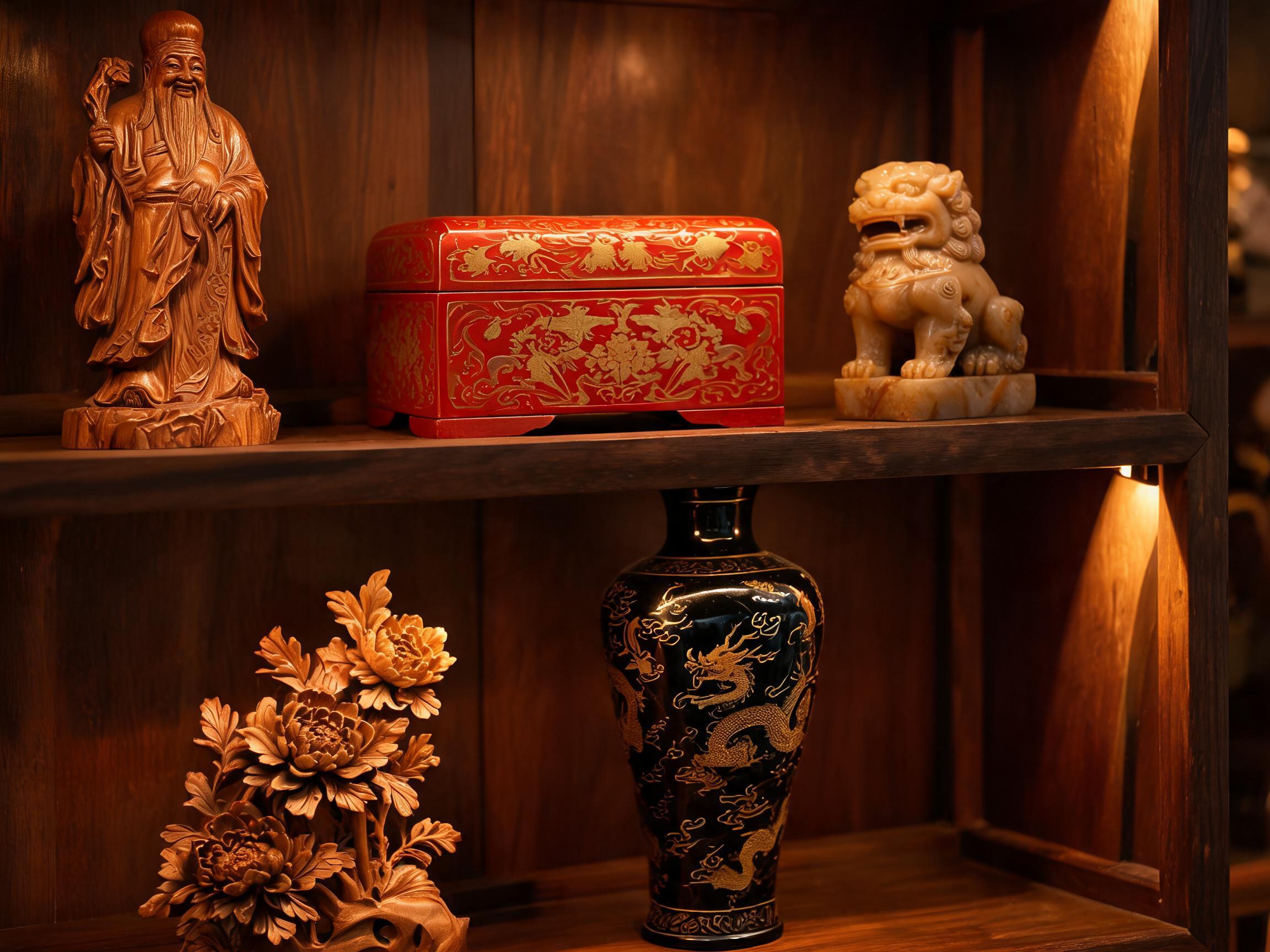
A practical guide for B2B buyers sourcing Chinese craft ornaments for gift and collector channels. Learn about hand-carved wood, stone, and lacquer materials, common auspicious motifs, and how to build a coordinated themed collection with the right supplier.
Chinese Craft Ornaments: What B2B Buyers Need to Know Before Sourcing
For gift retailers, cultural venue shops, and collector-focused distributors, Chinese craft ornaments are a steady category — but sourcing them well is not just about picking a pretty figurine. Buyers searching for “chinese craft ornaments,” “chinese dragon ornaments,” or “chinese ornaments wholesale” are usually trying to solve the same problem: how to build a coordinated product range that has cultural authenticity, consistent quality, and reliable supply terms.
This guide walks through the three main material families — hand-carved wood, stone, and lacquer — explains the auspicious motifs that drive collector demand, and shows how to source a themed collection rather than one-off pieces. It is written for procurement and merchandising teams, not end consumers.
Key Takeaways
- Chinese craft ornaments fall into three core material groups: hand-carved wood, carved stone, and lacquer. Each has different visual character, weight, and care requirements.
- Auspicious motifs — dragons, elephants, dogs, cats — carry specific cultural meanings that matter for collector and gift positioning.
- For B2B programs, a coordinated themed collection (4–12 pieces per set) is easier to merchandise and more likely to generate repeat orders than individual SKUs.
- Work with a supplier that offers custom-themed designs, coordinated material selection, consistent quality grading, and export documentation as standard capabilities.
Understanding the Three Main Material Families
Most Chinese craft ornaments fall into one of three material categories. Each has distinct handling, appearance, and cost implications that should influence your assortment plan.
Hand-Carved Wooden Ornaments
Wood is the most traditional medium for Chinese decorative carving. Hand-carved wooden ornaments range from small desk pieces to larger display items. The grain and natural color of the wood give each piece a slightly different finish, which is part of the appeal for collectors.
For B2B buyers, wood ornaments are generally lighter than stone, which can reduce shipping costs. They also tend to feel warm and approachable — a good fit for gift packaging and retail display. The main quality variable is the carving depth and finish consistency, which is why consistent quality grading matters when ordering in volume.
See: Hand-Carved Wooden Ornament
Carved Stone Decorative Pieces
Stone ornaments carry a heavier, more permanent presence. They are often used for desk weights, bookends, or display pieces in cultural venues and offices. Carved stone can hold fine detail, but the material itself limits the size and shape complexity compared to wood or lacquer.
Stone is heavier, so factor in freight and packaging costs. It also has a longer production time per piece. For a coordinated collection, stone pieces are often used as the anchor or centerpiece of a set, paired with smaller wood or lacquer items.
See: Carved Stone Decorative Piece
Lacquer Craft Ornaments
Lacquer pieces are recognized by their glossy, often colored surface. Lacquer can be applied over wood or other bases, and it allows for bold color — typically red, black, or gold — that fits festive and ceremonial themes. Lacquer ornaments are popular for gift sets because they photograph well and look premium on a shelf.
Lacquer requires careful handling to avoid scratches. For retail packaging, consider individual wrapping or protective inserts. The finish is also more sensitive to humidity than bare wood or stone, so discuss storage conditions with your supplier if you ship to humid climates.
Auspicious Motifs and Their Collector Appeal
Motifs are not just decoration — they carry meaning. Understanding this helps you position products for different buyer segments: gift shoppers, cultural venue visitors, and serious collectors.
| Motif | Common Meaning | Typical Channels |
|---|---|---|
| Dragon | Power, strength, good fortune | Collector sets, corporate gifts, festive seasons |
| Elephant | Wisdom, protection, peace | Home décor, cultural venues, souvenir shops |
| Dog | Loyalty, companionship, protection | Year-of-the-dog collections, pet lovers, gift shops |
| Cat | Wealth, luck (especially beckoning cat) | Retail gifts, office décor, tourist shops |
Search data shows steady buyer interest in dragon, elephant, dog, and cat ornaments — each with hundreds of monthly searches from commercial buyers. This tells you that demand is not limited to one motif. A diversified collection that includes multiple animals or symbols gives you more shelf appeal and reduces the risk of a single theme underperforming.
For collector channels, the story behind the motif matters as much as the craft. Consider adding a small card or tag that explains the symbolism in English. This is a low-cost way to increase perceived value without changing the product itself.
Sourcing a Coordinated Themed Collection
Individual ornaments are easy to source, but they are hard to merchandise. A coordinated collection — where pieces share a theme, material mix, or color palette — is more attractive to gift buyers and more likely to drive repeat orders.
What a Themed Craft Ornament Collection Looks Like
Based on what serious suppliers offer, a typical themed collection includes:
- Mixed materials: wood, stone, and lacquer pieces in one set to show range
- Piece size: 5 cm to 15 cm per piece — small enough for retail display, large enough to show carving detail
- Set size: 4 to 12 pieces per set, depending on the theme and price point
- Theme-driven design: all pieces follow one motif or story (e.g., the 12 zodiac animals, a dragon series, or a set of auspicious symbols)
This structure works well for cultural venues that want a unified product line, and for gift buyers who want a ready-made “collection” rather than a random assortment.
Why Coordinated Material Selection Matters
When you mix wood, stone, and lacquer in one set, you are giving the buyer a sampling of Chinese craft traditions. But the materials must be chosen deliberately. For example, a set that pairs a carved stone centerpiece with smaller wood figures can feel balanced; a set that mixes random pieces from different batches may look incoherent.
Ask your supplier about their approach to material selection for themed sets. A good supplier will have a process for choosing materials that complement each other in color, texture, and weight.
Quality Grading and Consistency
Consistent quality grading is essential for a collection. If one piece in a set has deep, clean carving and another has shallow or rough details, the whole set looks off. When evaluating a supplier, ask how they grade finished pieces and what their tolerance is for minor variations. This is especially important for hand-carved wood, where natural grain can cause visible differences between pieces.
For B2B orders, you want a supplier that can commit to a consistent quality level across the entire production run — not just for the sample.
Custom Themed Designs for Events and Promotions
Beyond standard collections, many buyers need custom themes for specific events — a museum exhibition, a cultural festival, or a corporate anniversary. In this case, look for a supplier that offers:
- Custom-themed designs: the ability to develop new motifs or adapt existing ones to your brief
- Expedited sample production: faster turnaround on prototypes so you can approve before bulk production
- Export documentation included: handling the paperwork needed for international shipping
These capabilities are not universal. Some workshops only produce their own designs and cannot adapt quickly. If your channel requires custom themes, make this a screening criterion from the start.
MOQ, Samples, and Production Terms
For a themed collection, a typical minimum order quantity is 50 sets. This is manageable for a first test order and allows you to validate the product before committing to a larger program.
When requesting samples, ask for the full set — not just one piece. A single sample does not show you how the pieces work together. Also ask about sample production time and whether there is a separate sample cost.
Export documentation is another point to confirm. Some suppliers include it in the price; others charge extra. Clarify what documents are provided (e.g., packing list, commercial invoice, certificate of origin) and whether they meet the requirements of your destination country.
Building a Collection That Sells
Here is a practical approach to developing a Chinese craft ornament range for your channel:
- Choose a theme. Start with one motif that fits your customer base — dragons for a broad audience, dogs for a zodiac-specific year, cats for a retail gift market.
- Define the set composition. Decide how many pieces and which materials. A 6-piece set mixing wood and lacquer is a common starting point; add a stone piece for a premium tier.
- Review samples as a set. Check the visual balance, size variation, and finish quality across all pieces.
- Confirm production terms. Verify MOQ, lead time, and export documentation before placing a bulk order.
- Plan for repeatability. Ask if the same set can be reproduced later or if the theme can be extended with additional pieces.
This sequence keeps you from ending up with a random assortment of ornaments that are hard to display and harder to reorder.
FAQ: Sourcing Chinese Craft Ornaments
What is the typical MOQ for a themed ornament collection?
For a coordinated set, the MOQ is commonly 50 sets. This allows you to test the product across a few sales points without overcommitting inventory.
Can I get a custom theme for a specific event or venue?
Yes, if the supplier offers custom-themed designs. Confirm that they can adapt motifs to your brief and produce samples quickly. Expedited sample production is a key capability to look for.
How do I ensure consistent quality across a large order?
Ask about the supplier’s quality grading process. For hand-carved items, natural variation is expected, but the supplier should have clear tolerances and a final inspection step. Request a pre-production sample and, if possible, a mid-production check.
What export documents should I expect?
At minimum, a commercial invoice, packing list, and bill of lading. Some suppliers include a certificate of origin. Confirm which documents are included in the price and whether they meet your customs requirements.
Next Steps
Sourcing Chinese craft ornaments for gift and collector channels is a matter of matching the right materials, motifs, and production capabilities to your market. Start by reviewing the core product types — hand-carved wooden ornaments, carved stone decorative pieces, and lacquer craft ornaments — then ask your supplier about a coordinated themed craft ornament collection that fits your channel.
When you contact a supplier, come prepared with your target theme, set size, and material mix. That will save time and help you get a quote that matches your actual needs.