
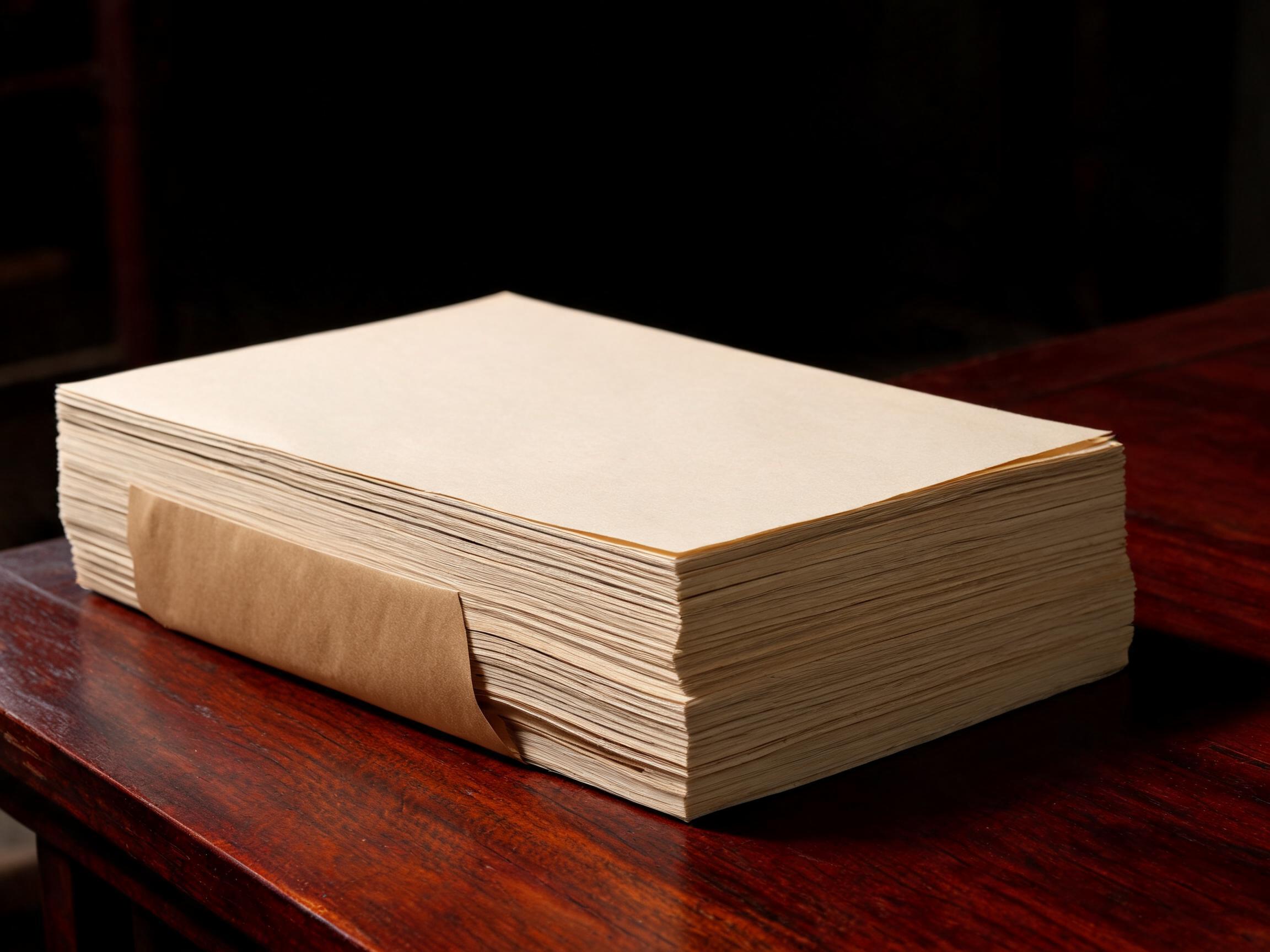
A specification-matching guide for program buyers: how weight feel, sheet size, and sheet-vs-roll format decisions change across student classroom practice, professional painting studios, and temple sutra-copying. Includes a bulk order specification checklist and sample verification steps before repeat commitments.
Program Specification Guide
If you buy Chinese calligraphy rice paper in bulk for a school system, a painting-studio supply chain, or a temple procurement office, the sheet or roll that looks right in a sample photo often fails in daily program use. The difference is rarely the fiber — it is weight feel, sheet size, and format matching the way your end users actually handle paper.
This guide maps three terminal programs to the specification decisions that matter. It does not re-explain what Xuan paper is made of or how sheng / semi-cooked / cooked grades differ by ink behavior. Instead, it answers: for your program, which weight feel, sheet size, and sheet-vs-roll format should you state on a bulk order — and what should you re-verify before you commit to a repeat?
Key Takeaways
- Student classroom practice: prioritize consistent ink absorption across large batches, a manageable sheet size for desks, and sheet format for simple distribution.
- Professional painting studio: weight feel must support controlled ink bleed for layered brushwork; sheet size follows composition scale; roll format suits large-scale scroll painting.
- Temple sutra-copying: thin, smooth weight feel with steady ink take-up; smaller sheet sizes reduce waste; sheet format eases ceremonial handling.
- On every bulk order, state grade family, sheet size, format, and packaging — then verify those four items on samples before a repeat commitment.
In this article
The answer framework: four specification decisions
Across all three programs, only four specification items change the buying outcome.
| Decision | What it controls | How program usage changes it |
|---|---|---|
| Grade family | Ink bleed and absorbency behavior | Raw Xuan for controlled bleed in expressive work; student-grade for uniform absorption across many users |
| Weight feel | How the sheet handles brush pressure and repeated strokes | Teachers want forgiving sheets; studios want responsive sheets; temples want light, smooth sheets |
| Sheet size | Composition scale and desk fit | Classroom desks and sutra columns need smaller sizes; studio compositions need larger sizes |
| Sheet vs roll format | Distribution, storage, and cutting workflow | Sheets for pre-cut distribution; rolls for continuous large-scale work |
Weight feel is not a number you guess. When you request samples, ask the supplier to cut the same nominal sheet size from each candidate grade family and handle them side by side. Feel the difference in stiffness and surface response under a loaded brush. That test tells you more than a thickness figure that the supplier may not have standardized.
Student classroom practice programs
Classroom programs — calligraphy schools, after-school providers, education distributors — run on volume, repetition, and low per-sheet tolerance for inconsistency. A teacher cannot stop a class to sort out a batch that absorbs ink differently from last month's delivery.
For this program, the specification priority is consistent ink absorption across the full bulk quantity. Student Practice Xuan Paper (SKU GMO-XP-003) is designed for this usage pattern: affordable student practice Xuan paper with consistent ink absorption, intended for calligraphy schools and educational distributors requiring bulk supply.
Weight feel
Student paper should forgive inconsistent brush pressure. Beginners press too hard, pause too long, and reload ink unevenly. A weight feel that is too thin will tear or cockle under a heavy beginner stroke; too thick and the ink sits without the absorbency feedback that teaches brush control.
Sheet size
Match the sheet to the desk, not the other way around. For classroom use, confirm the sheet size fits a standard student desk with room for an ink stone and brush rest. If your program uses pre-printed practice grids, state that in the order so the supplier knows the sheet must accept overlay or printing without buckling.
Format
Sheet format is almost always the right choice here. Pre-cut sheets reduce preparation time, simplify distribution to students, and make inventory counting straightforward. Roll format introduces cutting labor into a classroom environment that usually cannot absorb it.
What to state on the bulk order: grade family (student practice), nominal sheet size, sheet format, sheets per pack, and pack-to-carton configuration. Include the expected ink type (student liquid ink vs. ink stick) because absorption behavior on liquid ink is the most common source of batch complaints.
Professional painting studio programs
Professional studios buy paper as a controlled input. Their users are experts who will immediately notice if a batch bleeds differently from the last one. Here, the specification priority shifts from uniformity-at-scale to controlled ink bleed that supports layered brushwork.
Raw Xuan Paper Professional (SKU GMO-XP-001) is designed for this usage pattern: professional raw Xuan paper with traditional bark fiber and controlled ink bleed, intended for professional calligraphers and painting studios. The controlling property is bleed control — how far ink travels before it stops — because a studio painter relies on that behavior for washes, edges, and dry-brush texture.
Weight feel
Studios generally want a responsive sheet: one that registers brush speed and load without absorbing so fast that the stroke loses definition. When evaluating samples, test with the studio's own ink and preferred brush type. Have the painter produce the same three strokes — a wet wash, a dry stroke, and a layered overpaint — on each candidate and compare the edge behavior.
Sheet size
Sheet size follows composition scale. Many studio works are composed on standard sheet sizes that are then mounted. Confirm the nominal sheet size and note that final mounted dimensions depend on mounting and trimming, so the order should specify the paper size, not the finished frame size.
Format
This is where roll format earns its place. For large-scale calligraphy and scroll painting, a continuous roll lets the artist work without a seam in the middle of the composition. Xuan Paper Roll (SKU GMO-XP-004) is designed for this usage pattern: professional Xuan paper roll with controlled width consistency and clean edge cutting, intended for large-scale calligraphy and scroll painting. For most studio bulk orders, sheets serve daily composition and rolls serve the large-format projects.
What to state on the bulk order: grade family (raw professional), sheet or roll format, nominal sheet size or roll width, roll core diameter and roll length if applicable, and edge-cut requirement. For rolls, also state how the studio will cut — scissors, guillotine, or rotary cutter — because that affects the acceptable edge condition.
Temple sutra-copying and ceremonial programs
Temple and cultural institution procurement sits between the classroom and the studio. Sutra-copying programs involve many hands writing small characters in repeated columns, often with a devotional pace that values a calm, predictable surface. Ceremonial use adds handling requirements: sheets are distributed, offered, stored, or burned in ways that reward a smaller, cleaner format.
Weight feel
Sutra-copying favors a light, smooth weight feel with steady ink take-up. The writer's hand moves slowly and precisely; a sheet that fights the brush or feathers under slow strokes disrupts the copy. Request samples and have a copyist write a full column of small characters to check for edge feathering.
Sheet size
Smaller sheet sizes often reduce waste and simplify distribution to congregants or volunteers. Match the sheet to the number of characters per column your program uses. If the temple provides pre-lined or pre-printed sutra sheets, state that the paper must accept the printing or ruling method without ink show-through.
Format
Sheet format is the default for sutra-copying and ceremonial distribution. Rolls are difficult to manage in a group setting and create cutting waste. For ceremonial storage, confirm the packaging format, since storage conditions vary by institution.
What to state on the bulk order: grade family, sheet size, sheet format, sheets per pack, and packaging type. Do not assume a certification or preservation claim unless the supplier provides documentation for the specific product.
What to put on a bulk order and re-verify on samples
A bulk order specification should state four items clearly, plus one verification step.
State on the order
- Grade family — student practice, raw professional, or another named grade. Use the supplier's own grade name, not a generic translation.
- Sheet size or roll width — nominal dimension, plus any tolerance the supplier can confirm.
- Format — sheet or roll. For rolls, include core diameter and roll length.
- Packaging — sheets per pack, packs per carton, and any inner wrap or banding requirement.
Re-verify on samples before a repeat commitment
Sample approval is not the same as bulk approval. Before you place a repeat order, run a small reception check on the delivered batch against the approved sample. The four items to re-verify are the same four you specified: grade family behavior under your ink, sheet size against your layout, format consistency (especially roll width and edge cut), and packaging count against the packing list.
For specification questions on student paper, rolls, or professional raw Xuan, the product pages linked above carry the SKU-level descriptions. For order-specific figures — MOQ, lead time, carton dimensions, and price — confirm directly with the supplier, since these vary by program and destination.